


Radoslaw Zbroinski
Nov-28-2026
What Does High Battery Drain Mean on a BMW? Troubleshooting Guide
What Does High Battery Drain Mean on a BMW?
Is High Battery Drain Serious?
The Most Common Culprits: Root Causes of BMW High Battery Drain
Modules That Don't Go to Sleep
Aftermarket Electronics
A Weak Battery
A New Battery That Wasn't Registered
A Faulty IBS Sensor
Charging System Issues
Short Trips, Cold Weather & High Loads
Something Simply Left On
How to Troubleshoot BMW High Battery Drain – Step by Step
How to Prevent BMW High Battery Drain
To Sum It All Up
You start your BMW in the morning, and instead of a cheerful welcome, the dashboard greets you with a battery message: "High battery drain" or "Increased battery discharge." Sometimes the car starts just fine. Other times, it doesn't start at all.
Either way, it's not a message you should ignore. BMW high battery drain means that something kept drawing power from your car battery while the vehicle was parked, more than it should. The good news? In most cases, the cause can be found and fixed without replacing half the car. In this guide, we'll explain exactly what the warning means, go through the most common culprits, and show you how to track down the problem step by step.
Coming up:
- What the high battery drain message means
- Is it serious?
- The most common root causes
- How to troubleshoot a BMW battery drain issue – step by step
- How to prevent it from happening again
Let's dive in!
What Does High Battery Drain Mean on a BMW?
Modern BMWs are full of electronics, and many of them stay active for a while after you lock the car. Normally, once you walk away, the control modules shut down one by one and the car enters sleep mode, drawing only a tiny amount of current from the battery.
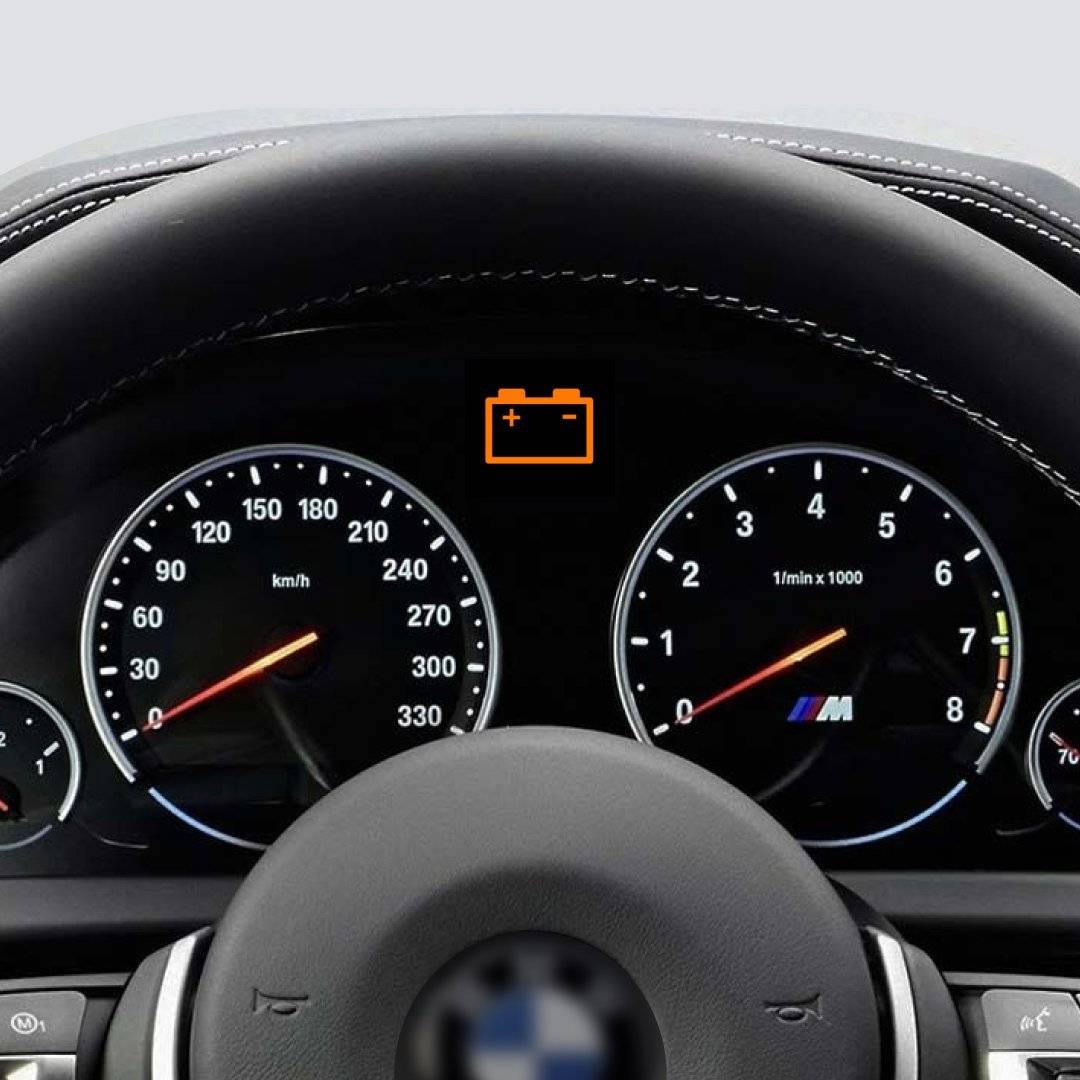
The component that keeps an eye on all of that is the intelligent battery sensor (IBS) – a small module on the negative battery terminal. It constantly measures the battery voltage, current and temperature, also when the car is parked. If it detects that the current draw stayed too high for too long while the vehicle was asleep (or that it never fell asleep at all), the car stores the event and shows a warning the next time you start it.
Depending on the model and generation, the battery message can read:
- High battery drain
- Increased battery discharge
- Increased battery discharge when stationary (or "while stationary")
They all mean roughly the same thing: the battery kept discharging faster than it should while the car was off. The only difference is the wording – the cause is just as likely to be the same issue in each case.
Is High Battery Drain Serious?
On its own, the message doesn't damage anything. But the problems behind it can:
- Dead battery – a high parasitic draw can flatten the battery in a couple of days, or even overnight.
- Shorter battery life – modern AGM batteries don't like being repeatedly deep-discharged.
- Limited functions – when the battery runs low, the car switches off non-essential consumers to make sure it can still start.
So, if you've seen the message once, keep an eye on it. If it keeps coming back, it's time to troubleshoot.
The Most Common Culprits: Root Causes of BMW High Battery Drain
Before you grab a multimeter, it's worth knowing where to look. These are the most common causes of a BMW high battery drain:
| Cause | Typical symptoms | How to check |
| Module not going to sleep | Message after parking, high current draw that never drops | Parasitic draw test, fault codes |
| Aftermarket electronics from disreputable sources | Drain started after installing a dashcam, tracker, or alarm | Disconnect the device and test again |
| Weak or aging battery | Slow cranking, message mainly in cold weather | Battery voltage and load test |
| New battery not registered | Problems started after a battery replacement | Check registration with a diagnostic tool |
| Faulty IBS sensor | Inconsistent readings, warnings despite a healthy battery | Fault codes, live data |
| Charging system problem | Low voltage while driving, battery never fully charged | Voltage with engine running |
| Short trips & cold weather | Message in winter or after lots of short drives | Charge the battery fully and observe |
| Something left on | Interior lights, glovebox or trunk light, phone charger | Visual check after locking |
Let’s take a more detailed look at them.
Modules That Don't Go to Sleep
Any control module can fail to shut down properly – the infotainment head unit, telematics, the amplifier, the alarm or the comfort access module itself. Since each of them is connected to the car's network, a single "insomniac" module can keep others awake, too. The result is a high parasitic draw, often several hundred milliamps instead of a few dozen.
Aftermarket Electronics
Dash cams with parking mode, GPS trackers, aftermarket alarms, amplifiers or poorly wired accessories are some of the most common culprits. If the battery drain issue appeared shortly after installing something new – or if you bought the car and don't know what the previous owner fitted – that's a good place to start.
A Weak Battery
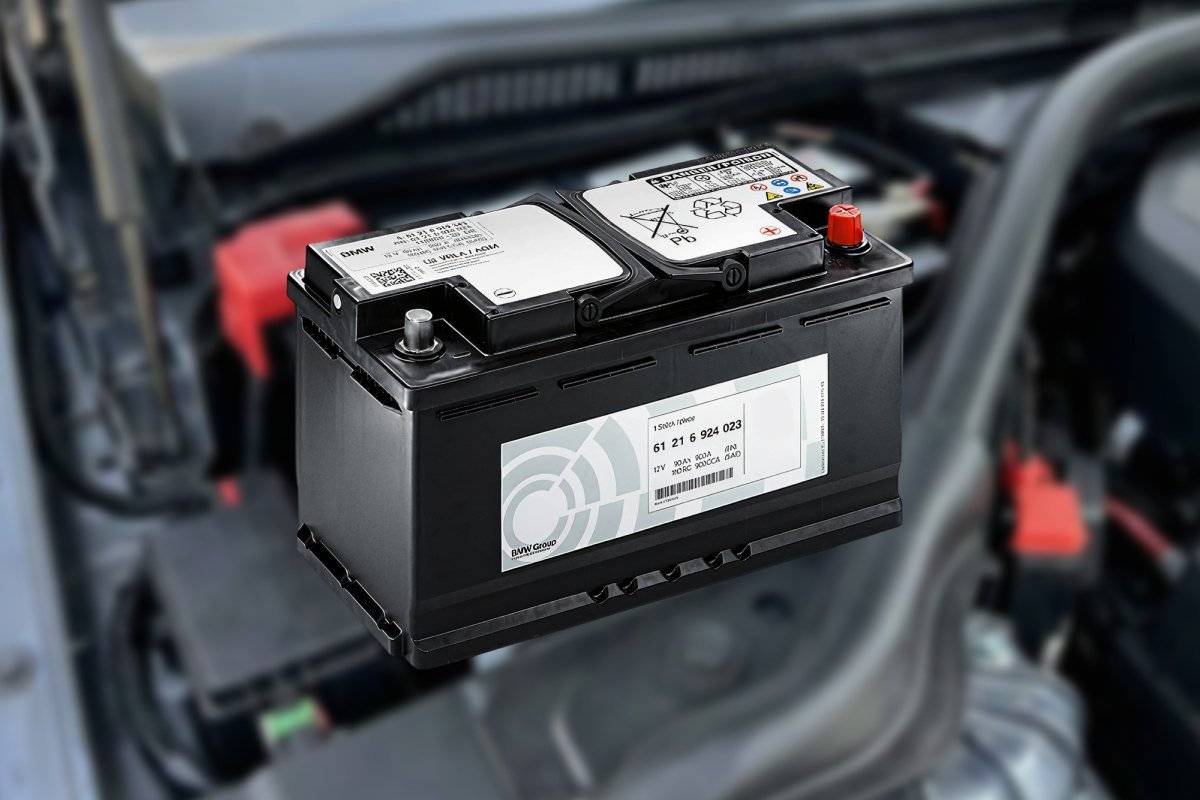
 Sometimes the drain is perfectly normal, but the battery simply can't handle it anymore. An aging battery holds less charge, so a normal amount of current draw will flatten it faster than before. It's especially noticeable in cold weather, when battery capacity drops.
A New Battery That Wasn't Registered
BMWs need to be told when a new battery is installed. If the battery replacement wasn't followed by registration, the car keeps charging the new battery as if it were the old, worn one. That can lead to undercharging, overcharging and – yes – battery warnings.
A Faulty IBS Sensor
The intelligent battery sensor is the one raising the alarm, so when it fails, the alarm can be false – or the charging strategy can go wrong. A faulty IBS can cause warnings despite a healthy battery or show readings that make no sense. We've covered it in detail in our article about the IBS sensor and its failure symptoms.
Charging System Issues
If the alternator or the charging system doesn't deliver enough power, the battery never gets a sufficient charge. It then runs out much sooner while parked, even with a normal current draw.
Short Trips, Cold Weather & High Loads
Lots of short trips in winter, with heated seats, the rear window defroster and the blower running at full power, mean the battery uses more than it gets back. Over time, it never gets fully charged, and the warning starts popping up – without any fault in the car itself.
Something Simply Left On
It happens to the best of us: interior lights, a glovebox or trunk light that stays on because of a faulty switch, or a device left plugged in. Always rule out the simple stuff first – a battery discharging overnight isn't always a sign of a fault.
How to Troubleshoot BMW High Battery Drain – Step by Step
Here's how to find the cause, starting from the easiest checks and moving to the more involved ones.
- Step 1 – Check the battery voltage
Use a multimeter on the battery terminals (red probe on the positive, black on the negative terminal) after the car has been parked for a few hours. As a rule of thumb, a fully charged battery at rest shows around 12.6 V or more, roughly 12.4 V means it's partly discharged, and anything below 12.2 V is low.
If you don’t have a multimeter at hand, most mechanic workshops should be able to help you.
- Step 2 – Check the battery's condition
If the voltage is low, charge the battery fully with a proper charger first. Then have it load-tested at a shop. If the battery is old or fails the test, replacing it may solve the problem – but keep going through the next steps if the message keeps coming back with the new battery as well.
- Step 3 – Read the fault codes
A regular OBD-II reader might not tell you much here. It’s best to use BMW-specific diagnostic software or an app to read the fault codes, especially in the engine control unit (DME), which stores the IBS data. Professional tools like ISTA can also show the battery history – when the current draw was too high and for how long. That alone can point you in the right direction.
- Step 4 – Rule out the most obvious
Check whether any lights stay on after you lock the car, unplug any devices from the sockets, and disconnect aftermarket electronics like dash cams or trackers. Also, try keeping the key fob further away from the car for a night or two, especially if your BMW has Comfort Access.
- Step 5 – Perform a parasitic draw test
This is the key test. It measures how much current the car draws when everything should be asleep.
- Make sure the battery is fully charged.
- Lock the car with everything switched off. If you need to open the trunk or hood to reach the battery, trick the latches into the closed position so the car "thinks" they're shut.
- Use a DC clamp meter around the negative battery cable – it lets you measure without disconnecting anything, which would wake up the modules.
- Wait. The car needs time to enter sleep mode, so give it at least 20–30 minutes, ideally longer, and don't open any doors in the meantime.
- Read the current draw. A healthy BMW in sleep mode typically draws under 50 mA. Anything consistently above roughly 80 mA points to a parasitic draw.
Take a few measurements over time to get a consistent reading – a single spike doesn't mean much, but a draw that never drops does.
- Step 6 – Fix the cause & register the battery
Once you've found the culprit, replace the faulty component, then charge the battery fully. If you've installed a new battery along the way, remember to register it – otherwise, the car will keep charging it incorrectly and you may soon be back at Step 1.
You don't have to visit the dealership for that. Our BMW Battery Registration remote coding service lets our technician register your new battery remotely, while you stay at home. IMPORTANT! If you don't feel confident working around the battery and the fuse boxes, leave the diagnostics to a qualified BMW specialist. A careless short can damage the electronics!
How to Prevent BMW High Battery Drain
Once the problem is solved, a few habits help keep it from coming back:
- Drive longer distances once in a while – short trips alone rarely give the battery enough time to charge.
- Use a battery maintainer – especially if the car sits in a garage for weeks at a time.
- Register every new battery – it keeps the charging strategy in line with the battery you actually have.
- Install accessories properly – make sure dash cams and other devices are wired correctly and have a low-voltage cutoff.
- Don't ignore warnings – the earlier you react, the less likely you are to end up with a dead battery.
To Sum It All Up
BMW high battery drain means the car detected too much current draw while it was parked. The cause can be as simple as a light left on, or as sneaky as a faulty Comfort Access door handle, a module that refuses to sleep, or an unregistered new battery.
Start with the battery voltage and condition, read the fault codes, rule out the obvious, and then perform a parasitic draw test – pulling fuses if needed. And whenever a new battery goes in, don't forget to register it.
FAQ
Comments(0)
All ratings
Popular posts:




and get to know all compatible products for your BMW or MINI
Where to find your VIN?