


Radoslaw Zbroinski
Oct-14-2026
What Is an IBS Sensor? BMW IBS Failure Symptoms
You've just replaced the battery in your BMW. Brand-new, reputable brand, fully charged. A week later, the iDrive greets you with "Increased battery discharge" again, the Auto Start-Stop refuses to work, and the clock resets itself every morning. Why is that? Is it some kind of an evil, Bavarian spell?!
Well, not really.
There's a good chance the problem isn't the battery at all, but a small module bolted to its negative terminal – the IBS sensor. In this guide, we'll explain what it is, why your BMW depends on it so much, how to recognize the symptoms when it fails, and what to do about it.
Coming up:
- What an intelligent battery sensor is and how it works
- Whether other car brands use it too
- Why the IBS is so important
- BMW IBS failure symptoms and their main reasons
- How to diagnose the IBS and what to do when it fails
Let's dive in!
What Is an Intelligent Battery Sensor?
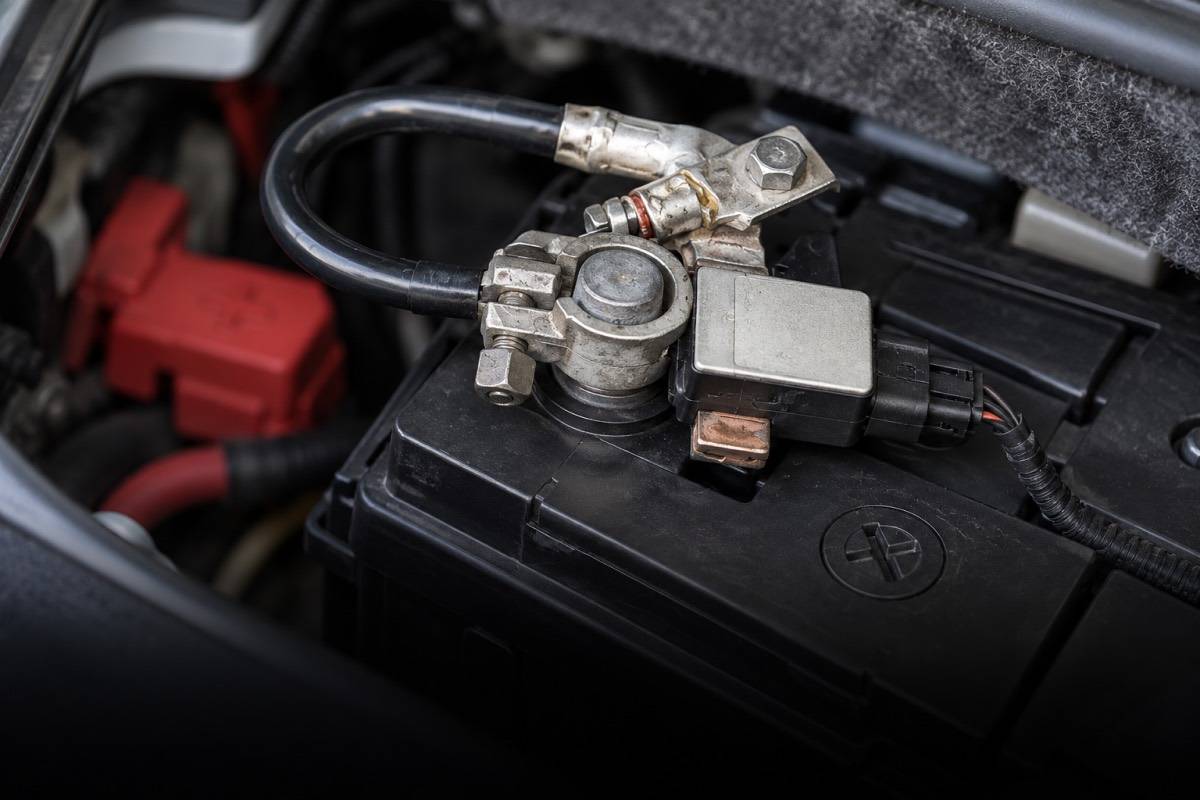
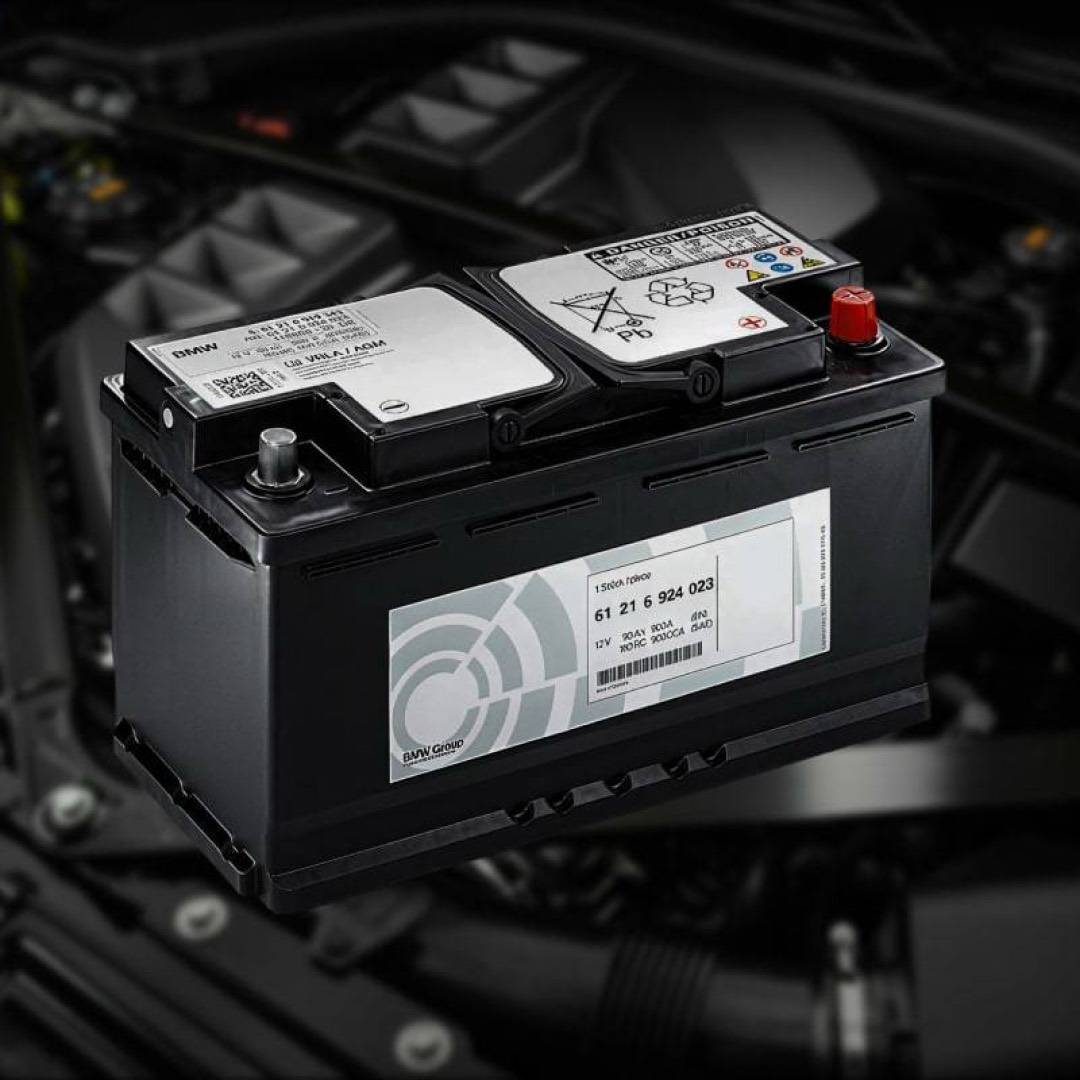
The IBS (Intelligent Battery Sensor) is a small electronic module mounted directly on the battery's negative terminal. In most BMWs, you'll find it in the trunk, where the battery usually sits, as part of the negative battery cable and its mounting clamp. And despite its size, it does a lot of work.
 The IBS constantly measures:
- Voltage – if the battery has enough of it left for starting up.
- Current – how much energy flows into the battery when it charges, and out of it when the car's electronics draw power.
- Temperature – which affects how the battery should be charged.
Based on that, it calculates the battery's state of charge (how full it is) and state of health (how worn out it is). It then passes all that information to the engine control unit (DME) it's connected to, which uses it to manage the whole electrical system. BMW has been using intelligent battery sensors for around two decades now – they appeared in the mid-2000s E-Series models and are present in every F- and G-Series car.
Is the IBS Only a BMW Thing?
Not at all!
BMW was one of the early adopters, but intelligent battery sensors are now common in most modern cars, especially those with start-stop systems and smart charging. You can find it in the Ford Focus, for example. Depending on the brand though, it might be called a battery monitoring sensor or an electronic battery sensor, but the idea is the same.
So, if you've driven a fairly new car of any brand, there's a good chance you've already been relying on one without knowing it.
Why Is the IBS So Important?
Modern BMWs are powered by a lot of electronics – and many of them keep running even when the car is parked. The IBS is what lets the car manage all of that intelligently, without dying on you overnight, when you need your car to start the most. Thanks to its readings, the DME can:
- Adjust the charging strategy – the alternator charges the battery only as much as needed, which saves fuel and extends battery life.
- Decide whether Auto Start-Stop can work – if the battery charge is too low, the system won't turn off the engine at a red light.
- Switch off non-essential consumers – when the battery runs low, comfort functions are cut first to make sure the car can still start.
- Detect abnormal current draw – e.g., when a module doesn't go to sleep after you lock the car.
Without a working IBS, the vehicle is basically guessing. And when it comes to charging a battery, guessing wrong means either overcharging it or leaving it chronically undercharged – neither of which helps its life expectancy.
BMW IBS Failure Symptoms
A faulty IBS can mimic a lot of other problems, which is why it's so often misdiagnosed. If you suspect yours might be failing, watch out for these symptoms in particular:
- "Increased battery discharge" or "Battery discharged" warnings – even though the battery itself is fine.
- Batteries that die quickly – a new battery that keeps going flat after a few weeks.
- Auto Start-Stop not working – the function stays inactive because the car "thinks" the battery is weak.
- Clock and settings resetting – a sign the electrical system is losing power.
- Random electrical issues – flickering lights, the radio switching off, or comfort functions switching off by themselves.
- Trouble starting the car – slow cranking or no start at all, especially in cold weather.
- Fault codes in the DME – e.g., ones referring to the intelligent battery sensor or its signal transmission.
Browse any BMW forum about it and the thread participants tell similar stories. BMW users often share reports of replacing two or three batteries before someone figured out it was the sensor. Some had their car towed after it wouldn't start; others were told by a mechanic that it's "just weak batteries" and got called back to the shop a week later.
Main Reasons for IBS Failure
It's worth noting that the sensor doesn't fail out of nowhere. The main reasons include:
- Corrosion – on the battery post, the terminal or the connector pins.
- Moisture – water getting into the trunk and the battery compartment.
- Damaged wiring – a broken connection between the IBS and the DME.
- Age – like any electronic component, it simply wears out over time.
- Lots of short trips – mostly short-distance driving keeps the battery undercharged, which puts extra strain on the whole charging system.
- Improper work around the battery – e.g., overtightening the terminal or connecting chargers and jump leads incorrectly.
Most of these things are done by the dealership, but some are directly affected by the way you're using your car every day.
How to Diagnose a Faulty IBS Sensor
Before you replace anything, check the basics – a lot of IBS problems turn out to be something else, and vice versa.
- Check the battery first.
Measure the voltage with the car off and rested – a healthy, charged battery should show around 12.6 V. Have the battery load-tested at a shop if you can; weak batteries cause many of the same symptoms. 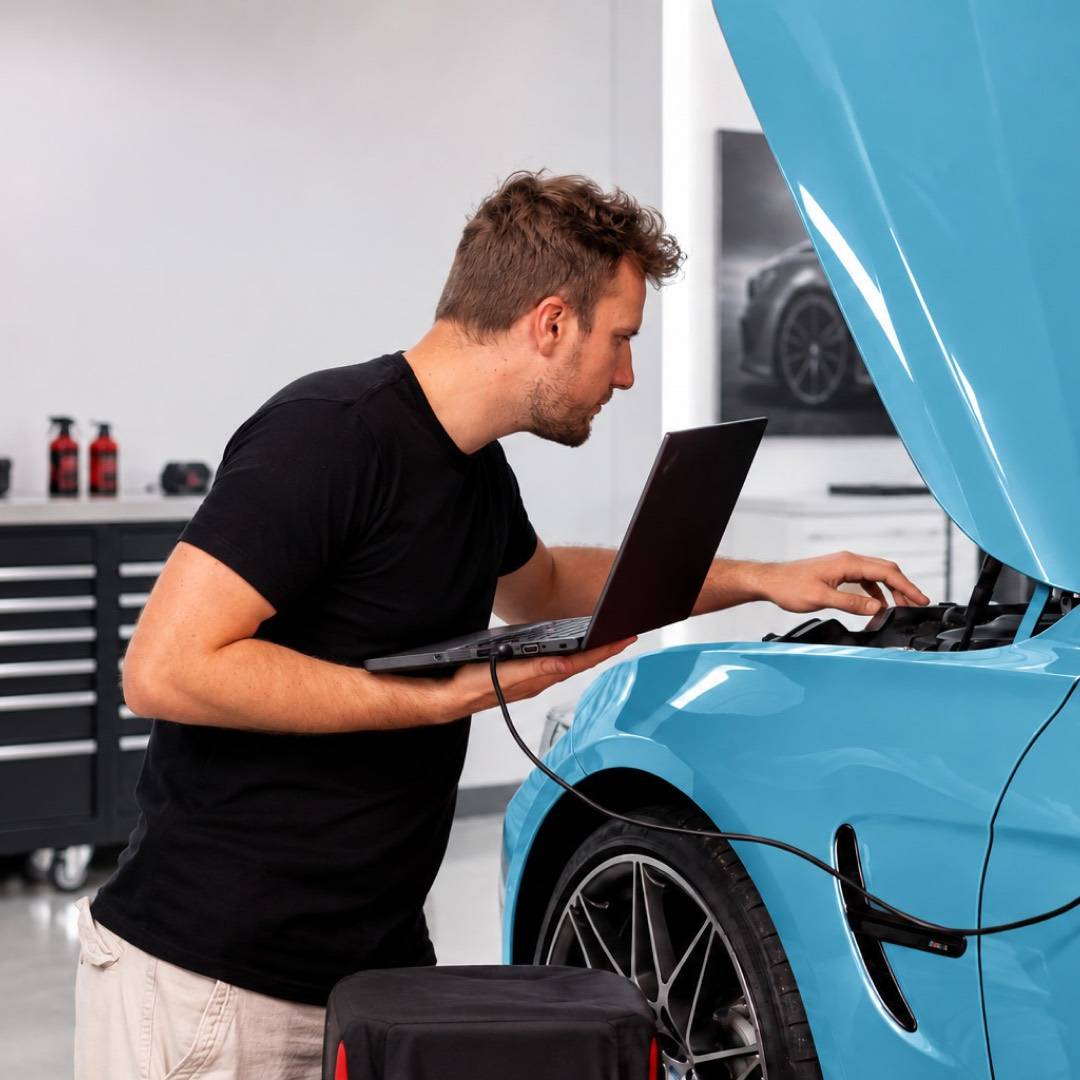 Inspect the negative terminal.
Look for corrosion, loose fittings or a damaged connector. Clean and tighten everything – sometimes, that's all it takes.- Read the fault codes.
A regular OBD-II reader won't do much here. Use BMW-capable diagnostic software or an app to read the codes stored in the DME. If any code mentions the IBS, you're on the right track. - Check live data.
A good diagnostic tool will show the IBS readings. If the voltage, current or temperature values make no sense compared with what you measure yourself, the sensor is likely faulty. - Measure the parasitic draw.
If the battery drains overnight, measure the current draw with the car asleep. A high draw points to a module that won't turn off rather than the IBS itself.
If you'd rather not do it yourself, any independent BMW mechanic or the official dealership can run the diagnostics for you – next time your car is in for an oil change, for example. The process shouldn't take long, but make sure to confirm the service pricing, since some dealerships overcharge you (and not the battery... get it?).
What to Do When the IBS Fails
The good news: replacing an IBS is one of the easier jobs on a BMW.
In many models, the IBS sensor BMW fits from the factory comes as part of the negative battery cable, so you replace the whole assembly. With the car off, you disconnect the negative terminal, swap the cable, and connect everything back up – it's usually done in under an hour. As for prices, expect roughly $200–350 for a genuine BMW one, depending on the model. Shops typically add $75–150 for labor.
Two things to keep in mind:
- Don't bypass the IBS.
Without it, the DME can't manage charging properly, and you'll end up with other issues later on. - Register the battery when needed.
If you've changed the battery along with the sensor – or because of it – the car must be told about it. Otherwise, it will keep charging the new battery as if it were the old, worn one.
Replaced the Battery? Don't Forget About Registering It
Battery registration tells your BMW that a new battery has been installed, so the IBS and the DME can reset their data and adjust the charging strategy. Skipping it can shorten the new battery's life, lead to overcharging or undercharging, and even cause electrical faults.
You don't have to go to the dealership for that – and you can save some money, too. With our BMW Battery Registration remote coding service, our technician registers your new battery remotely, while you stay at home:
- Fast – the remote session takes less than 30 minutes.
- Easy to prepare – all you need is a Windows laptop, a Wi-Fi connection and the coding cable (available as an add-on).
- Compatible with BMWs from 2002 onward.
Just send us photos of your new battery's label, connect your car, and we'll take it from there.
To Sum It All Up
The IBS is a small sensor on your battery's negative terminal that measures voltage, current and temperature, and helps your BMW decide how to charge the battery and power its electronics. When it fails, you might see battery warnings, a dead battery, a disabled Auto Start-Stop or random electrical problems. Check the battery and connections first, read the codes, and if the IBS is to blame – replace it. And whenever a new battery goes in, remember to register it properly.
Had an IBS problem in your BMW? Leave a comment and share your thoughts. Thanks for reading!
FAQ
Comments(0)
All ratings
Popular posts:



and get to know all compatible products for your BMW or MINI
Where to find your VIN?