


Radoslaw Zbroinski
Jul-31-2026
Toyota EV Manual Transmission – Why It's NOT a Total Travesty
Are you a true gearhead like me? Then you should be really interested in one of Toyota’s recent performance endeavors. Since 2022, they have been working on a sort of stick shift for electric cars. In this article, I’m going to tell you more about this thing – how it works, why it’s not a real manual transmission, and if it’s still something we should be rooting for. Spoiler: I fully believe we should, as this could define the future of fun cars.
A Word of Context – Why Does Manual Gearbox Matter?
Before I dive deeper into Toyota's new invention, allow me some explanation to get us on the same tracks for some of the deliberations I want to share with you. Note: if you already believe that a stick shift usually warrants a more fun and engaging driving experience, you can skip this part and go straight to the next section. This part is meant for those who either never drove manual or don't understand its appeal; I'll do my best to explain it to you without trying to convert you.
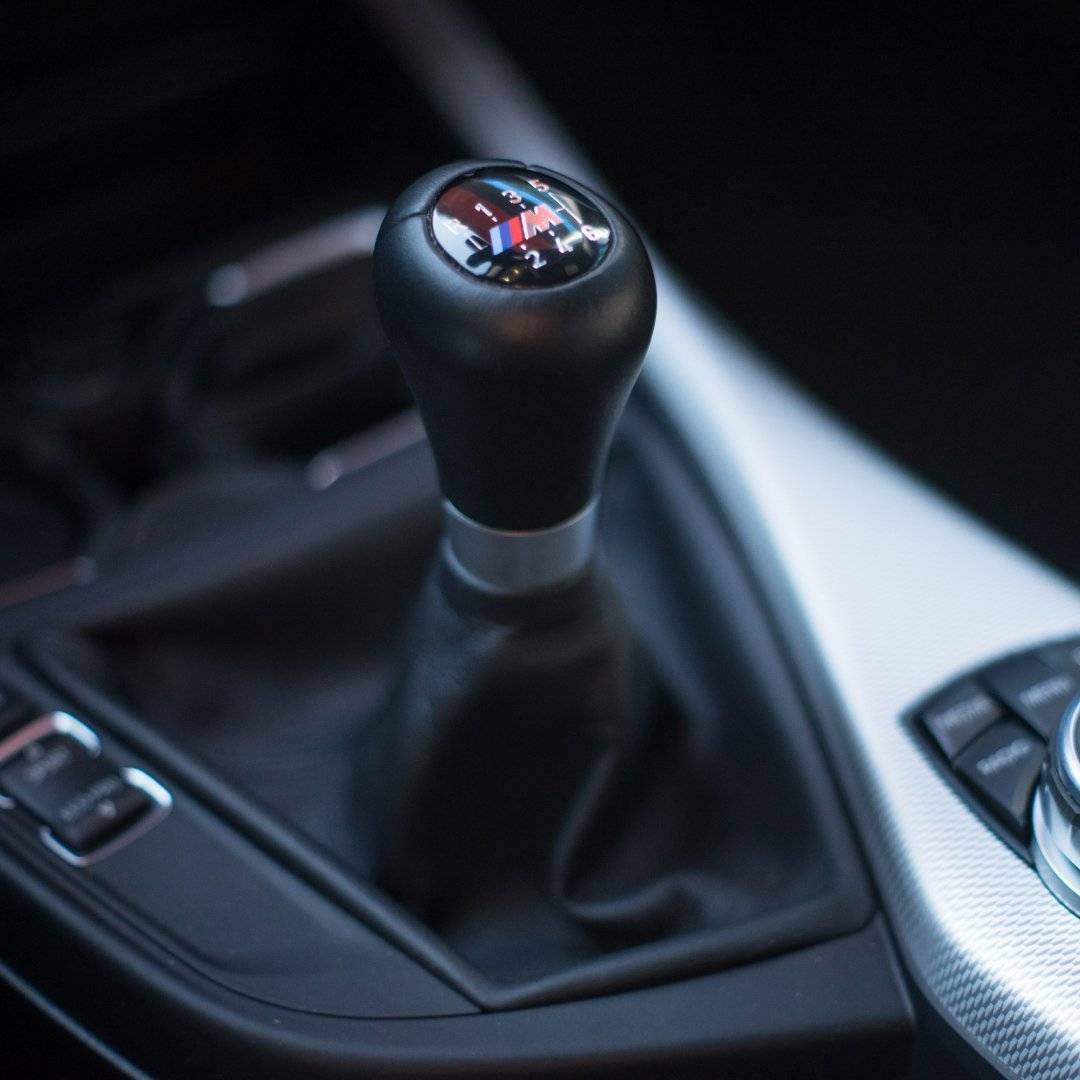 The magic and the cult following of manual transmissions among car enthusiasts stems from the engagement they offer – but what exactly is said mythical driving engagement? As you know, driving enjoyment comes in different shapes and colors; it's a strictly personal matter and I won't even try arguing with that. For some, it's having a nice sound system on board and being able to listen to their favorite tunes during everyday commute. For others, it's being able to overtake virtually everyone in a stupid-fast car, regardless of the transmission.
Then there are the stick shift folk, for whom it's all about... not screwing the gear changes up.
No, really. While the above is a humorous exaggeration, 99% of the manual fans will agree with me that the continuous perfecting of your gear change skills is a huge part of the driving joy. You start in your dad's old beater with a sloppy shifter, your sole goal being to not stall the car before an intersection.
If you stick to manuals after that (see what I did there...?), you reach yet another tier when you stop stalling the engine altogether and no longer think about doing the shifting; it just happens, like breathing. Next, you focus on getting your footwork improved, working on a more precise control of the accelerator and clutch pedals. This gets you hooked on trying to make the gear shifts as smooth as possible, which then results in you learning how to heel-and-toe shift and rev matching (i.e., blipping the throttle between gears).
So, the point with a manual transmission is that not only is there so much to learn, but that your effort directly translates into what's happening with your car. You are fully responsible for the violent jolts of botched gear changes, but you are also fully responsible for the buttery smooth ones. This allows for a better connection to your car, as it becomes more of a symbiotic exoskeleton rather than just a box on wheels you're sitting in.
The key takeaway is that a decent manual transmission will make even a pretty slow car much more fun for you, if you like to drive stick. With that out of the way, let's get to the star of this show...
How Does Toyota EV Manual Transmission Work?
The prototype was first shown in a Lexus UX300e electric car in 2022.
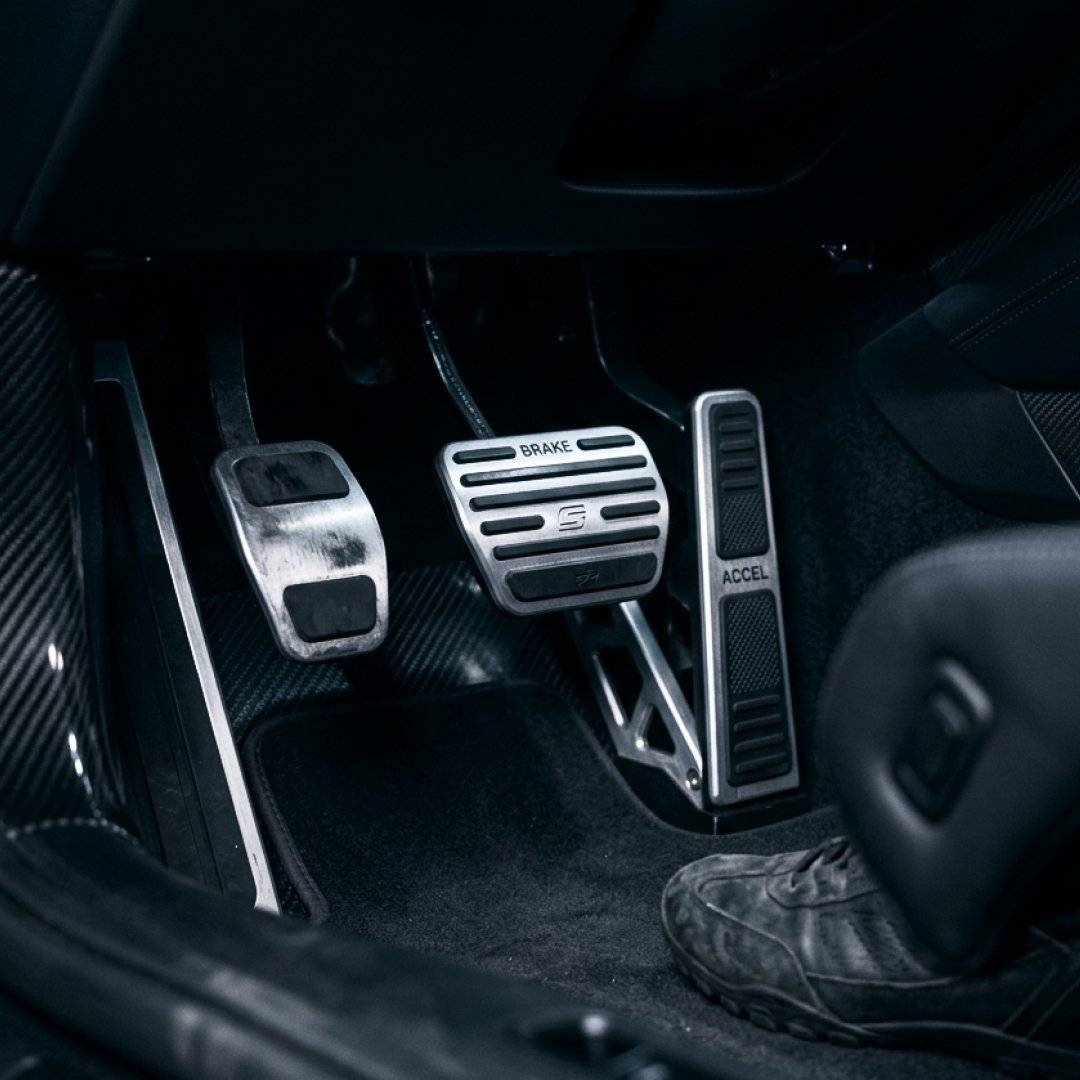 Based on the patent drawings, Toyota’s manual gearbox for EVs closely resembles an actual manual transmission. Physically, the setup consists of a clutch pedal and an H-pattern six-speed shifter, complete with a spherical knob and what looks like a lockout collar for the reverse gear. If you haven’t driven a manual: it’s the little ring below the shifter knob that you pull up with your fingers to allow the shifter to go into reverse.
That’s not everything we know from the information included in the patent application. According to Toyota’s engineering team, the whole system is meant to emulate much more than just the operation of manual’s physical controls. So, apart from that, you’ll be able to… make mistakes.
Release the clutch pedal too fast or without enough gas and wham! You’ve just stalled your EV. Noticing too much jerkiness when driving? You’re probably in the wrong gear, too high for the load or speed. All accompanied by a synthesised engine noise – one of many, since that’s supposed to be selectable by the driver.
Okay, but how exactly does that work?
While the clutch pedal and shifter are both real, they don’t seem to be connected in any way to the engine… I mean, the electric motor. Instead, they both send signals to the ECU, which then interprets all the relevant data (including the one from the virtual engine speed calculator) and simulates the desired engine behavior. In short: the manual EV system uses software to control torque delivery.
For example, if it detects engine stalling conditions, it will cut the electric motor’s torque and apply the brakes. Similarly, it should also be able to simulate the joltiness of an imperfect gear change. If you want to see it in action, check out the video below.
Fake Manual or the Savior of Driving Fun? Pros & Cons
It’s obviously too soon to say if the idea is brilliant or bad. Heck, we don’t even know if it will make it to the market – ultimately, Toyota might abandon it at some point. What we do know currently is the concept’s operating principles and from that we can make some assumptions.
- Upside #1 – Customization potential
Since the clutch and shifter are physical, some degree of mechanical adjustment might be possible for both of them. A screw to tighten, a lever to move, or a button to press on the touchscreen – either way, making these mechanisms adjustable doesn’t seem like a stretch. Moreover, being able to make the shifter more notchy or the clutch pedal harder to depress would tie in nicely with the various selectable engine sound presets. Better yet, if Toyota ever decides to put this idea into production, they could allow full-on customization.
The other aspect of such adjustability or customization is the fact that there could be an option for the stall threshold or even an outright gear change assistance. Hardcore manual fans will sneer at the idea, but this could make the performance car market more accessible, which also means more profitable for other companies to get into. Finally, the last use case for “easier” manuals would be in driving schools, especially in the markets where gasoline cars with manual transmission are still very popular.
- Upside #2 – It exists
Let’s be real: nowadays, car makers mostly don’t care about automotive enthusiasts. It’s all about profits, cheaping out on the interior materials, and emission norms compliance. Everything that’s geared towards driving fun instead of the other stuff is a welcome addition.
That being said, there are some potential drawbacks to this whole concept as well.
- Downside #1 – Watered-down mechanical nature
As someone pointed out in the comments under one of the testing videos, the shifter sounded… pretty underwhelming, to say the least. Or cheap, to be more direct. They compared it to a budget stick shift set for racing simulators, which seems to be pretty accurate. Looking at how the driver actuated it in the video, it lacked the notchiness of a real manual transmission – you could just hear it click lightly into place.
- Downside #2 – Synthetic feeling
This one highly depends on how well put together the whole system is. This means both the mechanical parts and the programming. Fake engine sounds are one thing, but how well will the ECU be able to emulate stalling? Or the joltiness of hard gear shifts?
The key and the main challenge for Toyota’s engineers would be to translate the fully mechanical experience into a hybrid, mechanically-electronical environment. It’s been done with the electric power steering, which nowadays rivals hydraulic systems in terms of providing feedback and doesn’t spoil the fun even in sports cars. Will the same be true for Toyota EV manual transmission? We’ll see (maybe).
Clutch Pedal for Your EV – Is Electrification Killing All the Fun of Driving?
If you don’t live under a rock and are an automotive enthusiast, you’ve got to share our respect for Toyota’s sporty “experiments” of recent years. After all, that’s kinda what brought us, a BMW-centered company, closer to this brand as well – yes, I’m talking about their little Z4/Supra collab. A revival of an iconic JDM sports car that’s NOT a crossover* and is packed to the brim with the finest Bavarian tech? Yes, please!
*Yes, Mitsubishi, I’m looking at your hideous Eclipse revival. No, adding “Cross” to its name doesn’t make it any better. Yuck…
Anyway, when I heard about yet another crazy idea from Toyota’s motorsport-loving engineers, I just couldn’t ignore it. It’s a good moment for full disclosure though: I am not too fond of EVs in general. I love naturally aspirated engines and, personally, prefer the driving experience a manual transmission provides, even at the cost of the immense comfort an automatic one offers.
Nevertheless, I am also a realist and I can’t deny that electric cars are here to stay and might get even more popular than they already are right now. How soon? Hard to tell. Will they become more popular than gasoline-powered vehicles or fully replace them? I don’t think so. But, and this is really important, I strongly believe that EVs are not the main reason for why we’ve been getting less and less manual transmission cars in the past years.
Stick shift has never been too popular in the United States to begin with. In 2001, manuals accounted for around 28% of all car sales here, compared to 91% in the key European markets. Fast forward to 2024 and only 1–2% new registered cars were manual in the US. For Europe, that number dropped to approximately 29%.
People just don’t want to drive stick anymore. Automatic transmissions are currently so advanced that they often offer better mileage than manuals. At the same time, they are much cheaper than they used to be, so they don’t really add much to the sticker price of new cars. And while they don’t offer nearly as much engagement, they are simply more comfortable day to day.
To answer the question from the subheading above tho: no, it's not the electrification that's killing the fun cars. It's us, the buyers, that don't really want them as much anymore. If anything, EVs allow a different kind of fun and some automakers are currently exploring this domain just like Toyota does – just take a look at Hyundai's N Division cars, like the IONIQ 5 N.
It's stupid fast and offers simulated manual mode, controlled by paddle shifters. Similar to what we discussed about Toyota's concept, it also enables drivers to change between artificial sound presets, to add the acoustic layer to the experience. Then there are cars like Tesla Model 3 Performance, Porsche Taycan, or Audi RS e-tron GT, which all have extremely high power outputs and sport-tuned suspension. All meant to provide their users with driving excitement.
So while there are fewer manuals available on the market, performance-oriented vehicles in general are still here. It just seems like they are evolving to the current trends and consumer needs.
Manual Transmission EV Cars – The Future of Performance?
If I was to answer the question of “what makes a car fun?”, manual transmission would definitely be one of the ingredients. But there are others, which can be mixed and matched in various proportions, all depending on which of the following aspects are important to you:
- Acceleration
- Handling
- Sound
- Engagement
- Comfort
It’s also made all the more difficult since chasing either one of these in particular pretty much always means compromising in others. Let’s take handling and comfort, for example. Stiffer suspension and low profile tires are great for handling, but they will get tiresome on uneven roads. Going for the engagement of a manual will compromise the comfort a bit – especially in stop-and-go traffic, where auto is simply king.
All that rumbling aside, the point I’m trying to make is that driving enjoyment is a zero-sum game and that manual EV transmission might not be the future of performance. However, it sure would be a great option to have.
Comments(0)
All ratings
Popular posts:


and get to know all compatible products for your BMW or MINI
Where to find your VIN?