


Radoslaw Zbroinski
Jun-05-2026
Bimmerpedia: BMW 5 Series History & Model Overview
What Is the BMW 5 Series & Where Does It Sit in the Lineup?
BMW 5 Series Specs & Versions
BMW i5 – The All-Electric 5 Series
BMW 5 Series Touring (Wagon)
BMW M5 – The Performance Flagship
Complete BMW 5 Series History
The 5er & Its Rivals – How Does It Stack Up?
A Lemon or Not? BMW 5 Series Reliability
How to Get the Most Out of Your BMW 5 Series
Is the BMW 5 Series a Good Car?
Ready to dive into the world of BMW's executive sedan benchmark? The BMW 5 Series is the car that has spent five decades proving you can have genuine driving pleasure without giving up the boardroom-ready image. It's the sensible-shoes choice that somehow still corners like it has something to prove – the business suit that secretly does CrossFit on weekends.
Coming up, we'll learn:
- About the history and specifications of the BMW 5 Series.
- What the different 5 Series generations are.
- The differences between various 5 Series variants.
- If the BMW 5 Series is reliable.
- How to get the most out of your 5er.
Enjoy the read!
What Is the BMW 5 Series & Where Does It Sit in the Lineup?
The BMW 5 Series is a mid-size executive sedan present in the BMW's lineup since 1972. It slots neatly between the compact 3 Series and the flagship 7 Series, offering most of the luxury and road presence of the big limousine while keeping enough of the 3 Series' agility to remain genuinely fun to drive. The "5er" gives you a spacious, high-tech cabin, but it doesn't isolate you from the driving experience the way a 7 Series sometimes does.
For a lot of buyers, it's the sweet spot in the entire range – big enough to matter, small enough to enjoy.
It's also BMW's oldest nameplate still in production and the first model line to use the three-digit naming system. When BMW introduced the 520 at the 1972 Frankfurt show, the "5" denoted the model line and the following digits indicated engine size. Since then, the naming convention has changed a bit though, with the two last digits referring to the power tier instead of the displacement.
The current eighth-generation BMW 5 Series (codenamed G60 for the sedan and G61 for the Touring wagon) starts at around $60,500 MSRP for the four-cylinder 530i. The xDrive version of the same engine is priced at $62,800 and the 540i (available exclusively with AWD) costs $67,700.
Moving up the bracket there are also the PHEV and all-electric variants:
- BMW 550e xDrive – $75,500
- BMW i5 eDrive40 – $67,100
- BMW i5 xDrive40 – $70,100
- BMW i5 M60 – $84,100
- BMW M5 – $123,300
While the lineup is not as rich as we were used to in the past, there are still plenty options to choose from. Please note that these prices are provided as of June 2026 and are subject to change.
BMW 5 Series Specs & Versions
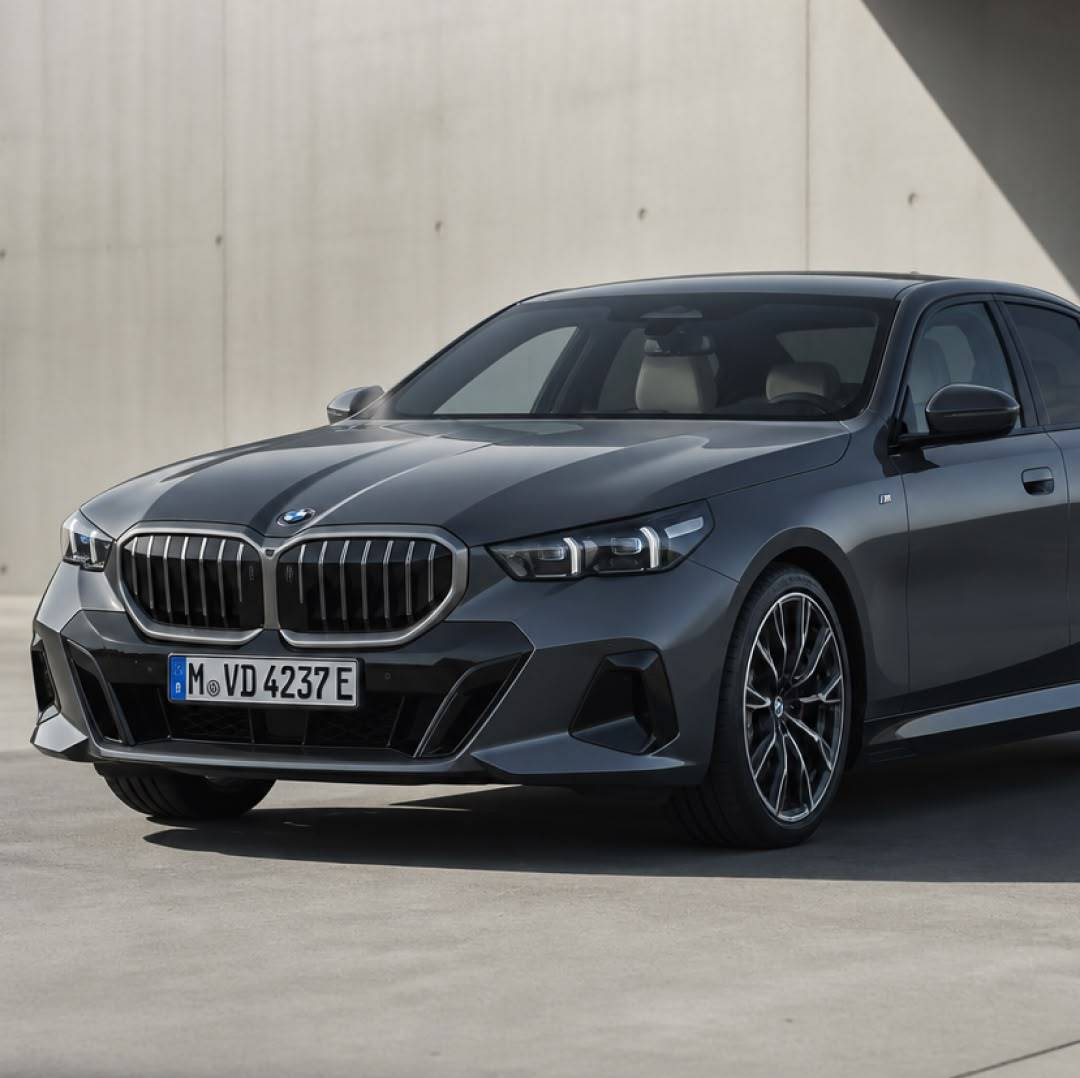 The G60 generation offers a powertrain for nearly every preference. As you could see earlier, there are gasoline four- and six-cylinder models, plug-in hybrids (including a monstrous V8-based one), and fully electric variants sharing the same body. Not every engine reaches every market, but the U.S. lineup is refreshingly straightforward.
The 530i runs a turbocharged 2.0-liter four-cylinder making 255 hp and 295 lb-ft of torque, available in rear-wheel drive or all wheel drive. The 540i xDrive steps up to a 3.0-liter turbocharged inline-six with 375 hp and 398 lb-ft, sold only with xDrive. The plug-in hybrid 550e xDrive pairs that same straight-six with a stronger electric motor for a combined 483 hp and 516 lb-ft.
Last but not least, there is the flagship gasoline version: the BMW M5 that has the S68 V8 engine supported by a PHEV system. This one produces a whopping 717 hp and 738 lb-ft of torque combined – and it's the quickest of the bunch (duh). Every one of the ICE models relies on the familiar ZF eight speed automatic transmissions to put the power down.
| Model | Engine | Power / torque | 0–60 mph |
| 530i / xDrive | 2.0 L turbo I4 | 255 hp / 295 lb-ft | 5.9 s / 5.8 s |
| 540i xDrive | 3.0 L turbo I6 | 375 hp / 398 lb-ft | 4.4 s |
| 550e xDrive | 3.0 L turbo I6 + EV motor | 483 hp / 516 lb-ft | 4.1 s |
| i5 eDrive40 | Single electric motor | 335 hp / 295 lb-ft | 5.4 s |
| i5 xDrive40 | Dual electric motors | 389 hp / 295 lb-ft | 4.9 s |
| i5 M60 xDrive | Dual electric motors | 593 hp / 586 lb-ft | 3.7 s |
| i5 M60 xDrive | Dual electric motors | 593 hp / 605 lb-ft | 3.7 s |
| M5 | 4.4 L V8 + PHEV system | 717 hp / 738 lb-ft | 3.4 s |
What's the standout takeaway from the table and our observation? The 540i xDrive is the value pick of the lineup. The price jump over the 530i is small, but the move from four to six cylinders transforms the car's character.
Dimensionally, the G60 stretches about 199.2–200.6 inches long and 74.8–77.6 inches wide, making it noticeably larger than 5 Series models of the past – this generation is bigger than some older 7 Series. Standard equipment is generous too, with heated front seats now included across the board, a curved display running the latest iDrive system, and a long list of safety features.
Speaking of which, the 5 Series comes well-stocked with driver aids. It's got active cruise control, lane departure warning, and an available head up display that projects speed and navigation onto the windshield. Higher trims offer integral active steering, which turns the rear wheels slightly to sharpen low-speed maneuvering and stabilize high-speed lane changes.
BMW i5 – The All-Electric 5 Series
For the first time, the 5 Series is available as a fully electric car built on the same body as its combustion siblings. The i5 isn't a separate model line – it's the 5 Series with an electric motor (or two) instead of a gasoline engine.
The rear-wheel-drive i5 eDrive40 uses a single motor producing 335 hp, while the range-topping dual-motor i5 M60 xDrive cranks out 593 hp. Both draw from an 84.3 kWh battery and BMW claims an all electric range of up to 295 miles for the efficiency-focused eDrive40 (EPA-dependent on wheels and configuration). It supports DC fast charging up to around 205 kW, enough to recover most of the range in roughly half an hour.
BMW 5 Series Touring (Wagon)
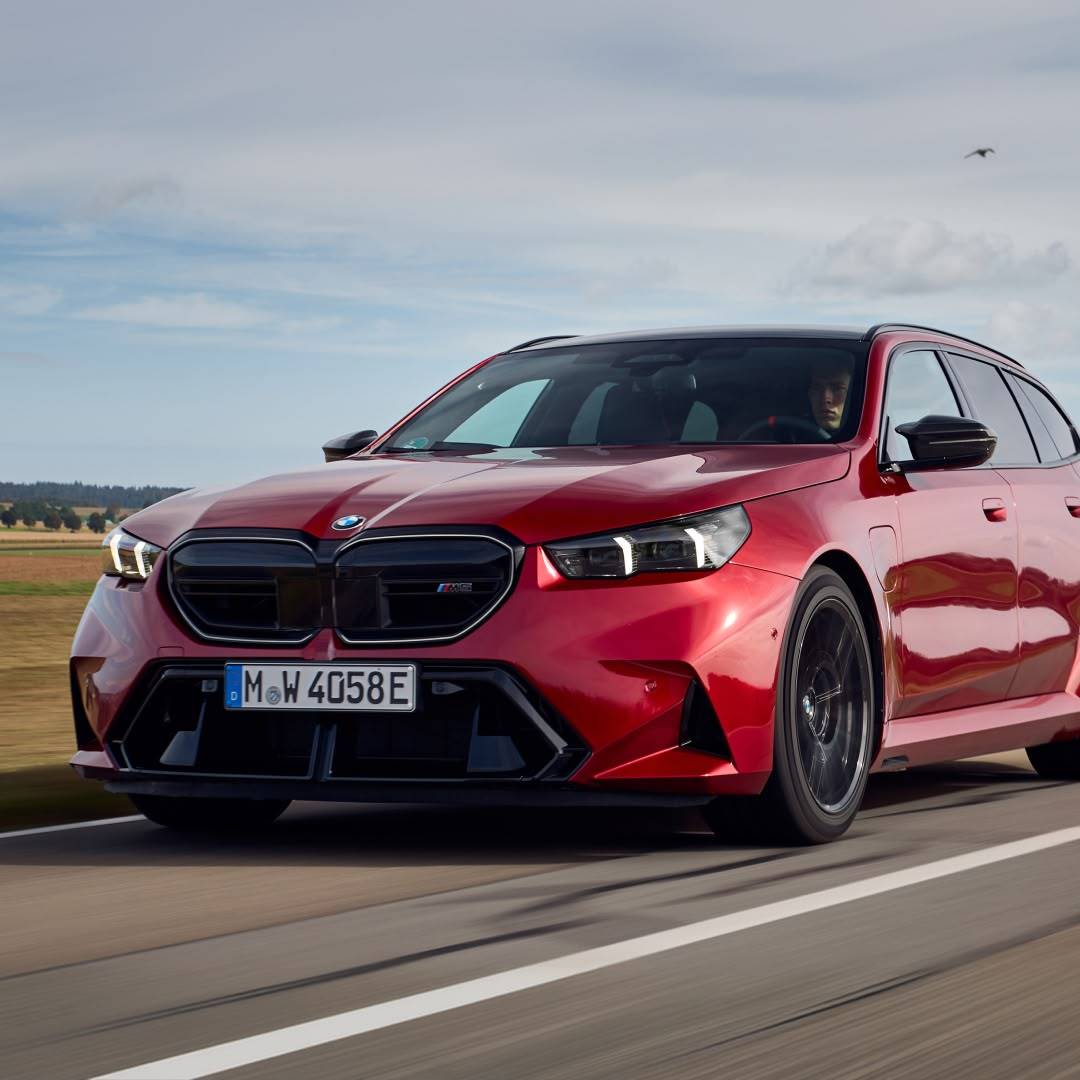 The wagon body style returns in the G61 5 Series Touring – though, as usual, American buyers are mostly left wishing. The conventional Touring isn't offered in the U.S., where the only 5 Series wagon you can buy is the high-performance M5 Touring. The rest of the world gets the regular version too, combining the sedan's road manners with substantially more cargo room and that distinctly European wagon cool. It's a recurring heartbreak for U.S. enthusiasts, who've watched BMW reserve its best longroofs for other markets for years.
BMW M5 – The Performance Flagship
The M5 has crowned the 5 Series range since the E28 generation and the latest G90 version goes further than ever – arguably to a fault. It pairs a twin-turbocharged 4.4-liter V8 with a plug-in hybrid system for a combined 717 hp and 738 lb-ft of torque.
All that power comes with a giant catch: weight. The new M5 tips the scales at well over 5,000 lbs, a consequence of stuffing a hybrid battery into an already large sedan. It's blisteringly fast in a straight line, though purists miss the lighter, simpler M5s of generations past. For the first time, an M5 Touring wagon is also offered – and unusually, it's sold in the U.S.
Complete BMW 5 Series History
The 5 Series story spans eight generations and over five decades, making it one of the most consistent nameplates in the business.
It began with the E12 (1972–1981), the car that launched BMW's three-digit naming system. Designed under Paul Bracq with input from Bertone's Marcello Gandini, the first generation started with four cylinder engines before adding six-cylinder models a year later. There was no M5 yet, but the M535i previewed what was to come.
The E28 (1981–1988) looked similar to the E12 but was substantially re-engineered. It gave us the very first M5 – a discreet sedan with a motorsport-derived engine that effectively invented the super-sedan genre.
The E34 (1988–1996) is regarded by many as a high point. It was the first 5 Series available with all-wheel drive and the first offered as a wagon, broadening the range considerably while building a reputation for tank-like build quality.
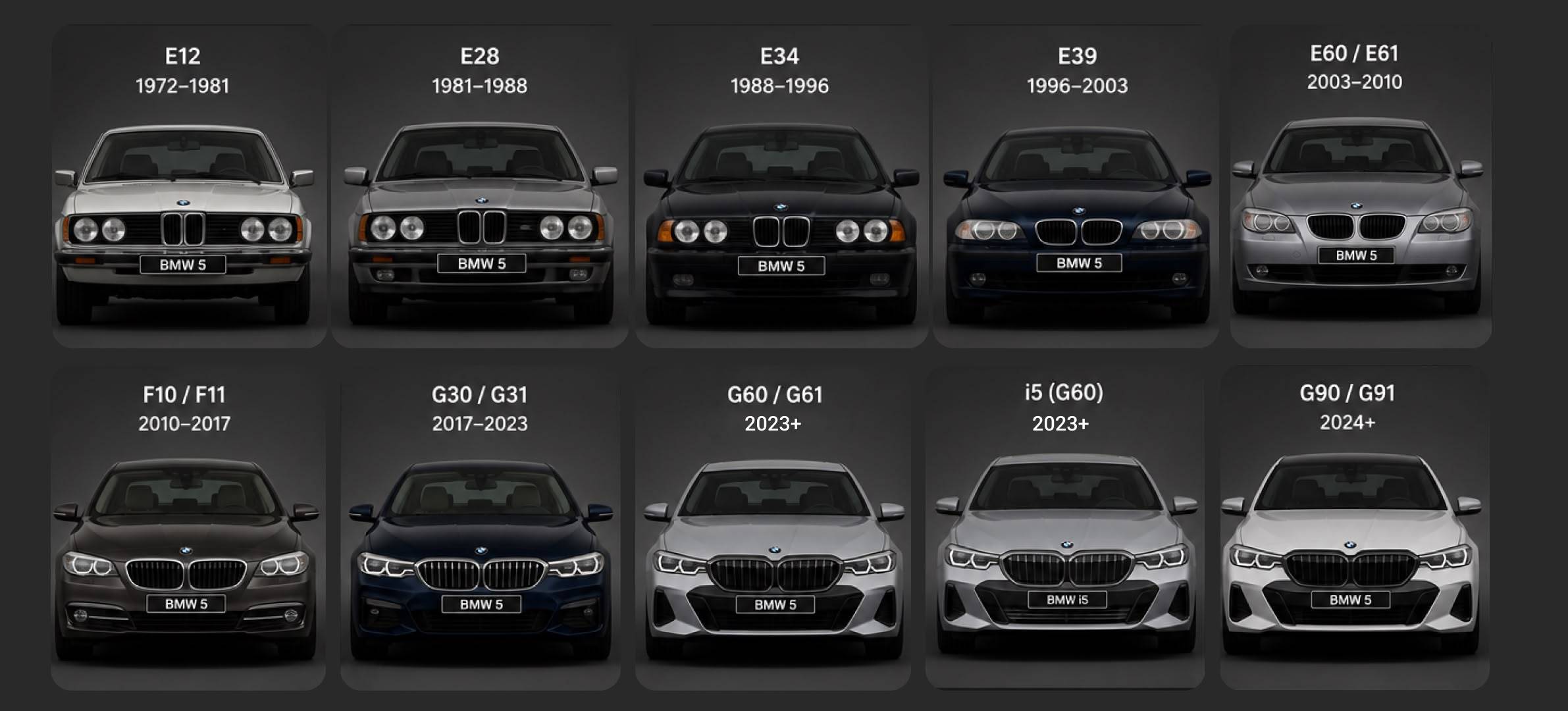
The E39 (1995–2003) is the one enthusiasts get misty-eyed about. With near-perfect weight distribution, gorgeous styling, and the iconic E39 M5's V8, it's widely considered the best-driving 5 Series ever made. Plenty of people would put it on a list of the best sedans, full stop.
The E60 (2003–2010) was the controversial one, courtesy of Chris Bangle's polarizing design and the debut of the iDrive system, which baffled owners at launch. It also introduced features like active steering – innovative, occasionally infuriating.
The F10 (2010–2017) smoothed out the controversy with cleaner styling and turbocharged engines across the range. It was the first 5 Series to feel genuinely tech-forward, and it even spawned the oddball 5 Series Gran Turismo – a tall hatchback that nobody asked for and few bought.
The G30 (2017–2023) refined the formula further, adding plug-in hybrid options and increasingly sophisticated driver assistance. It was a quietly excellent car that did everything well without making a fuss.
Which brings us to today's G60 (2023–present) – the largest, most high tech, and first electrified-from-the-ground-up 5 Series yet.
The 5er & Its Rivals – How Does It Stack Up?
The executive sedan segment is shrinking as buyers defect to SUVs, but the remaining contenders are fierce.
The Mercedes Benz E-Class is the eternal rival of the BMW 5 Series, prioritizing plush comfort and back-seat serenity over driver engagement. It's the choice for those who'd rather be driven; the 5 Series is the one you actually want to drive yourself. The E-Class also tends to cost more.
The Audi A6 counters with its slick interior and Quattro all-wheel drive, but, as with the A4 versus 3 Series matchup, it generally can't match the BMW's rear-biased handling balance. Audi loyalists will disagree, preferably from a snowy parking lot where Quattro shines.
The Genesis G80 has crashed the party with genuine value, a handsome cabin, and a lengthy warranty. What it lacks is the badge prestige and the dialed-in chassis the Germans have spent decades perfecting – but it undercuts them on price significantly.
The 5 Series' enduring strength is balance. It does luxury, technology, performance, and everyday usability competently, without forcing you to pick just one. That well-roundedness is exactly why it's been a segment benchmark for fifty years.
A Lemon or Not? BMW 5 Series Reliability
Like most German luxury cars, the 5 Series reliability depends heavily on which generation you're looking at and how diligently it was maintained.
Older models carry the usual premium-car baggage. The E60 in particular earned a reputation for electronic gremlins and complex systems that aged expensively – Consumer Reports and owner surveys alike flagged it. Cooling system components, electric water pumps, and oil leaks from valve cover and oil filter housing gaskets are recurring themes across several generations.
The current G60, like the latest 3 Series and X3, benefits from BMW's more mature B-series engines. The B48 four-cylinder and B58 inline-six have proven very robust when properly serviced, and the eight-speed automatic is widely regarded as one of the best transmissions in the business. The wild card is the electronics – this is the most software-dependent 5 Series ever, and complex tech means more potential failure points as the miles pile on.
The rule with any 5 Series is the same as with any BMW: maintenance isn't optional. Stick to regular service intervals (shorter than recommended), use quality parts, and address warning lights promptly. Parts and labor will cost more than a mainstream brand, so budget accordingly.
How to Get the Most Out of Your BMW 5 Series
The 5 Series makes an excellent platform for personalization, whether you're improving an older model or adding the features BMW left off the options sheet. A few of the upgrades owners appreciate most:
- Apple CarPlay retrofits – older 5 Series models that shipped without smartphone integration can gain full Apple CarPlay and Android Auto functionality through coding or a hardware retrofit, modernizing the iDrive system without replacing the whole unit.
- Premium audio upgrades – the standard sound systems are acceptable, but "acceptable" is a low bar in a luxury sedan. Plug-and-play speaker and amplifier upgrades transform the cabin into something genuinely concert-worthy, without sacrificing factory aesthetics.
- Comfort and convenience retrofits – features like a power trunk, upgraded displays, or ambient lighting bring older 5 Series cars closer to current-generation luxury for a fraction of the cost of upgrading the whole car.
If you'd like to dig into what's possible for your specific model, decode your VIN and browse the compatible upgrades – it's the easiest way to see what your particular 5er can accept.
Is the BMW 5 Series a Good Car?
After walking through its history, specs, and quirks, the verdict is an easy yes – the 5 Series remains one of the best executive sedans you can buy.
It delivers a combination of driving engagement, luxury, technology, and everyday practicality, with a powertrain range spanning efficient four-cylinders to a 717-hp hybrid V8 and a fully electric i5. There's a version for almost everyone in the segment.
The trade-offs are the familiar ones: higher running costs, premium fuel, and the increasing complexity that comes with all that technology. But for buyers who value how a car drives and are prepared for the realities of premium ownership, the 5 Series continues to justify its fifty-year reputation. The roundel on the hood comes with both privileges and bills – the 5er, more than most, makes the privileges worth it.
FAQ
Comments(0)
All ratings
Popular posts:


and get to know all compatible products for your BMW or MINI
Where to find your VIN?