
























[[post.title]]
We're changing for you!
Check out our new website 
We're changing for you!
Check out our new website
BMW Original Parts
Search by VIN
Search by VIN
Apr 29, 2026
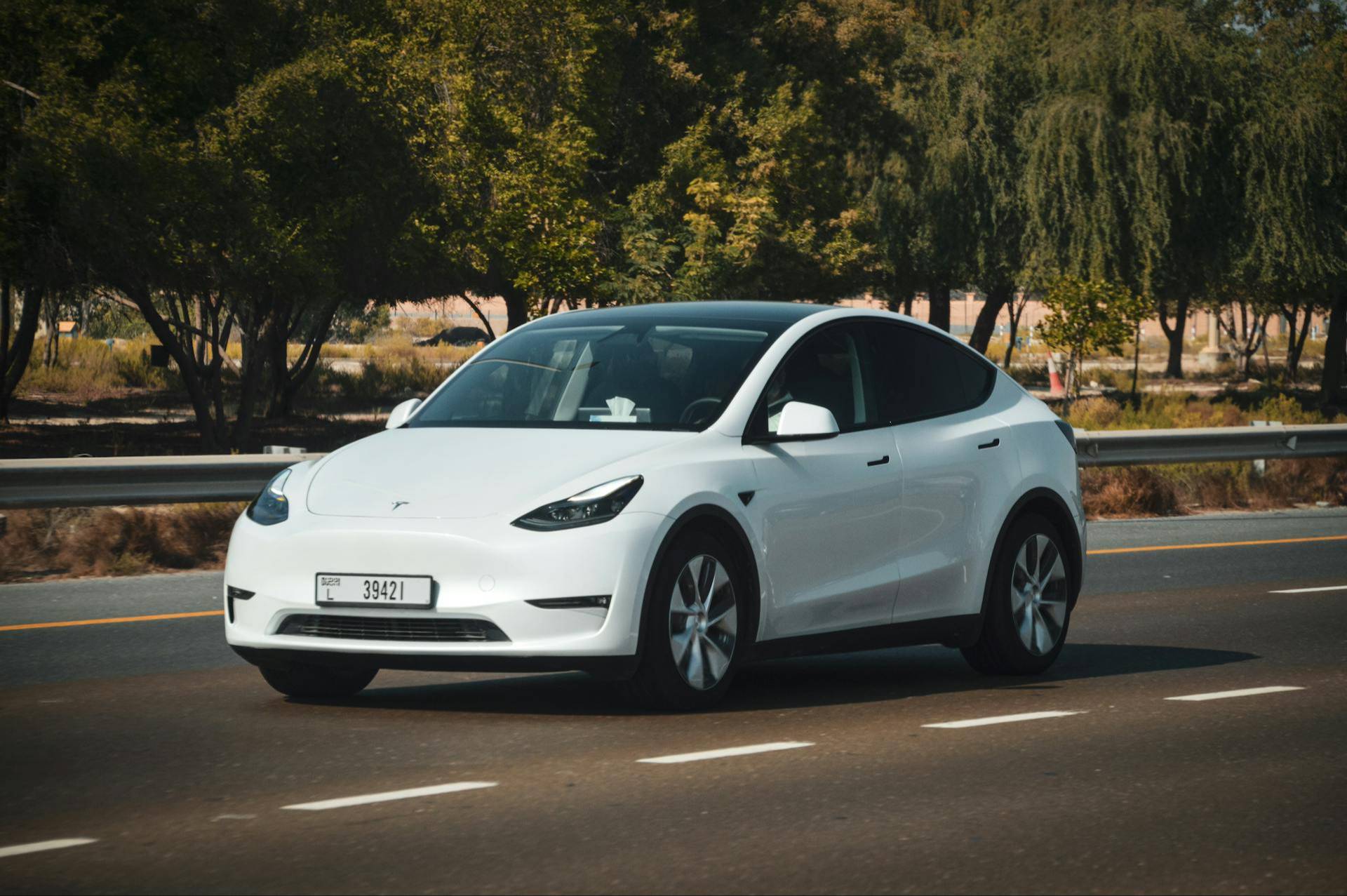
Buying a Tesla is full of decisions. Motor configuration, range, color, wheels… and somewhere further down the spec sheet, almost as an afterthought, the audio system. But if you spend a meaningful amount of time in your car, the sound system matters more than that spec-sheet placement suggests.
The Tesla Model Y currently comes in two audio setups depending on the trim. You can get a 7-speaker Standard system in the base trims or a 15-speaker Premium sound system in the Premium and Performance variants. On paper, that’s a straightforward choice. In practice, the difference between them is significant enough that it’s worth understanding before you configure your car – not afterwards.
Coming up in this article:
Let’s get into it!
Tesla designs and tunes its audio systems in-house – they don’t partner with Harman Kardon, Bose, Bang & Olufsen, or any of the usual suspects you’d find in a BMW, Mercedes, or Volvo. That said, they’re not starting from scratch.
In the past, Tesla has hired engineers from some of those very companies (B&O alumni among others) to build what is effectively a proprietary audio system. So when someone asks “what is the Tesla Model Y sound system brand?” – the answer is just Tesla. Made by some very experienced audio people, but Tesla.
The speakers and components are manufactured to Tesla’s spec and the tuning is done internally. It’s their original setup, not a rebadged product, which is both a point of pride for Tesla and a reason why aftermarket speaker upgrades require a bit more thought than on a typical car.
Across the Model Y lineup, this translates into two distinct audio configurations: the Standard 7-speaker system and the Premium 15-speaker system, as mentioned in the intro. Which one you get depends entirely on which trim you buy.
The Standard audio system comes fitted to the base RWD and AWD Model Ys in the US (as of May 2026). In the past, Tesla quietly renamed it a couple of times – “Custom” is how it was called on their website at some point. Which is an interesting choice for a system that is, by any measure, the lesser of the two options. Anyway…
Marketing semantics aside, here’s what the 7-speaker setup includes:
A quick note on the “hidden speakers” lore: older Model Y variants had speaker locations in the body that weren’t connected on non-premium trims and some early owners found ways to activate them. Those days are gone on current production – the wiring simply isn’t there anymore.
The premium audio system is currently fitted to all Premium and Performance Tesla Model Y variants. It’s a 15-speaker setup powered by two amplifiers, and the difference in scope is immediately obvious:
For context: a 2025 BMW X3 with a Harman Kardon system runs 16 speakers at 464 W total. Tesla’s premium system, with three fewer speakers, puts out nearly 100 W more. Speaker count alone doesn’t tell the whole story though – it’s also about the placement, cabin design, and DSP tuning – but it does show Tesla isn’t just playing the spec sheet game.
That second to last point is also the most consequential.
Without a dedicated subwoofer, low-end reproduction in the Standard sound system is handled entirely by the door woofers, which have some limits. You’ll get usable bass at moderate volumes, but push it and the low-end either muddies or simply disappears. The single-amplifier setup also limits total headroom and the ability to tune individual speaker channels independently.
Is it genuinely terrible? No. People coming from mainstream vehicles often find it acceptable – clean enough at normal volumes, fine for podcasts and casual listening. But if you’ve heard the Premium system, you’ll immediately feel the ceiling the standard setup hits. And for anyone who actually cares how music sounds in the car, that ceiling will become frustrating.
The rear coverage in the Tesla Model Y Premium sound system is also meaningfully better. The premium system adds midrange drivers in both rear doors and a speaker toward the rear of the cabin, creating a more enveloping soundstage. In the standard system, most of the audio energy is front-focused – rear passengers get noticeably less presence.
The subwoofer lives in the trunk, and the Model Y’s hatchback layout means there’s no physical barrier between it and the passenger cabin. This is actually an advantage – low-frequency energy moves more freely into the interior. It’s part of why some listeners find the Model Y’s bass more involving than that in the Tesla Model 3 sound system, despite the 3 having more total speakers.
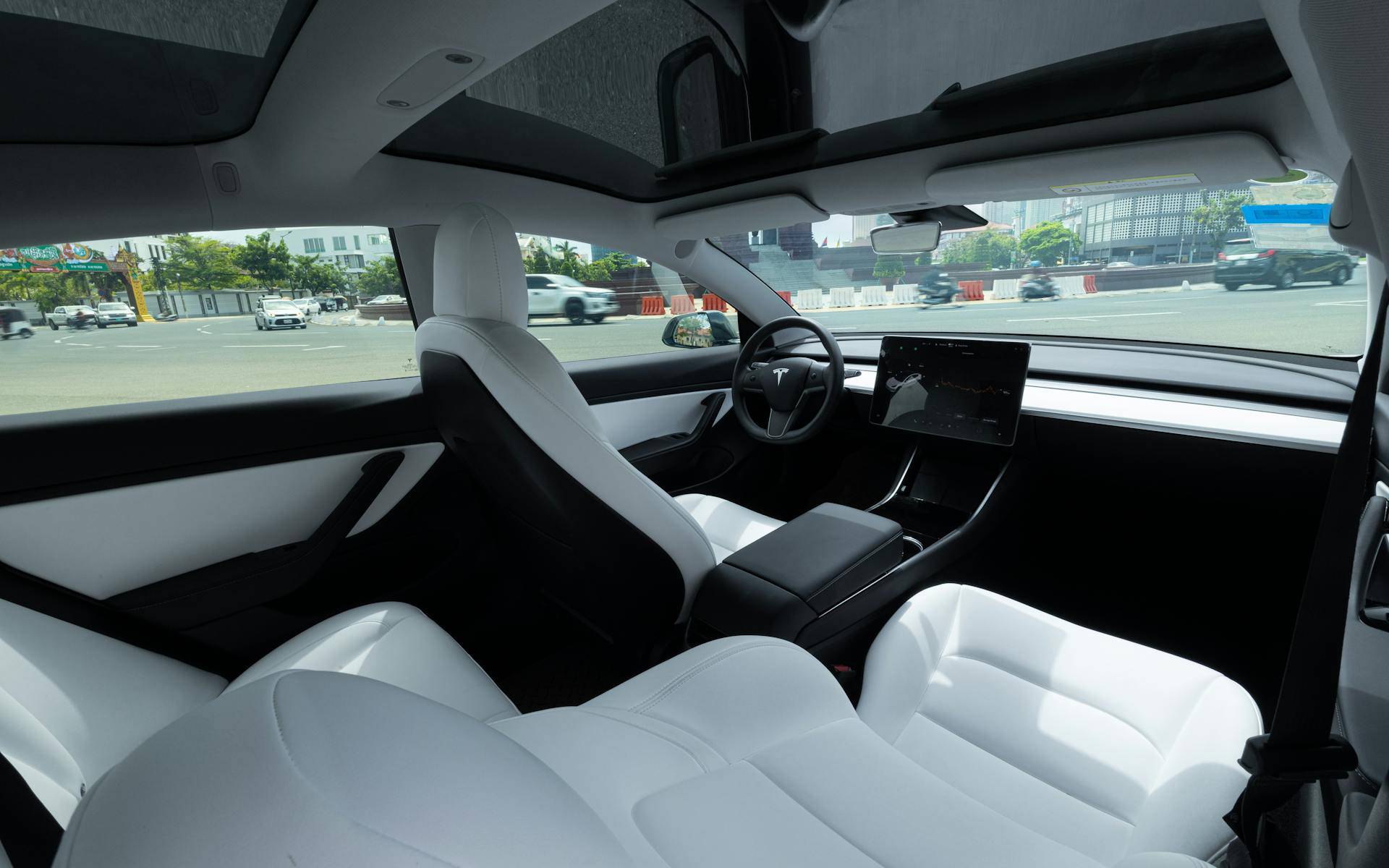
Here’s a direct comparison of the two Tesla Model Y audio configurations:
| Feature | Standard | Premium |
| Total speakers | 7 | 15 |
| Amplifiers | 1 | 2 |
| Subwoofer | No | Yes (160 W, 8") |
| Total system power | ~200 W (estimated) | 560 W |
| US trim availability | Base | Premium, Performance |
A couple of things worth highlighting though.
Both systems share the same 5-band EQ interface – the difference is in what the hardware can actually do with those adjustments. And the independent bass control exists in the premium system specifically because it controls the subwoofer – a component the standard system simply doesn’t have.
Immersive Sound is a DSP-based audio mode that comes exclusively with the Tesla Model Y Premium system.
You’ll find it in the Audio Settings menu, with levels ranging from off through Standard and High, plus an Auto option. The idea is to process the incoming stereo signal and create a wider, more three-dimensional soundstage – the kind of depth you’d associate with a proper listening setup rather than a car interior.
How exactly does it work?
The system controls the A-pillar tweeters, adjusts delay between speakers to create perceived spatial depth, and modifies reverb characteristics to simulate a larger acoustic space. It’s essentially multi-channel synthesis from a stereo source – since your music wasn’t mixed specifically for a Model Y interior, the DSP is making educated guesses about how to expand it.
The results are usually subjective.
Most casual listeners find “Standard” Immersive Sound to be an improvement – there’s a noticeable widening of the soundstage that makes listening feel less boxed-in. On the other hand, self-described audiophiles often prefer it off entirely, since the DSP processing alters the original mix in ways that can feel artificial on well-recorded tracks. If vocals start sounding like they’re coming from somewhere slightly wrong, or the stereo imaging feels stretched rather than natural, dial it back or switch it off.
The honest recommendation: try it at Standard, then High, then off on a track you know very well. The A-pillar tweeters make the most perceptible difference – once you realize they’re doing something, you’ll hear what the feature is going for. Whether you like it is your call.
Both the standard and premium systems give you a 5-band EQ covering low, mid-low, mid, mid-high, and high, plus front/rear and left/right balance controls. Same controls on both systems – the question is what they can actually accomplish with each respective setup.
On the Standard system, EQ adjustments can help a bit. Boosting the mid-low range partially compensates for the missing subwoofer; trimming the highs can soften tweeters that sound harsh on certain tracks. But you’re pushing a limited system when you do this, and at higher volumes the single-amp ceiling and absent sub become apparent regardless of EQ settings. You can optimize it, you just can’t fundamentally change what it is.
On the Premium system, the same EQ adjustments are noticeably more effective. More speakers, more amplifier headroom, and a dedicated sub mean there’s real hardware to respond to what you’re dialing in. The independent bass control – the subwoofer level – is particularly useful. Many owners find running it a decibel or two below default tightens the low end and reduces boom without losing impact.
One tip that applies to both setups: the front/rear balance fader. In the standard system, pushing audio rearward sounds more noticeably limited because the rear coverage is weaker. In the premium system, a slight rear bias can actually help fill out the soundstage when you’re sitting up front. Experiment with your own car – every ear and seating position lands somewhere slightly different.
Both systems, including the Premium one, have their limits. Crank the Premium setup past roughly 80% volume and distortion becomes audible. The subwoofer is capable but can feel short on extension at the very low end; deep bass from electronic music or orchestral content can feel slightly truncated. And the Standard system’s ceiling is obviously lower still.
The good news is that there are some plug-and-play solutions available – options that replace factory speakers without cutting, splicing, or modifying the existing wiring harness, using the original mounting points. For the Model Y, several speaker upgrade kits now follow this approach.
Here at BimmerTech, we’ve spent over a decade developing plug-and-play Alpha One audio upgrades for BMWs, MINIs, and Supras, and we’re actively working on bringing that experience to Tesla. Out of these efforts, two studio-quality upgrades have been born:
If you would like to learn more about them, check out the pages listed above.
The gap between the Standard and Premium sound systems in the Tesla Model Y is real and it’s not just about speaker count. The subwoofer, the second amplifier, the rear door speakers, and Immersive Sound together add up to a meaningfully different listening experience. If music matters to you when you drive, the Premium system is the right call.
If you’re already in a car with the Standard system and wondering what you’re missing: yes, a bit. The EQ helps, the balance settings can optimize things, but the hardware ceiling is what it is. The Alpha One Amplifier Upgrade can help with that quite a bit – even on the Premium setup, as the system is good, but not perfect. But that’s what the aftermarket is for.
It depends on the trim. The base Long Range RWD gets a 7-speaker system with one amplifier and no subwoofer. AWD variants – Long Range AWD and Performance – get a 15-speaker premium system with two amplifiers and a dedicated 160-watt subwoofer.
Only in the premium 15-speaker system, which comes with Premium and Performance trims. The Standard 7-speaker system in the base models has no dedicated subwoofer.
A DSP-based audio mode that processes the stereo signal to create a wider, more spatial soundstage. It activates the A-pillar tweeters and adjusts speaker delay and reverb. It’s exclusive to the premium system and can be set to Standard, High, Auto, or off in the Audio Settings menu.
Yes. Plug-and-play amplifier upgrade options exist for the Model Y, replacing factory speakers using the existing harness with no cutting required. One example is the Alpha One Amplifier by BimmerTech, a Tesla-specific audio upgrade product.
If audio quality matters to you, yes. The jump from 7 to 15 speakers is significant, and the subwoofer, second amplifier, and Immersive Sound make a noticeable real-world difference. In the US, getting the Premium system means choosing an AWD trim over the base RWD.
 Customer Reviews
Comments
Rate the product
This email is already registered.
Please Log In to continue.
Let us find
the right version for you
We'll confirm pricing, compatibility and product details for your car:
Enter your VINIt depends on the trim. The base Long Range RWD gets a 7-speaker system with one amplifier and no subwoofer. AWD variants – Long Range AWD and Performance – get a 15-speaker premium system with two amplifiers and a dedicated 160-watt subwoofer.
Only in the premium 15-speaker system, which comes with Premium and Performance trims. The Standard 7-speaker system in the base models has no dedicated subwoofer.
A DSP-based audio mode that processes the stereo signal to create a wider, more spatial soundstage. It activates the A-pillar tweeters and adjusts speaker delay and reverb. It’s exclusive to the premium system and can be set to Standard, High, Auto, or off in the Audio Settings menu.
Yes. Plug-and-play amplifier upgrade options exist for the Model Y, replacing factory speakers using the existing harness with no cutting required. One example is the Alpha One Amplifier by BimmerTech, a Tesla-specific audio upgrade product.
If audio quality matters to you, yes. The jump from 7 to 15 speakers is significant, and the subwoofer, second amplifier, and Immersive Sound make a noticeable real-world difference. In the US, getting the Premium system means choosing an AWD trim over the base RWD.
Customer Reviews
Comments
Rate the product
This email is already registered.
Please Log In to continue.
[[comment.name]]
[[comment.text|raw]]
BimmerTech
Newsletter
[[comment.name]]
[[comment.text|raw]]
BimmerTech