


BimmerTech
Sep-07-2026
Bimmerpedia: BMW 7 Series – Possibly the Ultimate Limousine?
What Is the BMW 7 Series & Where Does It Sit in the Lineup?
BMW 7 Series Variants & Specifications
BMW 750e xDrive – The Sensible Flagship
BMW 760i xDrive – The High-Performance Variant
BMW i7 – The All-Electric Option
The Rear Seat Is Actually the Point
Driver Assistance & Safety Features
Complete BMW 7 Series History
A Lemon or Not? BMW 7 Series Reliability
Is the BMW 7 Series the Ultimate Limousine?
The BMW 7 Series has spent nearly five decades doing something genuinely difficult: being a proper limousine that still feels like a BMW to drive. Most flagship luxury sedans pick one side of that equation. The 7er keeps insisting it can have both. Whether it actually pulls that off – and whether a 31-inch television in the back seat is peak luxury or peak excess – is exactly what we're here to figure out. This article is for you if want to learn more about the car BMW builds when budget stops being a design constraint.
Coming up, we'll learn:
- About the history and specifications of the BMW 7 Series.
- The differences between the various 7 Series trim levels.
- What the rear seat experience actually offers.
- If the BMW 7 Series is reliable.
- Whether it earns the "ultimate limousine" title.
Enjoy the read!
What Is the BMW 7 Series & Where Does It Sit in the Lineup?
The BMW 7 Series is the brand's flagship luxury sedan, sitting above the 5 Series and competing directly with the Mercedes-Benz S-Class, Audi A8, and – increasingly – the Porsche Panamera and various six-figure EVs.
Here's the thing that separates it from most of that competition: BMW has never quite been willing to build a pure chauffeur car. Even the current generation, which is more overtly limousine-focused than any 7er before it, still comes with rear-wheel drive as standard on the base model and a chassis that responds properly when you decide to drive it yourself. Mercedes builds the S-Class primarily for the person in the back. BMW keeps hedging, and that hedge is basically the entire personality of the model.
It's also historically been BMW's technology showcase. Features that eventually trickle down to the 3 Series and X5 usually debut here first, which is both the 7 Series' greatest strength and, as we'll get to, occasionally its biggest liability.
BMW 7 Series Variants & Specifications
The current seventh-generation 7 Series (codenamed G70) launched in 2022 and arrives in four combustion and hybrid trim levels for the 2026 model year, plus the fully electric i7 as a separate model line. Notably, this generation is offered exclusively in what used to be called the long wheelbase model configuration – BMW dropped the short-wheelbase version entirely, so every G70 gets the stretched body.
Here's how the range breaks down:
| Trim | Engine | Power / torque | 0–60 mph | MSRP |
| 740i | 3.0-liter turbo I6 (mild hybrid) | 375 hp / 398 lb-ft | 5.2 s | $99,300 |
| 740i xDrive | 3.0-liter turbo I6 (mild hybrid) | 375 hp / 398 lb-ft | 4.9 s | $102,300 |
| 750e xDrive | 3.0-liter turbo I6 + electric motor | 483 hp / 516 lb-ft | 4.6 s | $110,000 |
| 760i xDrive | 4.4-liter twin-turbo V8 | 536 hp / 553 lb-ft | 4.1 s | $124,700 |
Prices exclude the destination fee.
The most interesting takeaway from that table isn't the V8 at the top – it's that the plug-in hybrid 750e xDrive is only half a second slower to 60 mph than the 760i while costing nearly $15,000 less and returning dramatically better fuel economy. More on why that matters shortly.
Every trim runs the ZF eight speed automatic, and all but the base 740i come standard with xDrive all wheel drive. Trunk capacity sits at 19.1 cubic feet across the combustion models, dropping slightly to 18.5 in the hybrid to accommodate the battery – respectable for the class, though nobody buys a 7 Series for its cargo numbers. 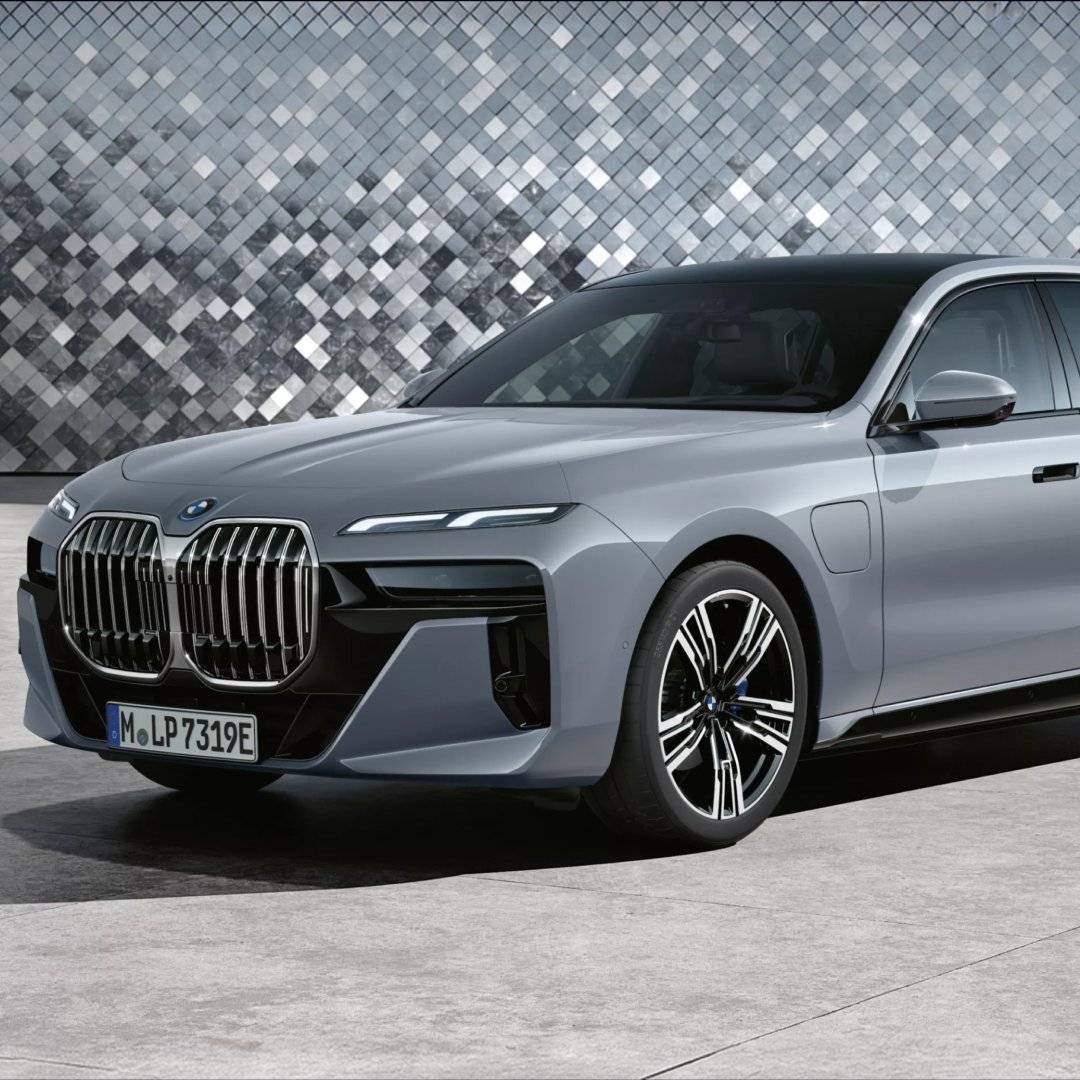
BMW 750e xDrive – The Sensible Flagship
The 750e xDrive pairs the 3.0 liter turbocharged inline-six with an electric motor for a combined 483 hp and 516 lb-ft of torque, fed by a 14.4 kWh battery pack good for roughly 34 miles of EPA-estimated electric-only range.
That figure matters more than it sounds. For a lot of 7 Series buyers, 34 miles covers the entire daily commute, meaning the car operates as an EV during the week and a long-range luxury sedan on weekends. Combined fuel economy sits around 24 mpg, versus 20 mpg for the V8 – a meaningful gap when you're feeding a car this size.
The trade-off is character. The V8's effortless, endless torque delivery is part of what makes a flagship feel like a flagship, and the hybrid's inline-six, capable as it is, doesn't quite replicate that. Whether that matters depends entirely on how often you're actually pressing the accelerator hard.
BMW 760i xDrive – The High-Performance Variant
At the top of the combustion range sits the 760i xDrive with its 4.4 liter twin-turbo V8 producing 536 hp and 553 lb-ft. It hits 60 mph in 4.1 seconds, which for a car this large and this heavily insulated is faintly absurd.
The 760i also picks up hardware the lower trims don't get as standard: four-wheel steering, ventilated and massaging front seats, and heated armrests front and rear. It's the trim that most convincingly argues the 7 Series is still a driver's car despite everything else it's trying to be.
BMW i7 – The All-Electric Option
Worth mentioning briefly, since it shares the same body: the all-electric i7 spans the eDrive50, xDrive60, and range-topping M70, the last producing 650 hp and hitting 60 mph in about 3.5 seconds. Electric range runs up to roughly 314 miles depending on model and wheel size.
The clever part of this generation's engineering is that you genuinely can't tell the powertrains apart from outside. BMW built one car and offered it with whatever you prefer under the floor, rather than forcing EV buyers into a visually distinct model.
The Rear Seat Is Actually the Point
Here's where the current 7 Series makes its most aggressive play for limousine status, and where the "ultimate" question gets interesting.
The headline feature is the BMW Theater Screen: a 31.3-inch, 8K touchscreen that folds down from the roof and spans the entire width of the cabin. It comes with Amazon Fire TV built in, supports 16:9, 21:9, and 32:9 aspect ratios, and pairs with the optional Bowers & Wilkins Diamond Surround Sound System. A recent update made the entire surface touch-operable and added access to BMW's video streaming platform along with downloadable apps through the ConnectedDrive Store. There's even an integrated camera for video calls, which turns the back seat into a genuinely functional mobile office.
Supporting it are 5.5-inch touchscreens embedded in each rear door, controlling climate, seat settings, the infotainment system, and the Theater Screen itself. The optional Luxury Rear Seating Package adds a continuous leg rest for the passenger seated behind the front passenger, and the full Rear Executive Lounge Seating Package layers on an electric reclining seat, a folding table, and a dedicated rear center console.
Two honest caveats. First, these options stack expensively – the Executive Lounge package has historically required several other packages as prerequisites, which is how a $7,250 option balloons into a $20,000 line item on the window sticker. Second, that 31-inch screen folds down from the roof, which means when it's deployed, rearward visibility for the driver is effectively gone. It's a feature designed on the assumption that someone else is driving. 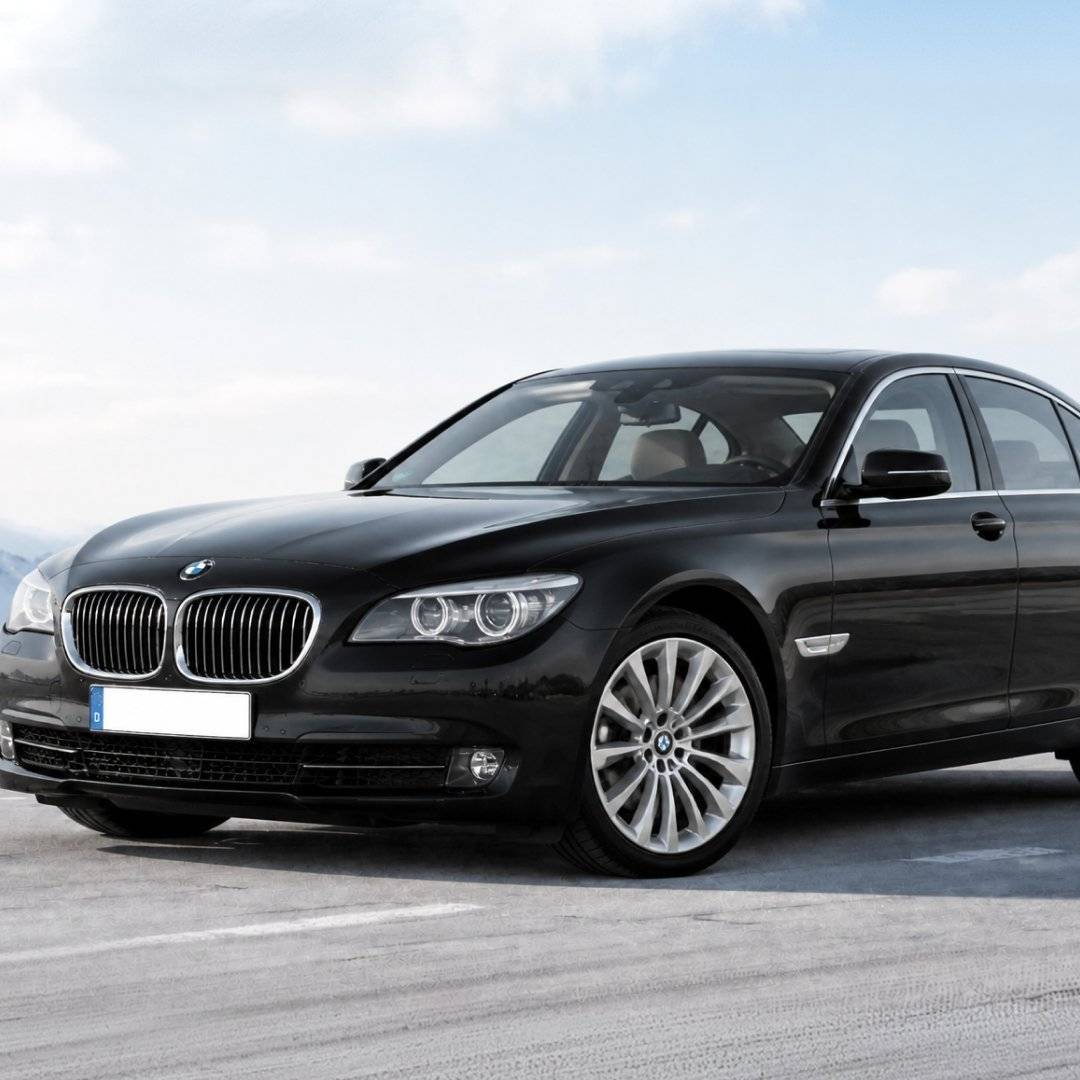
Up front, the driver gets BMW's Curved Display – a 12.3-inch instrument cluster merged with a 14.9-inch central touchscreen – along with a heated steering wheel and standard Bowers & Wilkins audio. The optional crystal headlights and illuminated kidney grille handle the exterior styling flourishes, which remain, let's say, divisive.
Driver Assistance & Safety Features
Standard driver assistance features across the lineup cover the expected ground: automatic emergency braking with pedestrian detection, lane departure warning, blind-spot monitoring, and active lane keeping.
The optional Parking Assistance Package brings Parking Assistant Professional, which can execute parking maneuvers autonomously and reverse the car back up to 200 meters along a path it recorded on the way in – genuinely useful in the tight underground garages this car will inevitably spend time in. The Driving Assistance Professional Package adds Highway Assistant, enabling hands-off driving at up to 85 mph on mapped highways, along with automatic lane changes and an evasion assistant.
For a car whose whole premise involves long distances and passengers who'd rather be working than watching the road, that suite of technology is arguably as central to the pitch as the leather.
Complete BMW 7 Series History
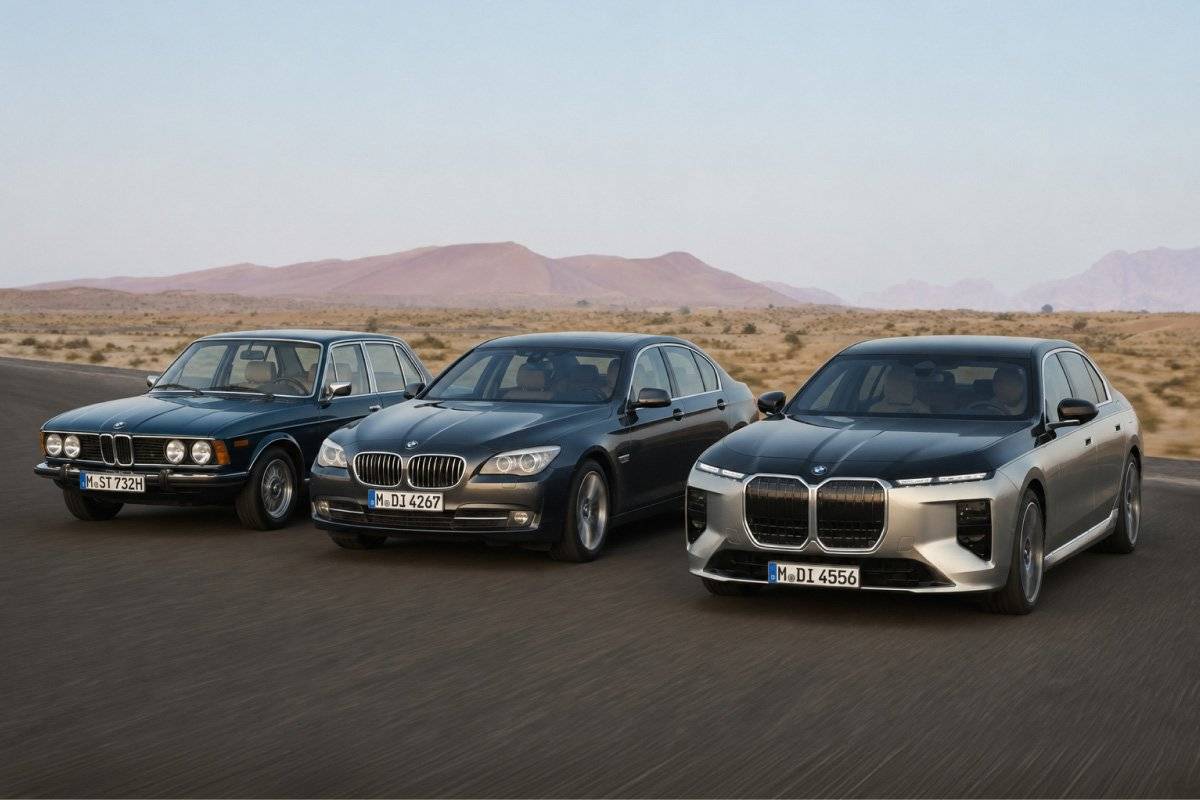
The 7 Series arrived in 1977 with the E23, replacing the E3 "New Six" and taking direct aim at the Mercedes S-Class for the first time. It introduced a raft of firsts for BMW – on-board computer, service interval indicator, and anti-lock brakes – establishing the pattern of the flagship as a technology testbed. All E23s were powered by inline-six engines, and remarkably by modern standards, a manual transmission was available.
The E32 (1986–1994) escalated dramatically, bringing BMW's first postwar V12 and, later, V8 options. It was among the most technologically advanced cars in the world at launch, and it's the generation that cemented the 7 Series as a genuine S-Class rival rather than an ambitious alternative.
The E38 (1994–2001) is the enthusiast favorite, and not just because it looks fantastic. It was the first car available with curtain airbags, the first European car offered with satellite navigation, the first BMW with a built-in television, the first 7 Series available with a diesel engine – and the last available with a manual. Three wheelbase lengths were offered, including the extended L7 limousine.
The E65 (2001–2008) is the controversial one. Chris Bangle's exterior styling divided opinion violently, and it introduced iDrive – a system so unintuitive at launch that it became a punchline before eventually evolving into one of the best infotainment systems in the industry. Despite the criticism, it was the best-selling 7 Series to that point.
The F01 (2009–2015) smoothed the styling and brought BMW's first hybrid drivetrain, first eight-speed automatic, and first turbocharged V12. The G11/G12 followed, and today's G70 arrived in April 2022, on the nameplate's 45th anniversary.
A Lemon or Not? BMW 7 Series Reliability
The honest answer: flagship luxury sedans are, almost by definition, the least reliable cars any manufacturer builds, and the 7 Series is no exception to that rule.
The reason is structural rather than a knock on BMW specifically. Every new technology debuts here first, in its earliest and least-proven form, wrapped in more electronic complexity than any other model in the lineup. The E65's iDrive teething problems are the textbook example – a genuinely good idea that shipped before it was ready. Owner surveys and reliability rankings from outlets like Consumer Reports have consistently placed complex luxury flagships below simpler mainstream models, and the 7 Series generally lands where you'd expect in that context.
Common wear items across generations follow the familiar BMW pattern: air suspension components, electronic modules, cooling system parts, and oil leaks from valve cover and oil filter housing gaskets as mileage climbs. On the current G70, it's still relatively early to draw firm conclusions, though the B58 inline-six underpinning the 740i and 750e has an established reputation as one of BMW's most durable modern engines.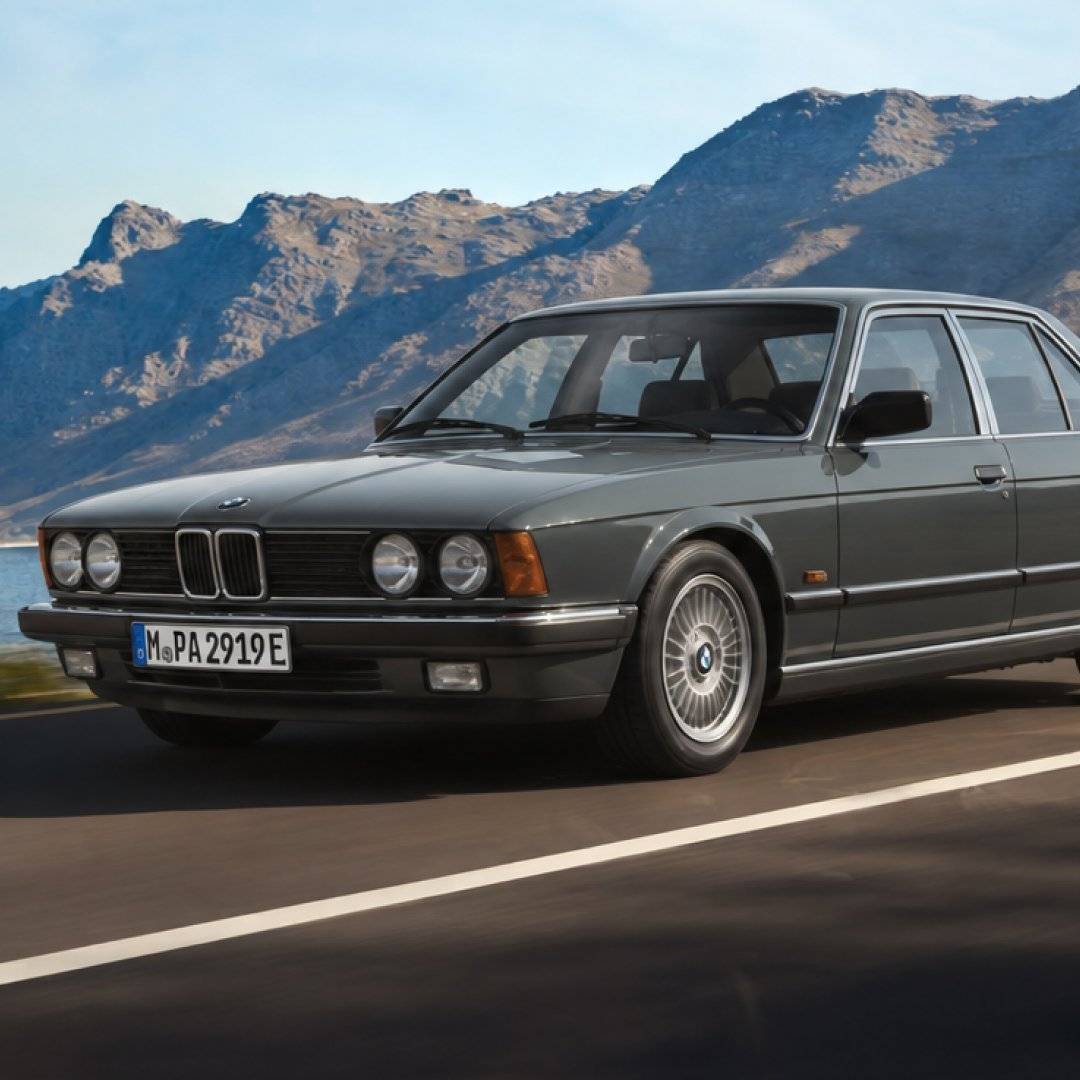
The practical advice is the same as with any 7 Series: buy the newest one your budget allows, prioritize documented service history over low mileage, and budget realistically for maintenance. A used 7 Series is one of the fastest-depreciating luxury cars on the market for a reason – the purchase price falls dramatically, but the repair bills don't.
Is the BMW 7 Series the Ultimate Limousine?
Almost, and the qualifier is the interesting part.
If "ultimate limousine" means the best possible experience for someone sitting in the back seat being driven somewhere, the 7 Series makes an extremely strong case. The Theater Screen has no real equivalent from Mercedes or Audi, the Executive Lounge seating is genuinely first-class, and the rear-door touchscreens make the second row feel like a designed space rather than an afterthought.
But BMW still won't fully commit. The 740i comes with rear wheel drive as standard. The 760i gets four-wheel steering and a V8 that begs to be used. The chassis rewards a driver who actually wants to drive it – which is a strange priority for a car whose flagship feature requires the driver to give up their rear visibility.
That refusal to pick a lane is either the 7 Series' central flaw or its entire appeal, depending on what you want. If you're being driven, an S-Class arguably does the serenity thing better. If you're driving yourself, a 5 Series does most of what matters for far less money. The 7 Series exists for the buyer who genuinely does both – and for that person, there's nothing else quite like it.
FAQ
Comments(0)
All ratings
Popular posts:


and get to know all compatible products for your BMW or MINI
Where to find your VIN?