


Mateusz Biela
Aug-07-2026
Audi Q9 vs BMW X7: Which Luxury SUV Should You Buy in 2027 And Why?
Is the Q9 Actually Bigger Than the X7? Dimensions and Size Comparison
Power and Performance – Another Advantage of Audi Q9
Which Cabin Works Better for Family Life?
Value for Money – Which One Makes More Sense?
Is Audi's Tech Ahead of BMW's?
Should Current X7 Owners Consider Switching to Audi Q9?
Audi Q9 or BMW X7: Our Final Verdict
The Q9 is Audi's answer to a segment that has been ignored by the brand for years – a full-size, three-row luxury SUV that sits above the Q7 as the brand's new flagship. It’s also their largest vehicle ever.
The Q9 isn't just a stretched Q7. It rides on a longer wheelbase, at 123.5 inches, with room for six or seven passengers depending on configuration. The six-seat layout swaps the middle bench for two captain's chairs, which most buyers in this segment tend to prefer.
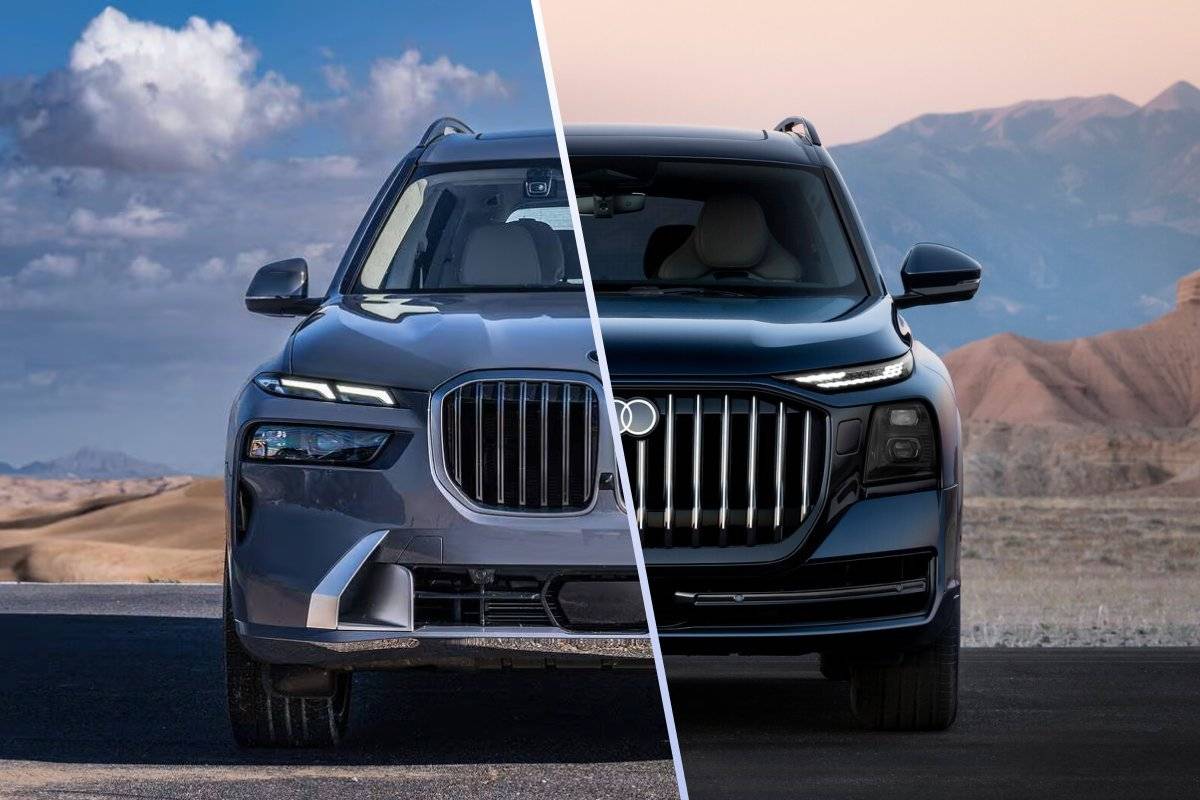
With the Q9, Audi is aiming squarely at the Mercedes-Benz GLS, Cadillac Escalade, Range Rover, and especially the BMW X7. Since we know a thing or two about BMWs, we wanted to dig deeper into that specific matchup – how the new Q9 stacks up against the X7 and which one actually makes more sense for you.
Is the Q9 Actually Bigger Than the X7? Dimensions and Size Comparison
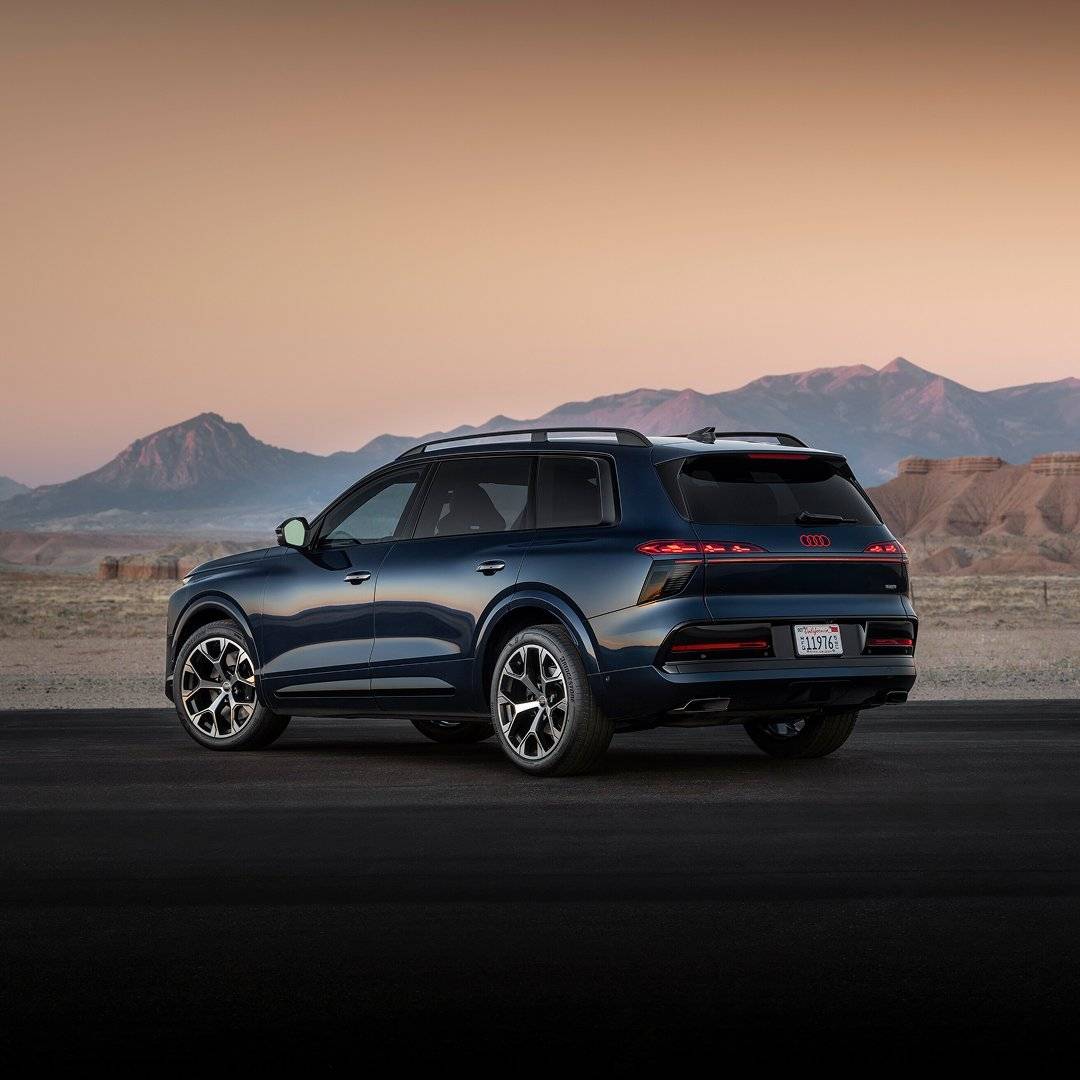 By building the Q9, Audi basically took a huge step toward having one of the biggest SUVs on the market. Some people joke that if you want to make finding a parking spot in a busy city difficult, the Q9 is a solid way to do it.
At 209 inches long and 86.8 inches wide, the Q9 lands near the top of the size leaderboard – over 5 inches longer than the X7 and just half an inch narrower. Height is where BMW edges ahead: the X7 stands 72.2 inches tall against the Q9's 71.4 inches.
So if you're shopping for something to drive daily in a city centre, keep this in mind: a longer wheelbase means a wider turning radius and no amount of 360-degree cameras fully offsets that when you're squeezing into a tight parking garage. Both cars are giants, but between the two, we'd give the X7 the edge for tighter urban driving.
That changes, though, if you live in the suburbs and aren't fighting downtown traffic and parking every day. In that case, the size difference stops being a real drawback and the Q9's extra length works in its favor instead – more room without the daily parking headache.
Power and Performance – Another Advantage of Audi Q9
Dimensions aren't the only thing worth comparing here. If power matters to you, Audi has the edge. The base Q9 offers 429 hp from a twin-turbo 2.9L V6, hitting 0–60 in 4.9 seconds. The X7 xDrive40i counters with 375 hp from a 3.0L inline-six, needing 5.6 seconds for the same sprint.
What makes this more interesting is that the Q9 actually weighs less than the X7, at 5,302 lbs against the X7's 5,452 lbs. So Audi isn't just throwing more power at the problem – it's doing more with less weight, which makes the performance gap even easier to justify.
Move up to the performance trims and the story is much the same. The SQ9's 591-hp twin-turbo 4.0L V8 gets to 60 mph in 3.8 seconds, while the X7 M60i's 523-hp 4.4L twin-turbo V8 needs 4.0 to 4.5 seconds.
For a typical school-run or grocery-run family, this gap won't be felt much. Where it does matter is when the car is actually working – fully loaded with seven people and luggage, or towing something. Both the Q9 and SQ9 are rated to tow up to 7,700 lbs, slightly ahead of the X7's 7,500-lbs max.
If you're regularly hauling a boat or a trailer, or you routinely drive with a full cabin, that extra power and torque translate into a noticeably less strained engine – not just a faster 0–60 time on paper.
Which Cabin Works Better for Family Life?
Let's say power isn't the deciding factor for you, and what actually matters is which model works better for family life. Here, both the Q9 and X7 do their job well when it comes to meeting a typical family's needs.

Audi likes to talk up the Q9's automatic doors, but for most families, they honestly won't make much of a difference day to day. We'd rather see as much cargo space and room between the seats as possible – that's what most families are actually looking for.
That said, automatic doors aren't pointless for everyone. If you regularly drive with newborns, older relatives, or anyone with limited mobility, they can genuinely make getting in and out of the car easier – it's a feature that matters a lot to a specific group of buyers, even if it won't move the needle for most.
On cargo and space, both cars hold their own. The Q9's longer wheelbase gives it more interior room, with up to 87.7 cubic feet of cargo space when everything's folded down. The X7 counters with 90.4 cubic feet – a bit more, but close enough that it shouldn't be the deciding factor either way.
Value for Money – Which One Makes More Sense?
The 2027 Audi Q9 costs $89,095, while the BMW X7 xDrive40i starts at $87,875 – a gap of less than $1,500. Move up to the performance trims and it's a similar story: the SQ9 costs $119,395 against the X7 M60i's $115,075. In both cases, the price difference is nearly invisible.
What you're getting for that money. And based on everything we've covered above, the answer depends on what you weigh most heavily. If horsepower, towing, and Digital Stage tech top your list, the Q9 gives you noticeably more car for essentially the same price. If you'd rather pay for a platform with years of reliability data and a simpler, driver-focused cabin, the X7 is the safer bet at a near-identical price point.
We're not the type to chase the newest thing just because it's new. We'd rather go with what's been tested and proven. Thus on that basis alone, we'd lean toward the X7 for now. But that's a preference for proven track records, not a knock on what the Q9 brings to the table. If you're comfortable being an early adopter, the value case for the Q9 is genuinely strong.
Is Audi's Tech Ahead of BMW's?
 Since infotainment and in-car tech are something we pay close attention to at BimmerTech, this is a comparison we weren't going to skip.
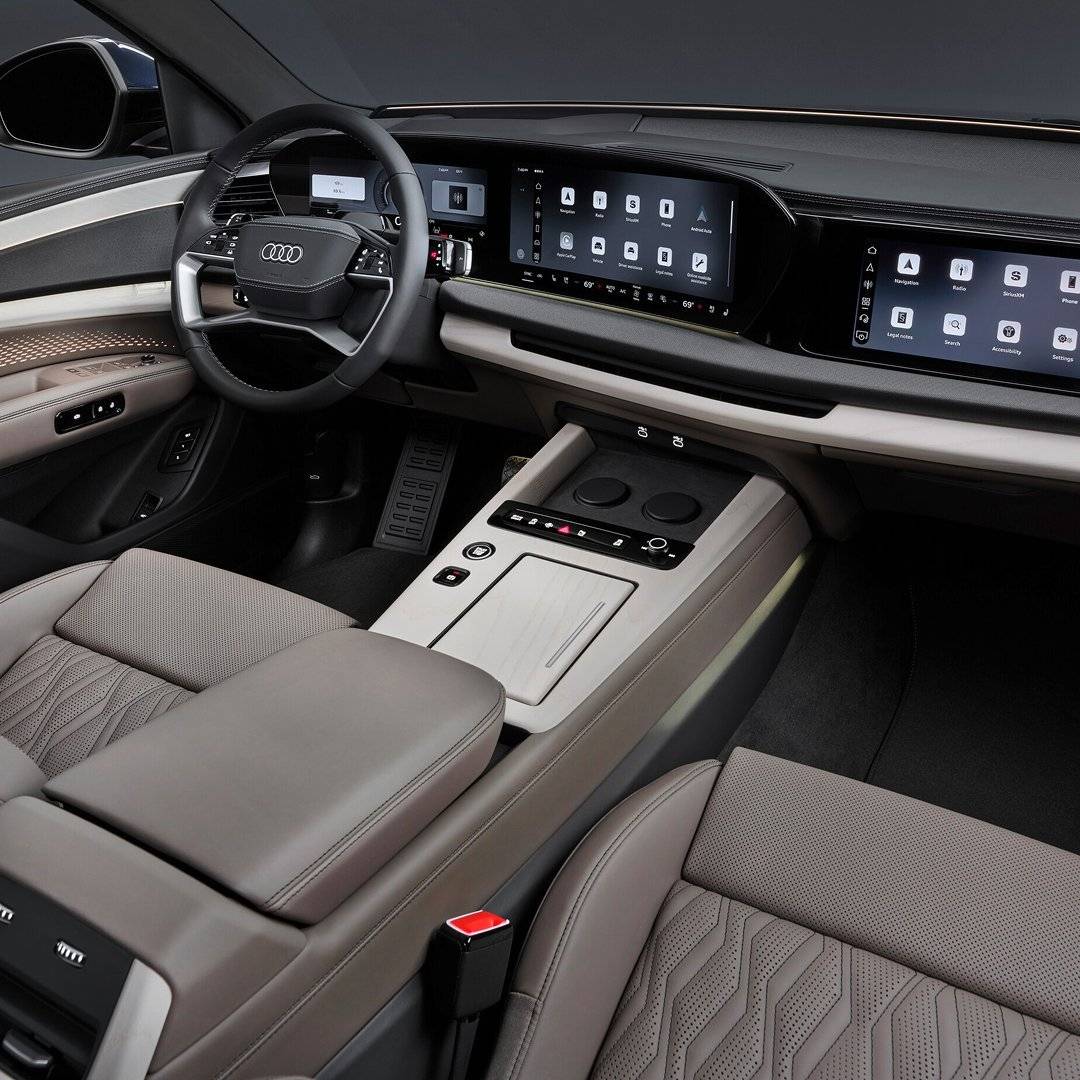
Audi's biggest move here is the Digital Stage – a triple-display setup with a driver panel, a central OLED touchscreen, and a dedicated front passenger screen that runs its own content without distracting the driver. It's a genuinely new idea for this segment, and it can be pretty useful: the front passenger can pull up navigation, media, or even work through their phone's mirrored screen without ever touching the driver's display. For families or anyone who regularly drives with a co-pilot, that's a real, everyday convenience, not just a party trick.
Where it gets less convincing is if you're usually driving alone. In that case, the third screen turns into something you notice once, are impressed by, and then mostly ignore. Then it’s like a neat gimmick with a short shelf life rather than something that changes how you use the car.
BMW takes the opposite approach with the X7: fewer screens, more focus on the driver, consistent with how the brand has always positioned itself. The idea is to keep the driver's eyes on the road and cut down on time spent digging through menus mid-drive – a real advantage for anyone who drives a lot and wants the car to stay out of their way.
Connectivity differs too as the X7 uses a personal eSIM tied to your data plan, while the Q9's Audi Connect supports up to eight devices as a standalone hotspot, which matters more if you regularly have a full car of passengers all trying to get online at once.
So is Audi's tech actually ahead? In screen count and personalization, yes – and for a family that uses the front passenger screen regularly, that's a real functional edge, not just marketing. But BMW's simpler approach isn't a step behind either. It's a different philosophy, one that prioritizes the driver's focus over the passenger's entertainment, and for solo or driving-focused owners, that can matter more than an extra screen ever will.
That said, we want to push back on the idea that more tech automatically means a better car. Car companies have spent the last few years racing to out-screen each other, but we're not convinced that's actually what most buyers want.
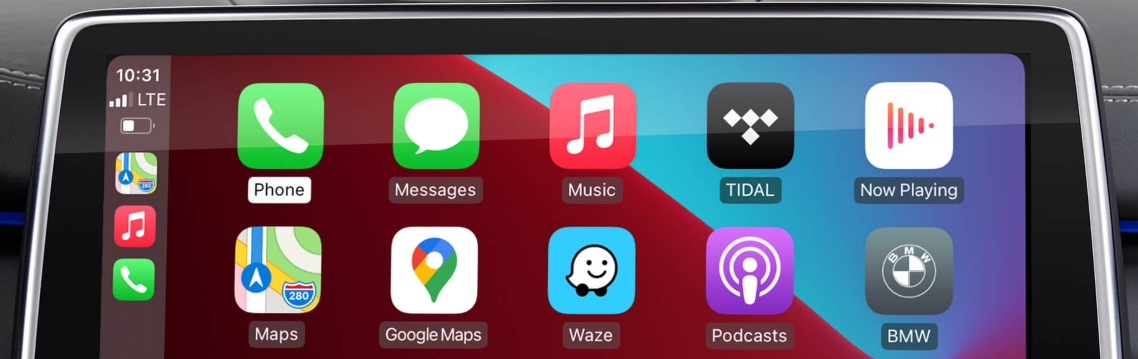
What people tend to ask for is something practical – good audio, CarPlay or Android Auto that just works. Not a cabin that runs almost entirely through a touchscreen with barely a physical button in sight, the direction BMW's own iX5 leans toward with its stripped-back controls. Some manufacturers have clearly misread the room here: piling on more advanced tech doesn't guarantee people will love the car more. Sometimes it has the opposite effect.
Should Current X7 Owners Consider Switching to Audi Q9?
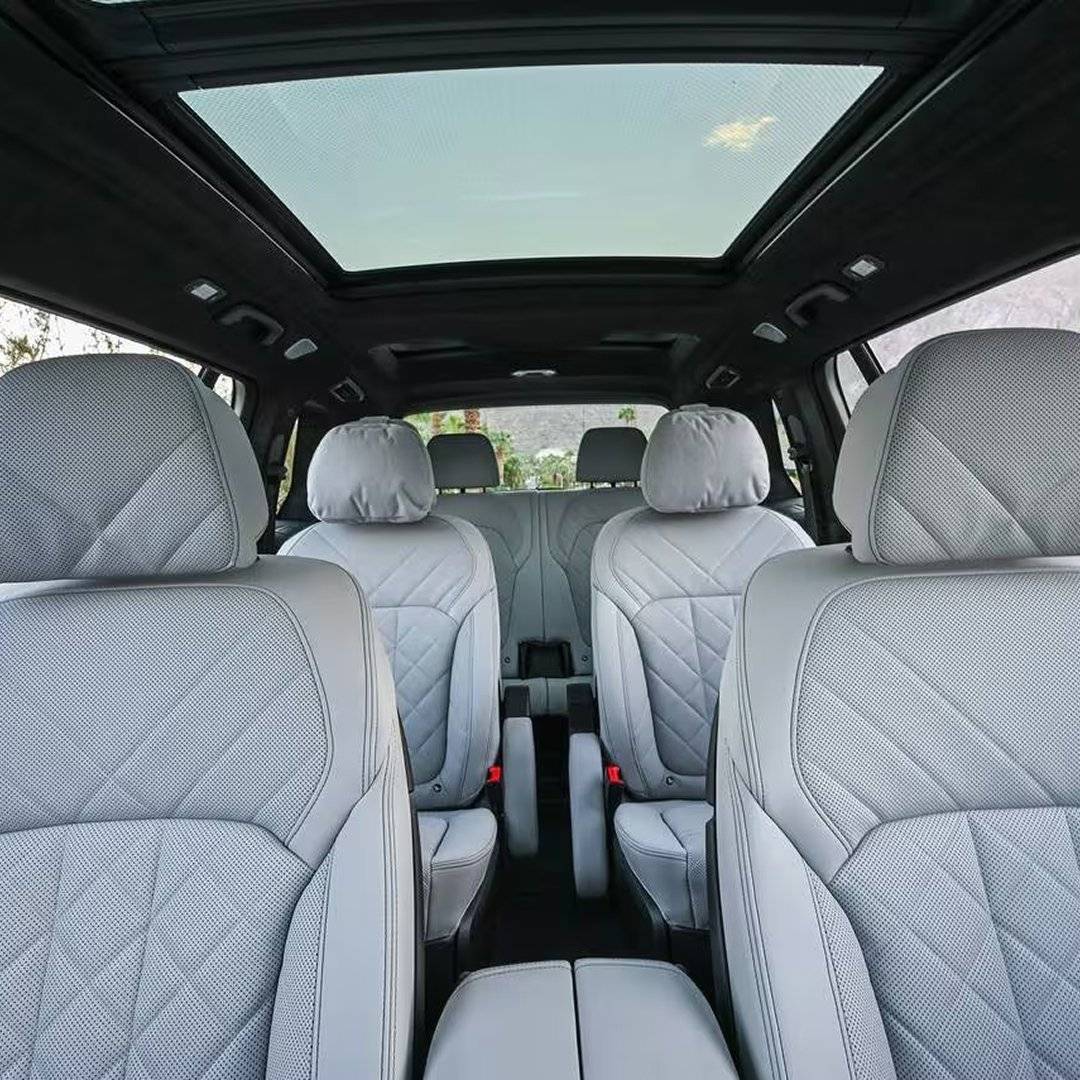 If you've driven BMW for years and want to try something new, this is worth a serious look. But before making the jump, it helps to separate what's a real upgrade from what's just a new feature.
On the "real upgrade" side the Q9 and SQ9 both out-muscle their X7 counterparts on power, for close to the same money. The longer wheelbase means more usable space in the third row, which matters if you have much more to carry than expected. And if you tow anything, the Q9's 7,700-lb rating edges out the X7's 7,500 lbs. These are the kinds of differences you'd actually feel behind the wheel, week after week.
On the "new, but not necessarily better" side things like the automatic doors and the extra passenger screen. They're genuinely new to the segment, and they do matter to specific buyers – families with young kids or older relatives, or anyone who regularly drives with a co-pilot who wants their own screen. But if none of that describes how you actually use your car, these features are closer to nice-to-haves than reasons to trade in a working X7.
Then there's the risk side of switching. The X7 has been on the market since 2018, which means real owners, real reliability data, and a dealer network that already knows the car inside out. The Q9 has none of that yet – it's a first-year model, with no track record on long-term reliability and no real-world data yet on how well it holds its value after three or five years.
You'd also be trading BMW's driver-focused cockpit for Audi's more screen-heavy, passenger-oriented approach – not better or worse, just different, and worth knowing if the driving feel was the reason you bought a BMW in the first place.
So honestly, the switch makes sense if the real upgrades like power, space, towing matter more to you than the proven track record you'd be giving up. It makes a lot less sense if you're mainly drawn to the new gadgets. If that's the case, there's no real reason to trade in a car that already does most of what a full-size luxury SUV needs to do, with years of proof behind it.
Audi Q9 or BMW X7: Our Final Verdict
New models will keep coming, and the Q9 won't be the last word in this segment. But right now, here's where things stand.
The Q9 and X7 have a lot in common – same price bracket, same target buyer, same three-row full-size ambitions. Where they differ is more interesting than where they overlap. Audi brings more power, more screens, and genuinely new ideas like the automatic doors and Digital Stage. BMW brings years on the market, a proven track record, and a driver-focused cabin that hasn't needed to chase every new feature to stay relevant.
That doesn't mean you should jump ship from the X7. It's earned its reputation the hard way, and "proven" counts for a lot when you're spending six figures on a family SUV. The Q9, on the other hand, still has to prove itself. New technology is exciting, but it's also untested, and more tech doesn't always mean a better ownership experience. Sometimes it just means more that can go wrong, or more you're paying for without knowing yet if it's worth it.
So here's where we land. Go with the Q9 if performance, towing, extra passenger-side tech, and third-row space top your list, and you're comfortable being an early adopter of a first-year model. Go with the X7 if you'd rather have a proven platform, a simpler driver-focused cabin, and years of real-world reliability data behind your purchase. Neither answer is wrong – it just depends on what you're actually optimizing for.
Time will tell how the Q9 holds up once it's actually out there. For now, the smartest move is to match the car to your priorities, not the other way around.
Comments(0)
All ratings
Popular posts:



and get to know all compatible products for your BMW or MINI
Where to find your VIN?