


Radoslaw Zbroinski
Jun-30-2026
Tesla Roadster History & Model Overview
What Is the Tesla Roadster & Why Does It Matter? A Brief History Overview
A Hot Affair with Lotus – Tesla Roadster Design Details
Tesla Roadster Engineering & Specs
Inside the Original Roadster
The Second-Generation Roadster – A Decade in the Making... And Still Not Here
What to Expect From the New Roadster?
Tesla Roadster vs. the Sports Car Establishment
Is a Used Tesla Roadster Worth Buying Today?
The Short Answer
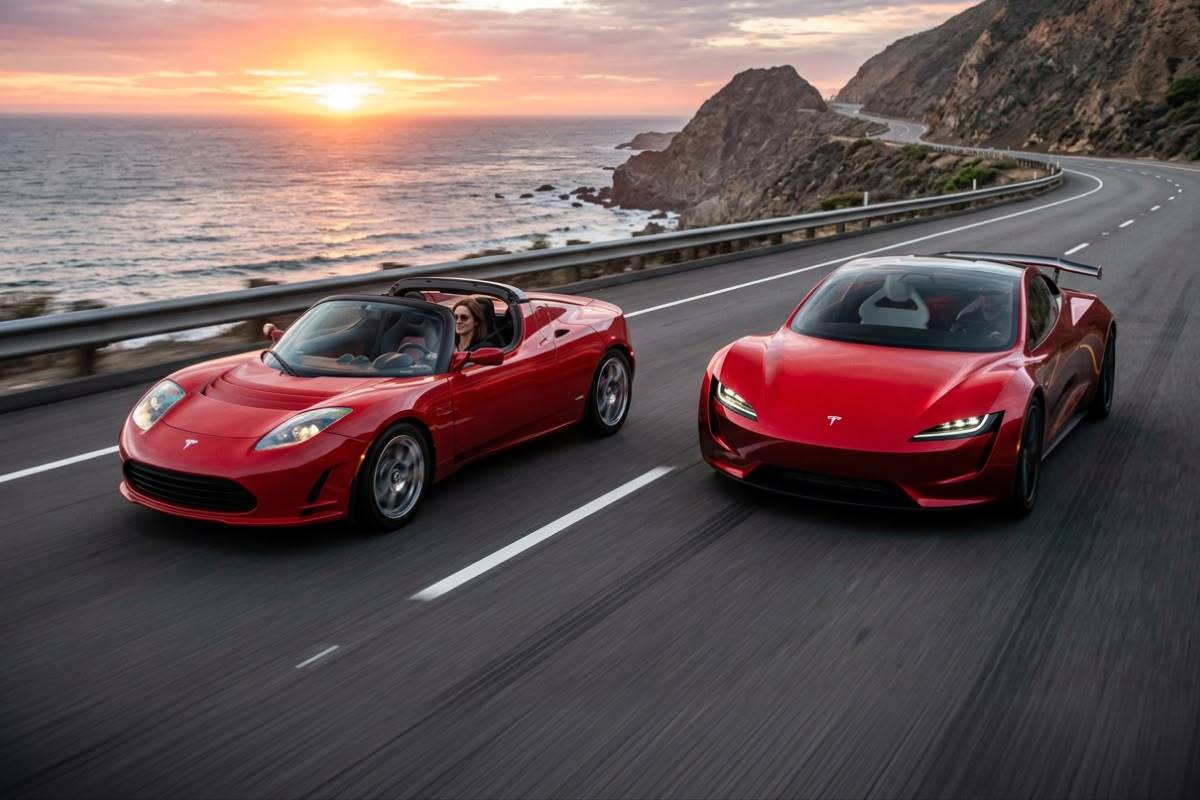
Ready to check out the car that tried to convince the world an electric vehicle could actually be fun? While it didn't become a bestselling hit, the Tesla Roadster isn't just another model in the company's lineup – it's the reason Tesla exists as a car company at all. Without this scrappy little two-seater, there would be no Tesla Model S, no Model Y, Model 3, no Cybertruck, and certainly no trillion-dollar valuation. If you are interested in the history of this model or Tesla in general, this is going to be a particularly interesting read for you.
Coming up, you'll learn:
- About the history and specifications of the first Tesla Roadster.
- What made the original Roadster's design and engineering so significant.
- The long, strange saga of the second-generation Roadster that has not yet been released.
- If a used original Roadster is worth buying today.
Enjoy the read!
What Is the Tesla Roadster & Why Does It Matter? A Brief History Overview
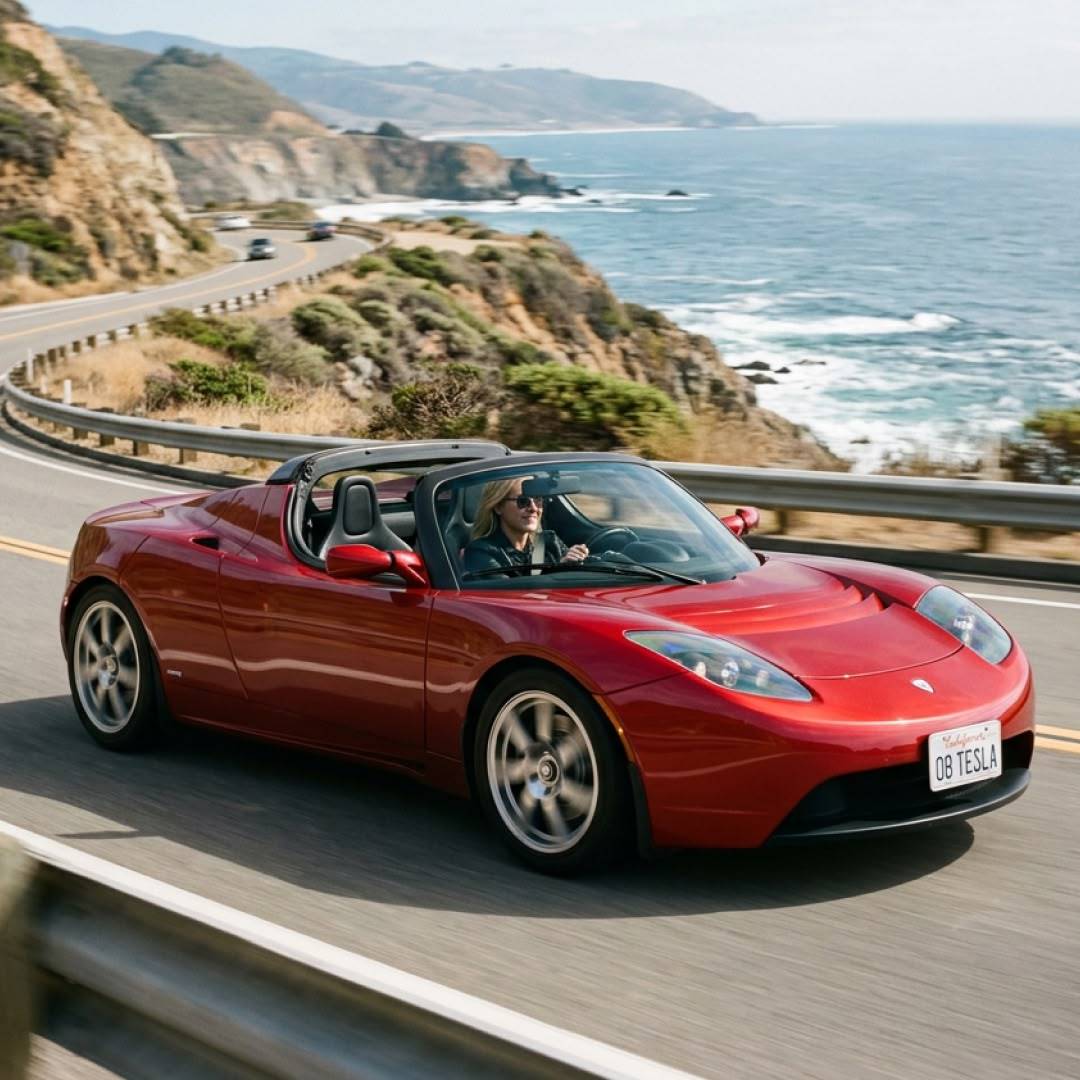 The Tesla Roadster is an electric sports car, and more specifically, it's Tesla's first production vehicle. Before the Roadster, Tesla was a startup with some battery technology and big ambitions, but no actual car to sell. The Roadster proved electric powertrains could deliver genuine performance, instead of just means for efficient commuting – a fundamentally different sales pitch than the golf-cart image EVs carried at the time.
Elon Musk joined the company as chairman and lead investor not long after its 2003 founding and by 2006, Tesla had a prototype ready to show the public. Production followed in 2008, with Musk himself taking delivery of the first car off the line that February.
The timing could not have been worse though, commercially speaking – the global financial crisis hit just as the Roadster reached customers. And yet the car succeeded anyway, eventually pushing Tesla into its first month of corporate profitability in July 2009. So, let's take a look at what contributed to that recipe for success...
A Hot Affair with Lotus – Tesla Roadster Design Details
Back then, Tesla didn't have the engineering depth or manufacturing capacity to build a car from scratch, so the company partnered with the British sports car maker Lotus. The Roadster borrowed its chassis from the Lotus Elise, lengthened by two inches and reinforced to handle the additional weight of a battery pack.
Despite the shared underpinnings, only about 6% of parts ended up interchangeable between the two cars. Tesla developed its own drivetrain, battery system, and body panels – most of the latter made from lightweight carbon fiber to help offset the roughly 700 extra pounds the batteries added over a standard Elise.
Tesla ordered 2,500 "gliders" (complete cars minus the powertrain) from Lotus, with final assembly handled at Tesla's own facility in Menlo Park, California. Production ran from 2008 until January 2012, when Tesla's contract with Lotus expired and the supply of donor chassis ran out. In total, Tesla built approximately 2,450 Roadsters, selling them in more than 30 countries.
The original sticker price was around $98,000 in 2008, climbing to $109,000 within a year, and then to $128,500 in 2010. Adjusted for inflation, today that's $151,406–196,802; an astronomical sum of money for a small electric two-seater built by a company nobody had heard of yet.
However, there are also other considerations they have to take into account when designing tires for battery-powered vehicles.
Tesla Roadster Engineering & Specs
The first-generation Roadster used a single electric motor sending power to the rear wheels through a single-speed transmission. For an EV, it was also a very light car, getting even lighter with the following iterations – a totally opposite trend to what we are seeing in the automotive industry right now.
Here's how the vehicle evolved across its short production run:
| Version | Power | Torque | Weight | 0–60 mph | Range (EPA) |
| Roadster 1.5 | 248 hp | 273 lb-ft (370 Nm) | 2,877 lb (1,305 kg) | 4.0 s | 231 miles (372 km) |
| Roadster 2.0 | 288 hp | 280 lb-ft (380 Nm) | 2,727 lb (1,237 kg) | 3.9 s | 244 miles (393 km) |
|
Roadster 2.5 Roadster 2.5 Sport |
295 lb-ft (400 Nm) | 3.7 s |
Even the slowest version sprinted to 60 mph quicker than most gasoline sports cars of the era, and it did it silently. According to the EPA, the original Roadster could also travel 244 miles on a charge, making it the first production EV to break the 200-mile between charges mark.
The Roadster's design borrowed the Elise's low-slung silhouette, but added a longer nose, larger headlights, and a distinctive single center-mounted windshield wiper. Tesla also fitted louvers into the hood to help cool the electronics underneath, since there was no engine to vent heat from in the traditional sense.
Inside the Original Roadster
Step inside and the Lotus DNA is obvious – it's a minimalist, driver-focused cabin with a double-bubble instrument cluster and not much else. Tesla upgraded the experience over the base Elise with leather-wrapped sports seats and a unique center console housing the various electronic system controls.
There's no touchscreen, no Apple CarPlay, no Android Auto – this was 2008, and even Tesla's own infotainment ambitions were years away. What you got instead was a small display monitoring battery state and charging status, plus a classic-looking rotary gear selector for choosing drive modes. Cargo space was, predictably, tight; the trunk barely accommodated a weekend bag, in keeping with the car's sports-car-first priorities.
Later cars received some welcome updates. The Roadster 2.5, introduced in 2010, added a push-button gear selector, improved interior materials, and a center display showing range, regenerated power, and – in a slightly odd touch – how many barrels of oil you'd avoided burning.
The Second-Generation Roadster – A Decade in the Making... And Still Not Here
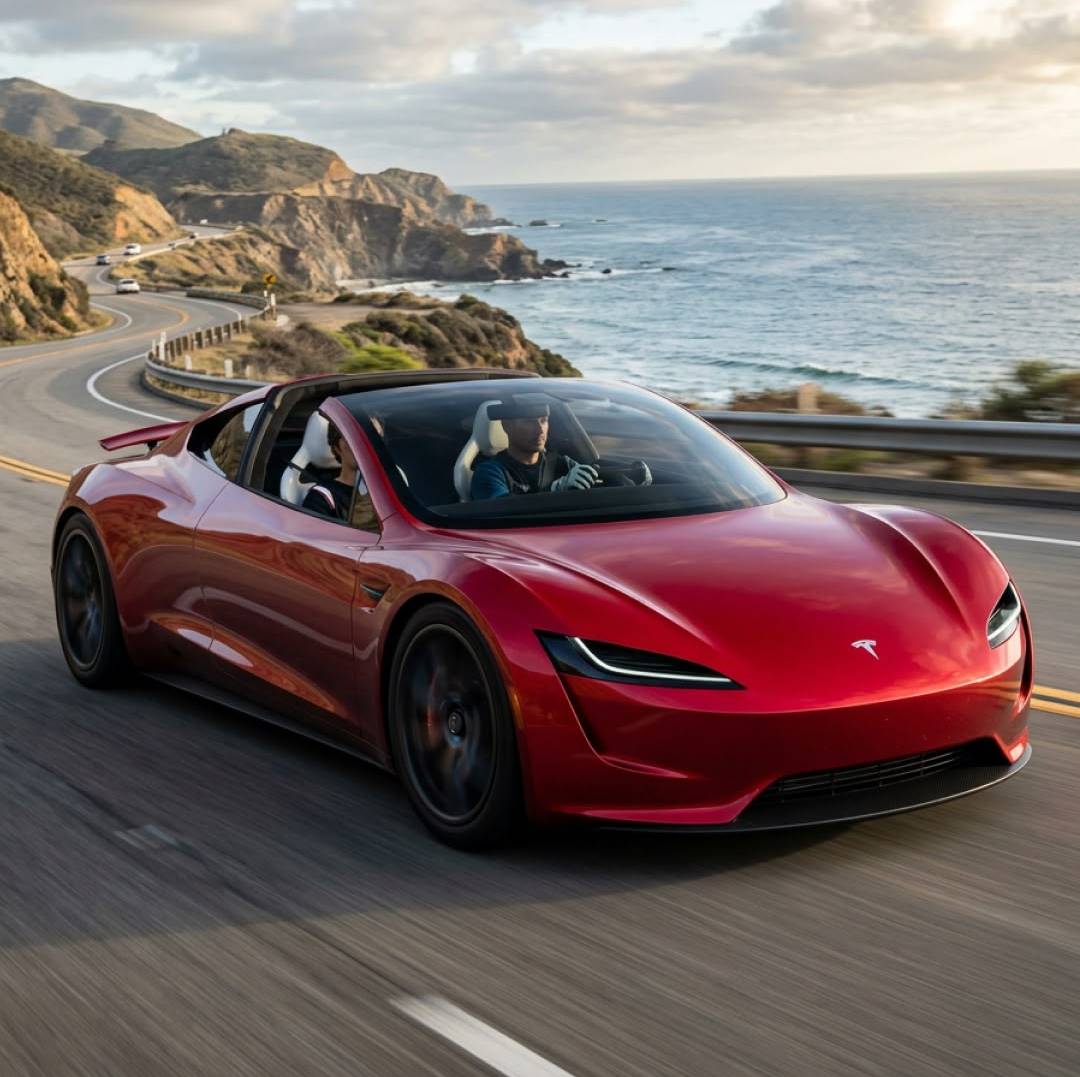 If the first Roadster's story is one of scrappy success, the second-generation Roadster's story is one of escalating ambition and a truly remarkable string of delays. Tesla unveiled the new Roadster prototype in November 2017, alongside the Tesla Semi, with bold performance benchmarks: a 200 kWh battery pack, a claimed 620 miles of range, a 1.9-second 0–60 mph time, and a top speed above 250 mph. The base price was set at $200,000, with reservations requiring a $50,000 deposit – or $250,000 for one of the exclusive "Founders Series" units.
Then came the delays.
Musk originally promised production in 2020. That slipped to 2022, then 2023, then 2024. In February 2024, rather than simply admitting more delay, Musk escalated the claims instead – announcing the design goal had shifted to a sub-one-second 0–60 mph time, a figure that would put the car ahead of dedicated drag racers, let alone any other street-legal vehicle.
By late 2025, Musk pushed production all the way out to 2027 or 2028 – nearly a decade after the original prototype reveal. A promised April 1, 2026 unveiling slipped to "late April," then to "a month or so," then to August 2026 or later. As of this writing, no firm production date exists, and reservation holders who put down deposits back in 2017 are still waiting for their cars.
What to Expect From the New Roadster?
Assuming it eventually arrives close to its claimed specs, expect Tesla's new model to be a genuine performance flagship. The drivetrain is expected to use three electric motors in an all-wheel-drive layout—one up front, two at the rear—with torque vectoring distributing wheel torque between the rear wheels for sharper handling.
The car is also expected to retain a removable glass roof, continuing the targa-style theme of the original, though seating for four rather than the strict two-seater layout of the first generation. Which should make it more practical as an occasional grand tourer as well, but will definitely lead to it being much, much heavier and significantly less nimble.
Then there's the genuinely strange part: the optional "SpaceX package."
First teased back in 2018, this feature was supposed to add roughly ten cold-gas thrusters around the car. They would be fed by high-pressure air tanks borrowed conceptually from rocket technology used on Falcon 9 and Falcon Heavy. What for? The pitch is improved cornering, braking, acceleration, and top speed – and, according to Musk, the ability to briefly hover off the ground. Tesla's own VP of Vehicle Engineering has publicly acknowledged this is one of the hardest parts of the entire program.
It also sounds kinda like a far-fetched excuse for the ridiculously long delays, but what do I know...
Two versions are reportedly planned: a SpaceX limited edition with the full thruster package, and a standard model without it. Treat any of these specs as aspirational until Tesla actually puts a production-intent car on a stage.
Tesla Roadster vs. the Sports Car Establishment
Comparing the original Roadster to its era's gasoline rivals is a tough task.
A Lotus Elise of the same period, the very car the Roadster was based on, couldn't match its electric sibling's acceleration despite weighing hundreds of pounds less. The instant torque of an electric motor simply has no analog in a naturally aspirated four-cylinder.
At the same time though, the Elise was almost 2 times lighter than the Tesla Roadster, weighing just 1,598 lb (725 kg). Lotus also came with a 5-speed manual transmission – combined with low weight, this is not something any EV car will be able to beat anytime soon. Unless Toyota puts their EV manual into production, but that's a story for another day...
The more interesting comparison is with where the segment has gone since. The long-promised second-generation Roadster, if it ever ships with anything close to its claimed numbers, would put genuine hypercars on notice. Brands like Aston Martin, whose combustion-powered cars rely on big displacement and turbocharging to chase similar acceleration figures, would be competing against an electric powertrain that doesn't need to build boost or manage heat the same way.
Whether that comparison ever gets to play out on a track, rather than in a press release, remains the open question that's defined this car for nearly a decade.
Is a Used Tesla Roadster Worth Buying Today?
With production long over and no factory warranty support for most components, buying an original Roadster today means buying a collector car, not a daily driver with manufacturer backing. That's not necessarily a bad thing.
Roadster values dropped substantially when the Model S arrived – a car with a base price tens of thousands of dollars lower and dramatically more advanced technology made the Roadster feel instantly outdated. For years, that meant steep depreciation. More recently, though, limited production numbers (just 2,450 units total) and the car's historical significance have started pulling values back up, the same way collector markets eventually circle back to genuinely important cars.
Well-kept examples currently trade in the $45,000 to $65,000 range, roughly half of what they cost new. Appraisers who use the same Black Book data dealers rely on to appraise vehicles generally note that low-mileage cars with documented battery health command a real premium, since most owners treated these as weekend toys rather than commuters.
Tesla claims the original battery packs should last in excess of 100,000 miles, and given how few miles most Roadsters have actually accumulated, battery life isn't usually the dealbreaker buyers worry about. Sourcing parts and finding technicians familiar with a 15-plus-year-old, low-volume EV is the bigger practical hurdle. Specialist financing for collector EVs is increasingly available, though it's worth shopping multiple lenders, as not every classic car loan program is set up to value an electric vehicle the same way it would a gas-powered counterpart.
The Short Answer
The original Tesla Roadster was never about being the most practical sports car or even the most refined one. It was a proof of concept that happened to also be genuinely entertaining to drive – quick off the line, quiet at speed, and capable of embarrassing far more expensive cars away from traffic lights.
The new Roadster, whenever it finally arrives, carries an entirely different weight of expectation (literally!). It's meant to be a halo car for a company that's since built its reputation on mass-market vehicles and autonomy projects, not boutique two-seaters. Whether the rocket thrusters ever make it to a public road, and whether the rest of the car lives up to a decade of escalating promises, is something only an actual production vehicle can answer.
Until then, the first-generation Roadster remains the more honest story: a small, slightly rough-around-the-edges electric sports car that did exactly what it set out to do, and started a revolution in the process.
Comments(0)
All ratings
Popular posts:


and get to know all compatible products for your BMW or MINI
Where to find your VIN?