


Radoslaw Zbroinski
May-12-2026
BMW F30 Big Brake Kit – How to Install F80 Brakes on F30?
BMW F30 Brakes & Brake Pads Explained
BMW F30 M Performance Brakes vs. M Sport Brakes – A Giant Ba-M-boozlement
Stock BMW F30 Brakes & Upgrades Specifications
Do You Even Need a BMW Big Brake Kit in Your Car?
BMW Brake Upgrade Advantages
BMW Brake Upgrade Disadvantages
How to Install a F80 Brake Swap into BMW F30?
Simple BMW F30 Brake Upgrade – Better Pads & Rotors
Is BMW F80 Brake Swap Worth It?
Bimmers are pretty fast – you know that, I know that, everybody knows that! It’s probably also why you chose your BMW F30 (or whichever model you went with) instead of a Ford, VW, or Subaru. However, besides the generously powerful engine and well-tuned suspension, there is one other crucial part to the “ultimate driving machine” equation: BMW brakes. Because if you can’t stop, you’ll go fast only once. And then, presumably, crash.
Most if not all BMWs come with more than adequate stopping power for even the most spirited drivers, but there are some instances where an upgrade is needed. Whether you’re taking your car to the track or just want a visual enhancement (nothing like big, colorful calipers, am I right…?), you might be considering a BMW F30 big brake kit.
In this article, we’ll:
- Discuss the pros and cons of big brake kits.
- Check out the alternatives to such an extensive brake mod.
- Tell you all about a F80 brake swap for your BMW F30.
Let’s get started!
BMW F30 Brakes & Brake Pads Explained
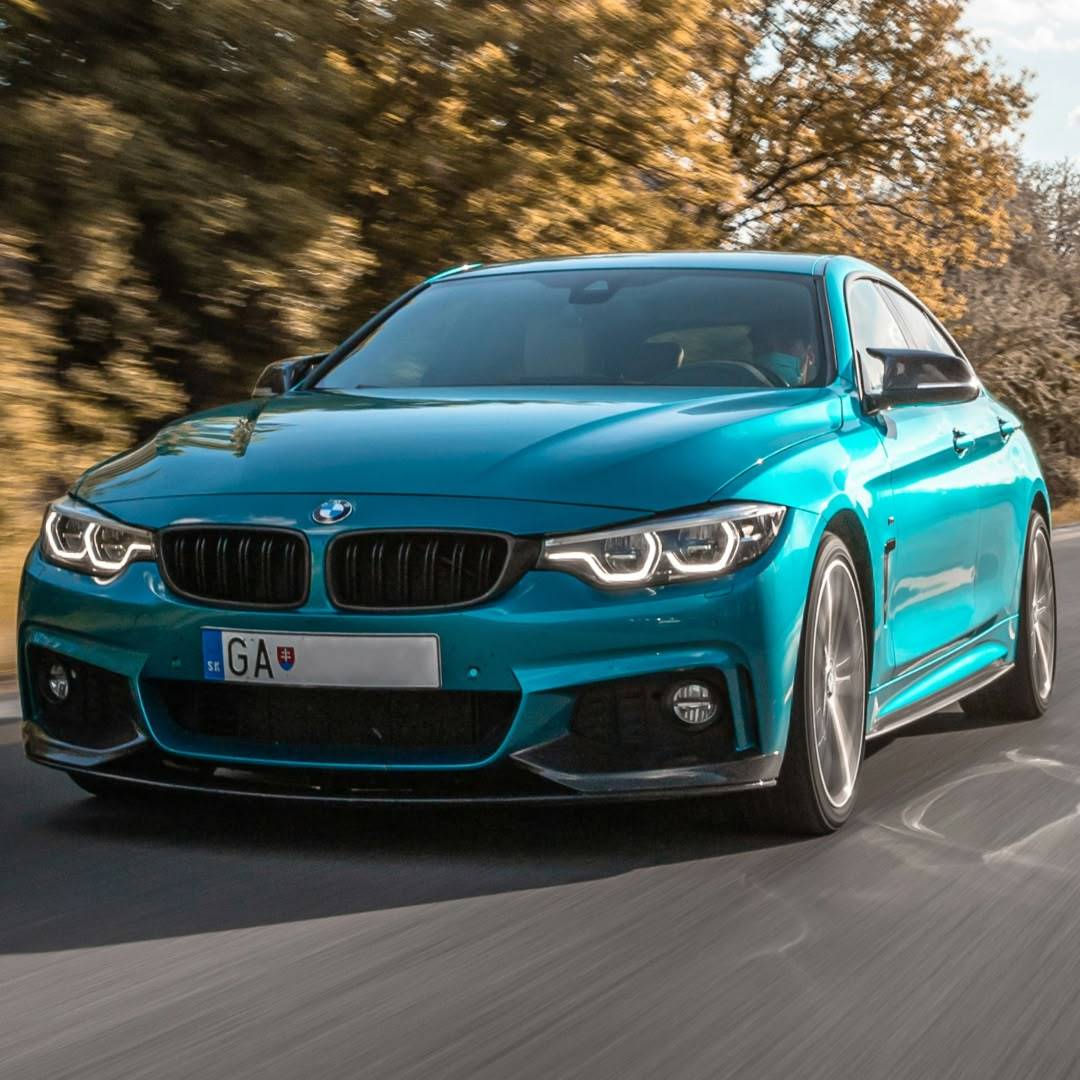 We already did a piece on BMW brakes and brake pads in the past – if you are interested in technical stuff or would like to learn more about brake maintenance, make sure to read it. Now, we’ll focus on the subject of brakes in the BMW F30/F31 3 Series in particular. Most of what’s described here should also be applicable to the first generation BMW 4 Series (F36, F33, F36).
CAUTION! While this article will be going over the subject of brake swaps, BimmerTech FZE does not condone nor does it encourage anyone to do brake system modifications. Any mechanical work or maintenance on the braking system of a roadgoing vehicle should be performed by qualified professionals. BimmerTech FZE does not take responsibility for any damages or injuries resulting from braking system modifications.
With that out of the way, we should start by clearing up some confusion about the various available brake setups in BMW F30 and its related models.
BMW F30 M Performance Brakes vs. M Sport Brakes – A Giant Ba-M-boozlement
Since all the BMW 3 Series and 4 Series models are built on the same platform, they share a lot of common components, including suspension and brakes. This also applies to the M3s and M4s, which has led to people figuring out a simple, reliable, OEM big brake kit – a swap from the high-performance F80 to the civilian F30.
Before we go into details on that upgrade, it’s necessary to understand how tangled the nomenclature regarding BMW brake systems is. Which is all the Bavarians’ own fault, as they’ve been incredibly inconsistent in how they describe certain parts and options.
Anyway: the “M Sport” name has been used to describe either entire trim packages or upgraded brake options. Usually, the brakes themself were hidden under option codes P337A or S2NHA – again, beware though, as these same codes could mean two different brake versions. All depending on the specific car model it refers to.
What’s always true for these is that any of those codes or the M Sport name will describe bigger than stock brakes with fixed, multiple piston calipers in the front. Not the simple floating ones with 1–2 pistons.
So, what exactly does the upgraded brake setup depend on?
- Car model
- Production year
- Sales market
The story with the “M Performance” label is a bit simpler, marked by slightly more naming consistency. Where available, these were always the ultimate factory upgrade – sometimes only possible to get as a dealer accessory retrofit, not optionable when ordering the vehicle.
Similar to the M Sport brakes, the M Performance ones came with large, colorful calipers; though they were painted yellow, orange, or red, not blue (or sometimes grey). However, unlike the other less hardcore option, their brake rotors weren’t plain, but dimpled and slotted for an even better initial “bite.” And to look cool too, probably.
Then there are also the brake setups from the F8x generation BMW M3s and BMW M4s. Since both of them are outright sport cars, even their “basic” brakes are monstrous and they could be optioned with special carbon ceramic rotors that came with even beefier golden calipers. But more on that in the following table…
Stock BMW F30 Brakes & Upgrades Specifications
If you’re still following us (or, even more so if you aren’t), here is a detailed table breakdown of the brake setups described above (for the F3x generation). Again, take it more as a general reference than something set in stone, but it should give you a good idea of everything.
| Brake option | Brake rotors | Brake calipers | F3x models |
| Base (low HP) |
|
Grey, 1-piston (front & rear) | BMW 320i / BMW 328i / BMW 330i / BMW 428i / BMW 430i |
| Base (high HP) |
|
Grey, 4-piston front Brembos, 1-piston rear | BMW 335i / BMW 340i / BMW 435i / BMW 440i |
| M Sport |
|
Blue Brembos, 4-piston front, 2-piston rear | BMW 320i / BMW 328i / BMW 330i / BMW 428i / BMW 430i |
| M Performance |
|
Yellow, orange, or red Brembos, 4-piston front, 2-piston rear | BMW 320i / BMW 328i / BMW 330i / BMW 335i / BMW 340i / BMW 428i / BMW 430i / BMW 435i / BMW 440i |
| M3/M4 Base |
|
Blue Brembos, 4-piston front, 1-piston rear | BMW F80 / BMW F82 / BMW F83 |
| M3/M4 Carbon Ceramic |
|
Gold Brembos, 6-piston front, 4-piston rear | BMW F80 / BMW F82 / BMW F83 |
Due to platform similarities most of these setups can be installed in a car that came with only the base brakes from the factory. However, the degree of complexity will vary depending on how many components you’ll need to replace along the way – read on for an overview of parts required to do a brake swap like that. Just slapping on blue M Sport calipers along with bigger front and rear rotors simply won't cut it.
Do You Even Need a BMW Big Brake Kit in Your Car?
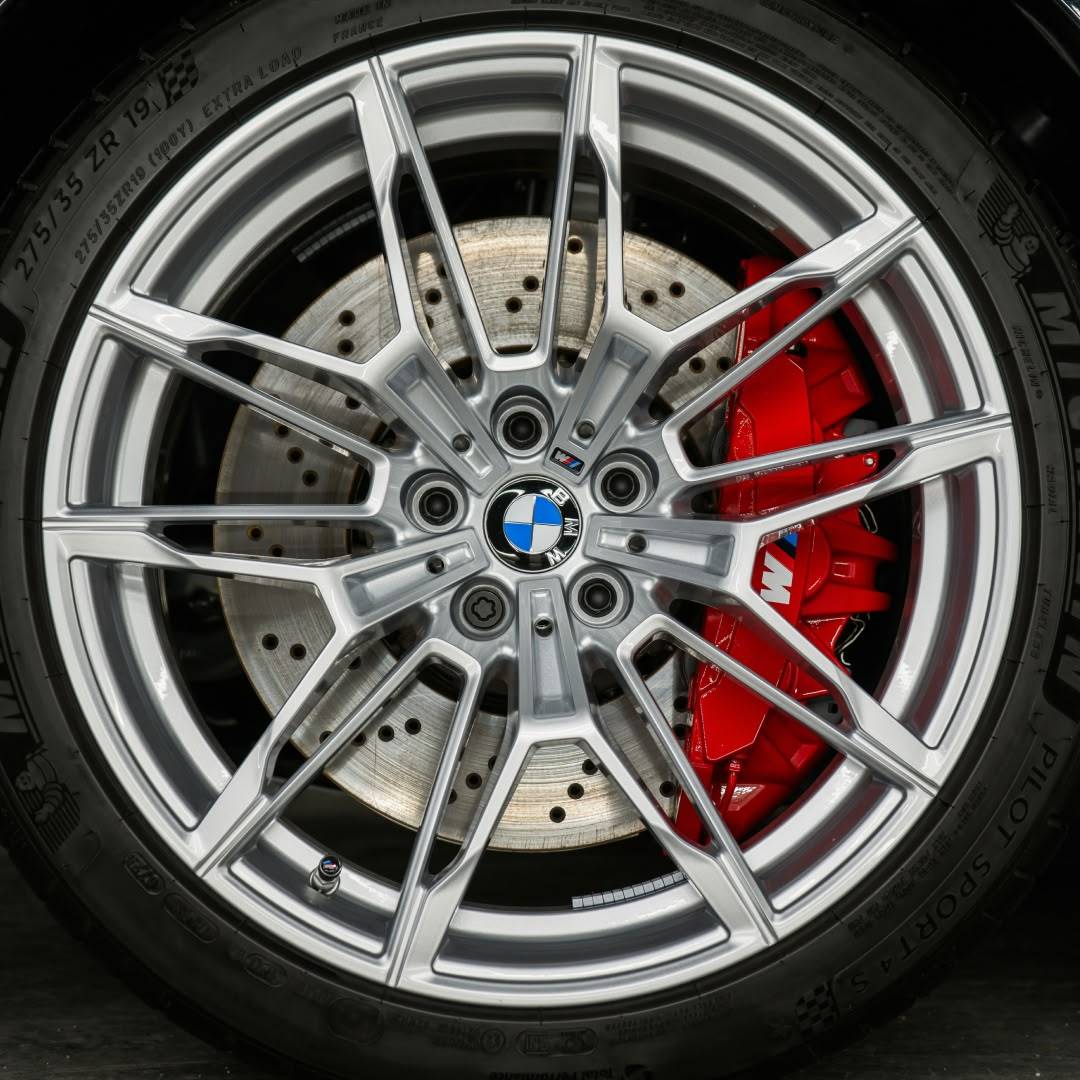 Short answer? Probably not. Long answer? It depends on how you use your car.
For daily driving or even somewhat spirited backroad runs, the stock or M Sport brake setups on the BMW F30 are more than capable. They were engineered with a wide safety margin, accounting for different driving styles, loads, and conditions.
Where things start to change is under sustained stress:
- Track days.
- Repeated high-speed braking.
- Aggressive mountain driving.
- Heavily modified engines (more power = more speed to scrub off).
In those scenarios, the limitations of smaller brakes become apparent. Heat buildup leads to brake fade, longer stopping distances, and reduced confidence behind the wheel. So, while a big brake kit isn’t a necessity for everyone, it becomes a very logical upgrade if you’re consistently pushing the car beyond what BMW intended for everyday use.
BMW Brake Upgrade Advantages
There are a couple of benefits to doing a big brake upgrade.
First, there’s heat management. Larger brake components can absorb and dissipate heat more effectively, which significantly reduces brake fade. This is crucial if you’re driving hard for extended periods, i.e., when racing on a track.
Another benefit is better pedal feel and modulation. Fixed calipers (like the Brembos used in M Sport, M Performance, and F80 setups) provide a more consistent and predictable response compared to floating calipers.
And yes—let’s not pretend it doesn’t matter—aesthetics. Big, colorful calipers behind your wheels instantly elevate the look of the car. Whether it’s blue, red, yellow, or gold, they scream performance even when you’re parked.
Finally, there’s the OEM compatibility factor when doing something like a BMW F80 brake swap. You’re using factory-engineered components, which typically means better fitment, reliability, and parts availability compared to some aftermarket kits.
BMW Brake Upgrade Disadvantages
Most car upgrades come with some trade-offs and this one is no exception.
First and foremost: the stopping power. Bigger rotors and multi-piston calipers do not provide better braking force. Obviously, the applied pressure might be higher, but the one exerted by single-piston calipers is more than enough, so this is irrelevant. In short, you shouldn’t experience a significant reduction in stopping distances.
What could improve your braking performance by a higher margin are good tires; but that’s a story for another time… However, there is a cool video explaining the science behind this matter in a very simple way:
Secondly, there’s also the issue of increased unsprung weight. Bigger brakes are heavier and while the performance benefits usually outweigh this drawback, it can slightly impact ride quality and acceleration.
Thirdly, wheel fitment and wheel well clearance can become a problem. Larger brakes often require bigger wheels or specific offsets to fit properly. Your current setup might not work without spacers—or at all.
Lastly, although it’s probably the biggest downside is cost. Even when going the OEM route with an F80 swap, you’re still looking at a significant investment once you factor in calipers, rotors, pads, lines, and potentially new wheels. Larger rotors and performance brake pads are also more expensive to replace. And if you’re driving aggressively, you’ll go through them faster, so your maintenance cost will go up as well.
If your car is primarily a daily driver, you may never fully utilize the capabilities of a big brake kit. In that case, you’re paying for performance you don’t actually need.
How to Install a F80 Brake Swap into BMW F30?
As mentioned in the beginning of this article, we do not condone nor encourage anyone to do brake system modifications. This is just a collection of the information we found on the internet and/or know from our own experience. If you are planning on performing such a swap on your personal vehicle, please research the subject thoroughly and, preferably, have a qualified professional install it.
That being said, one of the biggest advantages of swapping brakes from the BMW F80 onto a BMW F30 is how relatively “plug-and-play” it is – at least compared to aftermarket big brake kits. It’s still not a beginner-level DIY job by any stretch.
What components will be required?
- F30 front and rear calipers
- Matching brake rotors (larger diameter than F30)
- Compatible brake pads
- Brake dust shields (often need trimming or replacement)
- Brake lines (in some cases upgraded or adapted)
- Mounting hardware
For a step-by-step instructions, make sure to check out this video by Kies Motorsports:
Again: this is not something to take lightly. If you’re not experienced with brake systems, having a professional handle the installation is advised.
Simple BMW F30 Brake Upgrade – Better Pads & Rotors
If a full big brake kit or F80 swap feels like overkill, don’t worry: there’s a much simpler (and cheaper) path to better braking performance. Upgrading just your brake pads and rotors can make a surprisingly big difference.
High-performance brake pads offer:
- Better initial bite
- Higher temperature resistance
- Improved consistency under load
Pair that with upgraded rotors—such as slotted or dimpled ones—and you’ll also improve heat dissipation and gas evacuation. This type of upgrade is ideal if you daily drive your car and only occasionally push it hard. It’s also a great stepping stone. Many drivers find that pads and rotors alone deliver all the improvement they need without the added cost and complexity of a full brake swap.
Is BMW F80 Brake Swap Worth It?
So, we’ve reached the million-dollar question – is it worth it?
If you:
- Track your car regularly
- Drive aggressively and experience brake fade
- Want OEM-level performance with factory reliability
- Or simply care about visual impact
…Then yes—the F80 brake swap is absolutely worth considering.
However, if your F30 is mainly a daily driver and you’re not pushing it to its limits, the benefits may not justify the cost. In that case, a high-quality pad and rotor upgrade will likely give you 80% of the improvement for a fraction of the price.
At the end of the day, it all comes down to how you use your car. BMW engineered the F30 to be a well-balanced machine and for most drivers, it already is. But if you’re chasing that extra edge, the F80 brake swap is one of the cleanest and most effective OEM+ upgrades you can make.
FAQ
Comments(0)
All ratings
Popular posts:


and get to know all compatible products for your BMW or MINI
Where to find your VIN?