



[[post.title]]
We're changing for you!
Check out our new website 
We're changing for you!
Check out our new website
BMW Original Parts
Search by VIN
Search by VIN
Oct 29, 2026
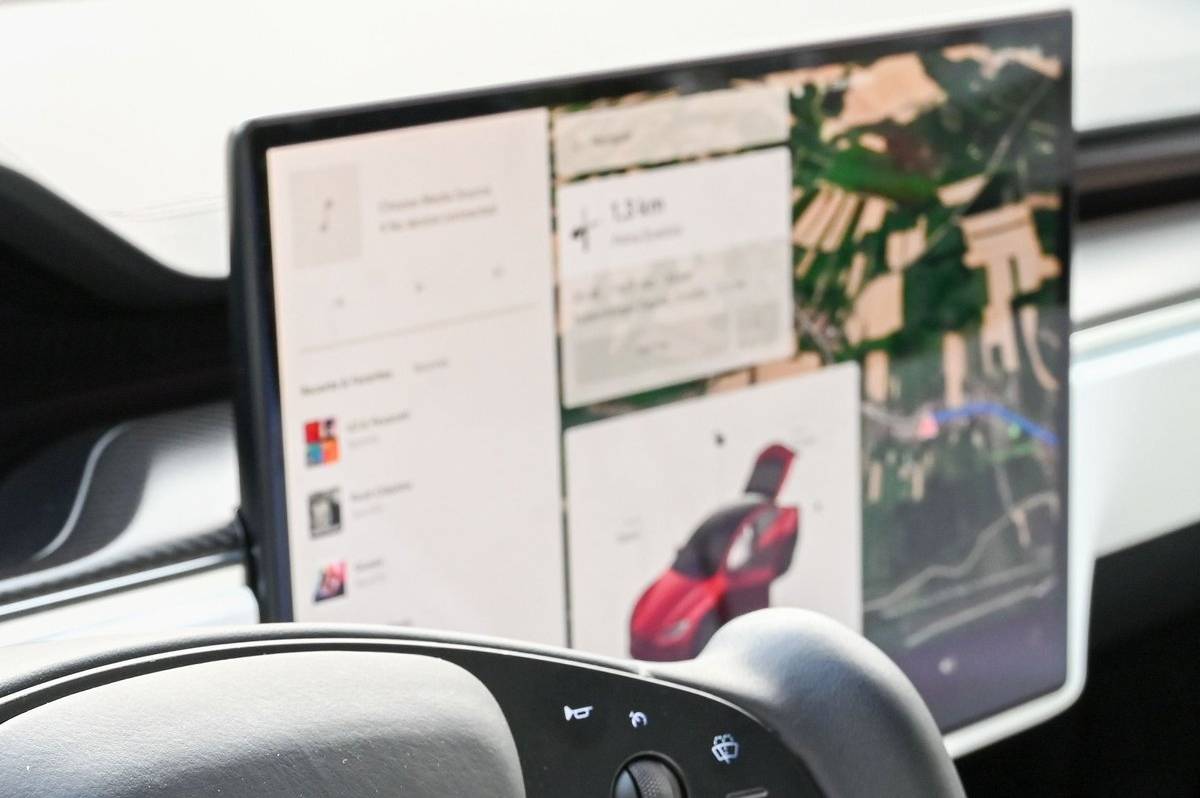
You get into your Tesla, ready to go, and… nothing. The map is stuck, the music won't change, and the touchscreen ignores every tap like a teenager ignoring a text from their parents. Annoying? Definitely. Dangerous? Not if you know what to do!
A frozen Tesla screen is one of the most common software hiccups, and in most cases, you can fix it yourself in under a minute. In this guide, we'll explain how to reset the Tesla screen on every model, what the difference between a soft and a hard reboot is, why screens freeze in the first place, and when it's time to stop pressing buttons and book a service appointment.
Coming up:
Let's dive in!
In most cars, a frozen infotainment screen means you can't change the radio station. In a Tesla, the touchscreen is practically the control center of the entire vehicle.
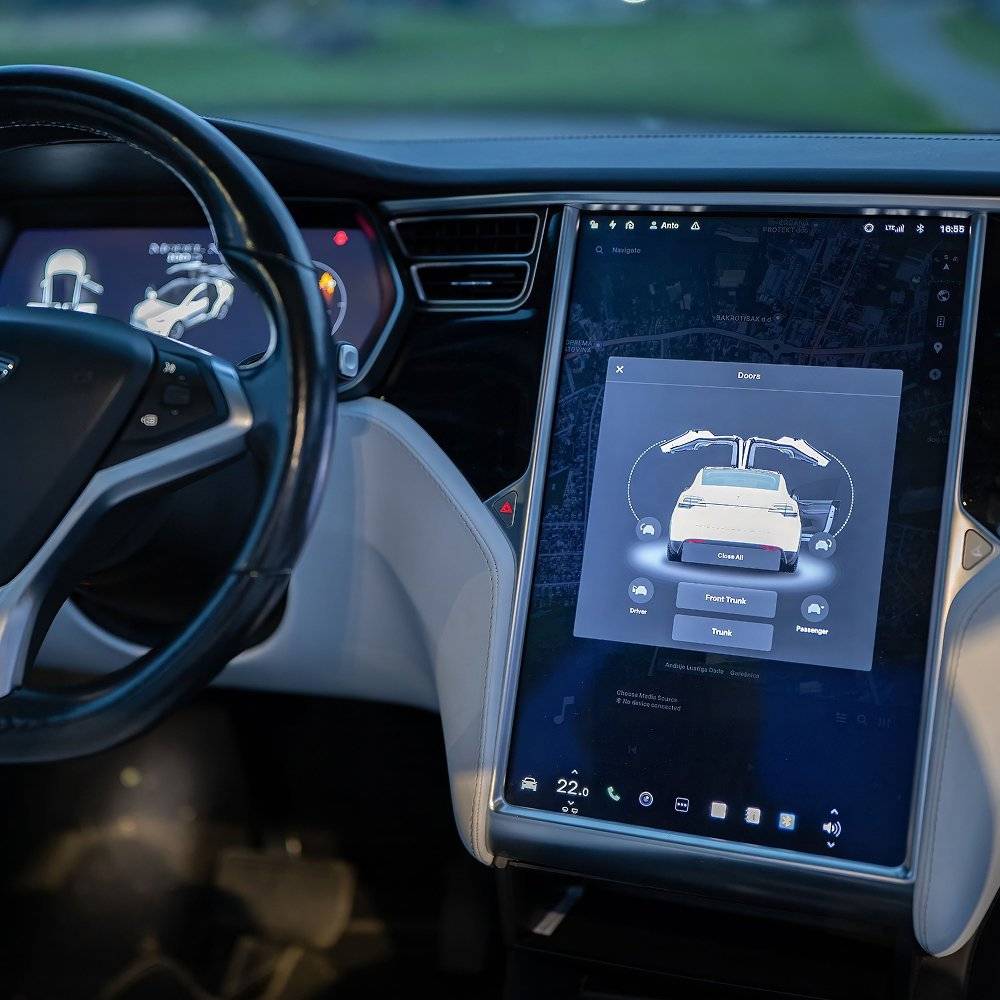 The car's computer – the media control unit (MCU) – runs the touchscreen and handles a lot of things other cars do with physical buttons: climate settings, mirror and seat adjustments, navigation, music, the backup camera view and much more. In the Model 3 and Model Y, which don't have a separate instrument cluster behind the steering wheel, it also shows your speed, the gear you're in and safety warnings.
So when it stops responding, it's not just an inconvenience. The good news: a frozen screen doesn't mean the car stops working. The touchscreen and the systems that actually drive the car (motors, brakes, steering) are separate. Your Tesla will keep driving – you just won't see much of what's going on.
First things first: never reset the touchscreen while driving. During the restart, the display goes dark for a while, which means no speedometer, no rearview camera and no safety warnings on the Model 3 and Model Y.
Here's what to do instead:
If the screen goes completely dark in a Model 3 or Model Y, you lose your speed and gear readout, so it's worth stopping sooner rather than later.
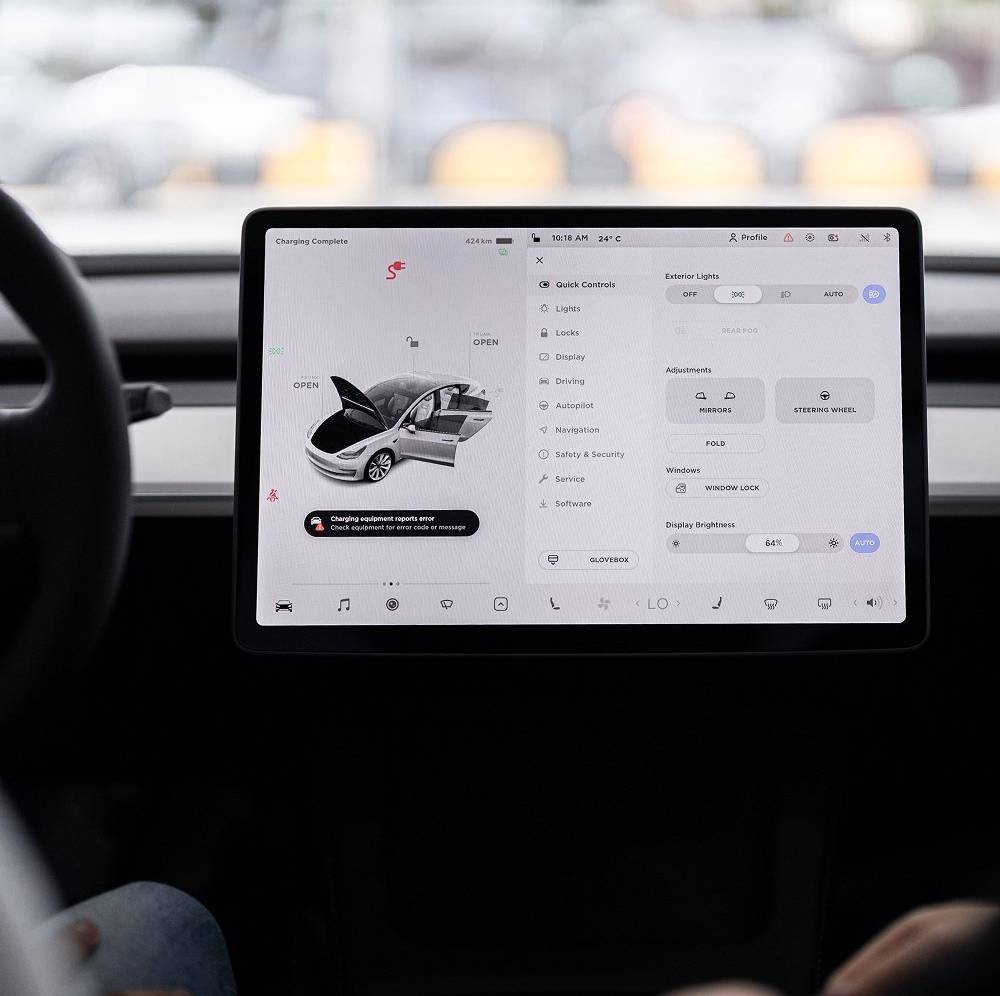 There are a few ways to bring your Tesla touchscreen back to life, and the steps are very similar whichever Tesla model you drive. Start with the simplest one and work your way up only if needed.
A soft reset – also called a soft reboot – restarts only the touchscreen. It doesn't turn the car off, doesn't delete any data or settings, and it fixes most freezes. This is the method most owners use, and the one you should try first.
Model 3 and Model Y:
You don't need to press the brake pedal for this one – holding both scroll buttons is enough.
Model S and Model X:
In older Model S and Model X cars, the instrument cluster behind the steering wheel can freeze independently of the touchscreen. Many owners restart it separately by holding the two upper buttons on the steering wheel until the cluster goes dark.
Cybertruck:
Hold both scroll buttons in Park until the screen goes black, then wait about 30 seconds – the same idea as in the Model 3 and Model Y.
If the soft reset doesn't help – or the screen freezes again shortly after – the next step is power cycling. It turns off the entire vehicle, not just the screen, which also restarts other electronics in the car.
There's one obvious catch: you need access to a working touchscreen to reach the Power Off button. If the screen is completely unresponsive, do a soft reset first, then power cycle once the screen responds. Tesla actually recommends this order in its manuals.
The hard reset is the nuclear option. It means cutting power from the low voltage battery, which forces every computer in the car to start from scratch.
We'll be honest: this one isn't for most owners. Read any forum post about it, and you'll see why – it's not something you perform on a whim in a parking lot. It involves removing trim panels, disconnecting the low voltage battery and, in some models, the first responder loop. Doing it wrong can damage electronics, cause injury (there's a high-voltage battery nearby, after all), or create problems with your warranty.
If the soft reset and power cycling didn't help, it's usually a sign that something else is wrong – and that's a job for Tesla Service, not for a screwdriver in your garage.
| Soft reset | Power cycling | Hard reset | |
| What it restarts | Touchscreen only | The entire vehicle | Every computer in the car |
| How | Hold both scroll buttons | Controls > Safety > Power Off | Disconnecting the low voltage battery |
| Time needed | About 30 seconds | At least 2 minutes | Depends on the model (trim removal included) |
| Requires a working screen | No | Yes | No |
| Difficulty | Very easy | Easy | Hard – not recommended |
| Risk | None | None | Damage, injury, warranty issues |
In most cases, the soft reset is all you need. Power cycling handles stubborn glitches, and the hard reset should be left to professionals.
Here's a common mix-up: a factory reset won't fix a frozen screen. It's a completely different thing.
A factory reset (under Controls > Service > Factory Reset) erases your personal data – profiles, saved locations, paired phones and settings – and returns the car's software to its original state. It's meant for when you're selling the car or transferring ownership, not for troubleshooting. You'll also need your Tesla account login to do it.
So unless you're about to hand over the keys to a new owner, leave that button alone.
A Tesla is essentially a computer on wheels, and like any computer, it sometimes hangs. Can you guess the most common reasons? Here they are:

If you drive an older Model S or Model X, there's one hardware issue you should know about.
The first-generation media control unit (MCU1) used an NVIDIA Tegra 3 processor with an 8 GB eMMC – short for embedded MultiMediaCard, a type of flash memory chip. With constant data logging, that chip wore out over time, which led to slow, unresponsive or completely dark screens.
This was a known issue big enough to prompt a recall. In 2021, after pressure from the NHTSA, Tesla recalled about 135,000 vehicles – the 2012–2018 Model S and the 2016–2018 Model X – because a failed eMMC could take out the rearview camera display, the defroster controls and some audio chimes, including turn signal sounds. The fix was a free replacement of the memory board with a bigger, more durable one.
If you own one of these cars and the recall work hasn't been done yet, contact Tesla Service – it's free. Owners who want a longer-term solution can also upgrade to a newer MCU, which is faster and doesn't have the same flaw.
A one-off freeze isn't a reason to worry. But if you notice any of these warning signs, the problem is likely deeper than software:
If the soft reset and power cycling didn't resolve the problem – or the screen keeps freezing – it's time to book a service appointment. You can do it directly in the Tesla app, under Service, without having to call or visit a shop.
A few tips to make it go smoother:
Tesla can often read the car's data remotely and diagnose the problem before you even arrive, and in some cases, a mobile technician can fix it at your home.
You can't prevent every glitch, but you can reduce the chances of one:
A frozen Tesla screen looks scary, but it's usually just a software hiccup. Shift into Park, hold both scroll buttons on the steering wheel until the screen goes black, and wait about 30 seconds – that fixes most cases. If it doesn't, power cycle the car via Controls > Safety > Power Off and wait at least two minutes.
Leave the hard reset to professionals, don't confuse it with a factory reset, and if the screen keeps freezing, book a service appointment. Especially if you drive an older Model S or Model X – it might be the eMMC chip calling it quits.
Shift into Park, then press and hold both scroll buttons on the steering wheel until the screen goes black. Release them and wait about 30 seconds for the touchscreen to restart.
No. During the restart, you won't see your speed, safety warnings or the backup camera. Always pull over and shift into Park first.
No. A soft reset only restarts the touchscreen. Your profiles, settings and data stay untouched.
A soft reset restarts only the touchscreen, using the steering wheel buttons. A hard reset means disconnecting the low voltage battery to restart all the car's computers – it's complicated and best left to Tesla Service.
Most often, it's a software glitch that a reboot or update fixes. If it keeps happening, it may point to a weak low voltage battery or a failing media control unit – especially the eMMC chip in older Model S and Model X cars.
 Customer Reviews
Comments
Rate the product
This email is already registered.
Please Log In to continue.
Let us find
the right version for you
We'll confirm pricing, compatibility and product details for your car:
Enter your VINShift into Park, then press and hold both scroll buttons on the steering wheel until the screen goes black. Release them and wait about 30 seconds for the touchscreen to restart.
No. During the restart, you won't see your speed, safety warnings or the backup camera. Always pull over and shift into Park first.
No. A soft reset only restarts the touchscreen. Your profiles, settings and data stay untouched.
A soft reset restarts only the touchscreen, using the steering wheel buttons. A hard reset means disconnecting the low voltage battery to restart all the car's computers – it's complicated and best left to Tesla Service.
Most often, it's a software glitch that a reboot or update fixes. If it keeps happening, it may point to a weak low voltage battery or a failing media control unit – especially the eMMC chip in older Model S and Model X cars.
Customer Reviews
Comments
Rate the product
This email is already registered.
Please Log In to continue.
[[comment.name]]
[[comment.text|raw]]
BimmerTech
Newsletter
[[comment.name]]
[[comment.text|raw]]
BimmerTech