
























[[post.title]]
We're changing for you!
Check out our new website 
We're changing for you!
Check out our new website
BMW Original Parts
Search by VIN
Search by VIN
Mar 17, 2026
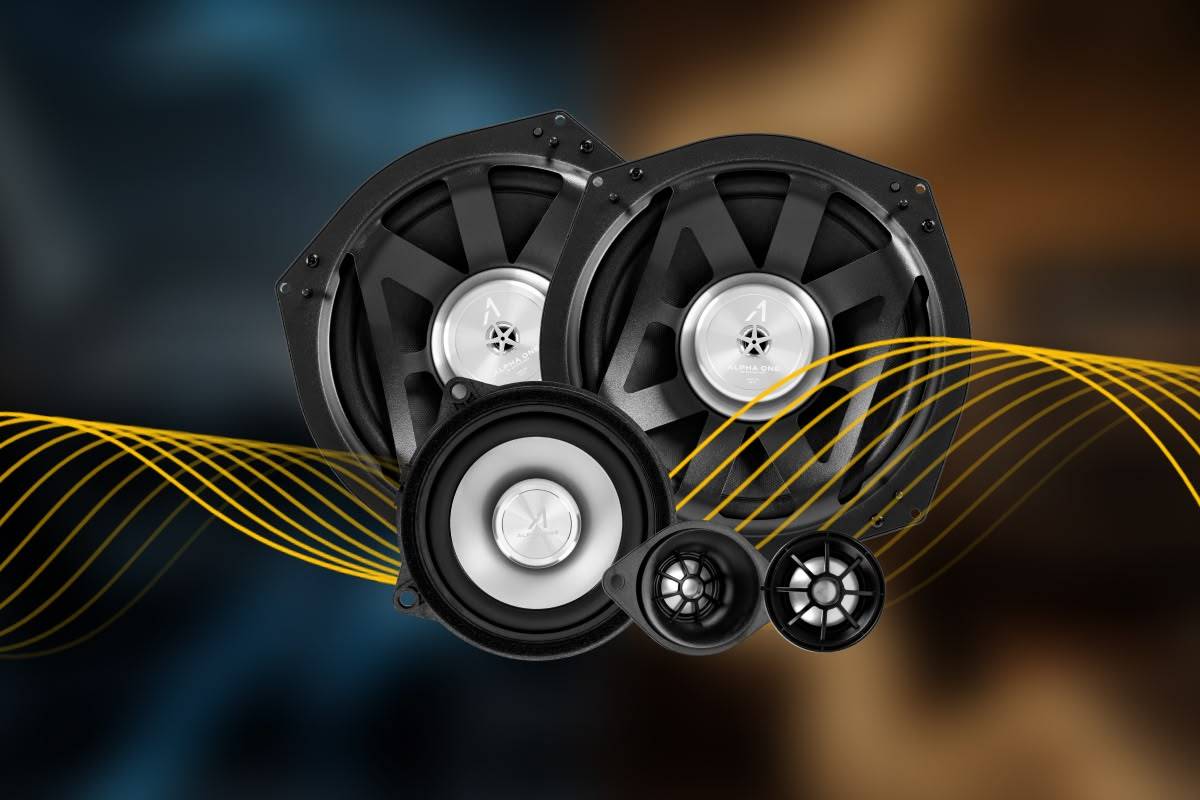
As per the Cambridge Dictionary, “coaxial” means “sharing an axis.” How exactly does it translate to car audio? There is actually quite a lot to it, but in the simplest of terms: coaxial speakers are a tweeter mounted directly on a midrange in a single unit. This solution covers much wider frequency spectra, while also being easier to install in applications without dedicated mounting points or wiring.
In this article, we’re going to take a deeper dive into this subject and explore:
Enjoy the reading!
Now that we’ve got the simple explanation out of the way, let’s talk business. When preparing this article, I asked our audio team “what are coaxial speakers?” to which they replied with a slightly more complex answer than what I included in the intro. So here’s what I learned from them. 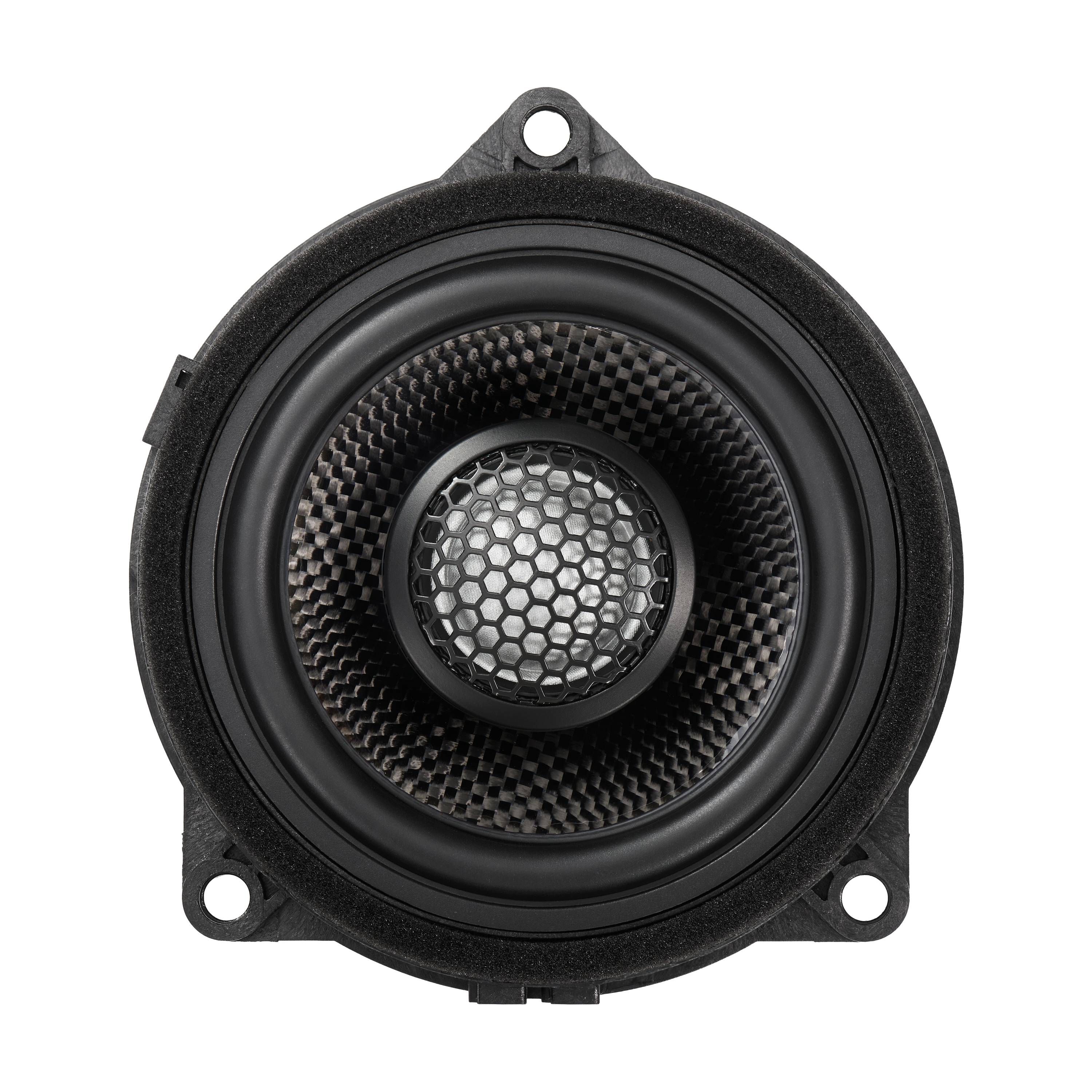
Coaxials are complex transducer systems with two or three acoustic outputs. This allows for covering significantly wider frequency spectra compared to a single component transducer. Usually, they consist of either two or three concentrically aligned speakers integrated into a single architecture, creating a single point source for easy car implementation.
The signal that’s delivered to them has to be separated into frequency bands adjusted for each of the transducer’s capabilities, usually by the means of passive filters built into the loudspeaker. A combination of the filters splitting the signal for the specific transducers is called a crossover.
There are a few types of coaxials. Most often you’ll find 2- and 3-way versions, but 4-way ones are also sometimes used. However, adding more and more speakers onto the assembly isn’t really that beneficial – the higher the reproduced frequency, the narrower the emission cone’s angle. Apart from that, extra transducers require more complex crossovers, which increases the coaxial’s cost and size, without real performance improvements.
HOLD UP! I’ve been scolded by our audio team that this is a loaded question and I should do better than that, so…
…Much better. So, what is the role of coaxial speakers? Simply put, they make it easier to fit a solution that covers a wider frequency spectrum into the car’s frame. Instead of using a separate midrange and tweeter, there is only one unit – meaning less components and less wiring.
Utilizing coaxes will yield the greatest gains in setups that don't have tweeters, like BMW’s Base (Stereo) system. In this application, the sound quality would improve dramatically after installing a coax (wideband) instead of a midrange speaker, which has a limited frequency response at the top. The use of a tweeter in the system complements the missing band by adding detail, improving the localization of apparent sources, and introducing microdynamics to the sound.
Moreover, in certain applications they are a great (and sometimes the only) way to improve the sound quality. We’re talking about vehicles that do not have factory mounting points for tweeters in their rear doors, for example.
By now you’re probably wondering what sets coaxial speakers apart from regular ones. Before we compare them side by side, let’s do a quick recap of the speaker types; if you already know all there is to know about these, skip this section and go to the next heading!
In other cases, what types of speakers are there?
Now that we know what is what, let’s see…
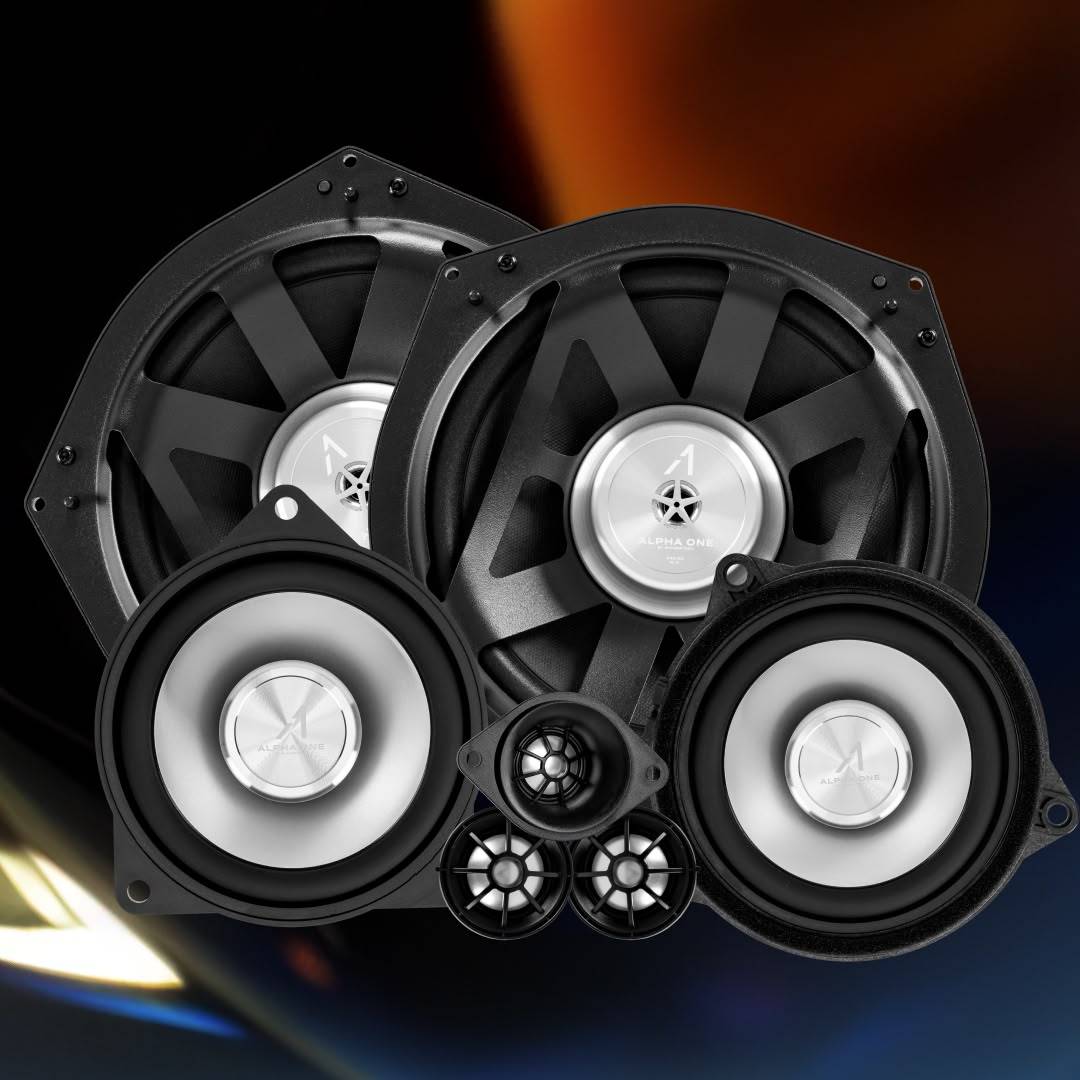 You’ll find all or some of the abovementioned speakers arranged in various ways across the interior of different vehicles. As opposed to coaxials—which combine two or more speakers in a single unit—standalone speakers make up for separate components of the whole system. Hence why they are also called “component speakers.”
While the coaxials have multiple sound sources at one point due to mounting limitations, component speakers take advantage of the less constrained placement possibilities. This allows them to be placed in such a way that they are pointed at the receiver’s head, possibly at the head’s level. Coaxials, on the other hand, are usually placed in the doors, which affects the audio’s high end. However, in applications where there is no other easy way for more complex setups that is a good compromise.
In general, having separate component speakers is audibly better for audio quality. At the same time, it is more costly, requires more wiring, the installation is more complex, and in some cases changing the car’s interior, e.g., by adding space for separate tweeters.
| Characteristic | Component speakers | Coaxial speakers |
| Design | Single transducer for separate mounting points | Two or more transducers in one unit (e.g., midrange & tweeter) |
| Advantages | Higher audio quality, finer control over the soundstage in a car | Much lower complexity, better packaged for limited spaces |
If you’re currently researching your BMW sound system upgrade options, coaxial speakers are probably not going to be the first thing you should be interested in. Depending on your budget, you’ll want to start your journey with getting a better amp, like one of our Alpha One Amplifiers – this is the true heart of all audio setups.
When it comes to speakers, which you’ll either get along with or after the amp, there are also some considerations. We’ve covered it extensively on our blog, so make sure to check out these resources:
If you’ve got particular questions regarding the Alpha One Speakers or Amplifier, there is a detailed Q&A guide available there as well. Obviously, if you won’t find your answers there, feel free to reach out to our Support Team – they’ll eagerly discuss your sound system needs.
Now you know what coaxials are, what purpose they serve, and how they compare against regular (component) speakers. While traditional transducers offer a much finer control over the soundstage and better sound quality, coaxes are simply unparalleled in terms of packaging and minimal complexity. In short: they are the best in vehicles with limited mounting locations.
We don’t have coaxial speakers in our offer yet, but they are coming and they are going to be something entirely else – in a good or even great way. I’m talking about the highest build quality our Alpha One customers have come to expect with a plethora of clever design solutions, as always.
Sounds interesting? Stay tuned for the future updates!
Coaxial speakers are available in various sizes and performance levels, catering to a wide audience. Mid-sized coaxial speakers provide a balance of size, power, and sound quality, catering to a wider audience.
Coaxial speakers are easier to install compared to component speakers, making them a popular choice for straightforward upgrades.
Coaxial speakers offer much less complexity and more compact packaging, while component speakers allow for finer control over the soundstage tuning and better sound quality. Cons of coaxial speakers include potential frequency interference and slightly lower sound quality compared to dedicated component systems.
The primary construction difference between coaxial and component speakers is that coaxial speakers integrate multiple drivers into a single unit.
Coaxial speakers are a versatile and popular choice for audio systems due to their compact size and ease of installation.
Coaxials are a midrange and a tweeter (or some other transducers) integrated into a single unit. Coaxial car speakers provide a cost-effective upgrade over factory systems with enhanced sound clarity.
 Customer Reviews
Comments
Rate the product
This email is already registered.
Please Log In to continue.
Categories:
[[cat.label]] ([[cat.data.length]])Popular posts:
Newsletter
Let us find
the right version for you
We'll confirm pricing, compatibility and product details for your car:
Enter your VINCoaxial speakers are available in various sizes and performance levels, catering to a wide audience. Mid-sized coaxial speakers provide a balance of size, power, and sound quality, catering to a wider audience.
Coaxial speakers are easier to install compared to component speakers, making them a popular choice for straightforward upgrades.
Coaxial speakers offer much less complexity and more compact packaging, while component speakers allow for finer control over the soundstage tuning and better sound quality. Cons of coaxial speakers include potential frequency interference and slightly lower sound quality compared to dedicated component systems.
The primary construction difference between coaxial and component speakers is that coaxial speakers integrate multiple drivers into a single unit.
Coaxial speakers are a versatile and popular choice for audio systems due to their compact size and ease of installation.
Coaxials are a midrange and a tweeter (or some other transducers) integrated into a single unit. Coaxial car speakers provide a cost-effective upgrade over factory systems with enhanced sound clarity.
Customer Reviews
Comments
Rate the product
This email is already registered.
Please Log In to continue.
[[comment.name]]
[[comment.text|raw]]
BimmerTech
Newsletter
[[comment.name]]
[[comment.text|raw]]
BimmerTech