























[[post.title]]
We're changing for you!
Check out our new website 
We're changing for you!
Check out our new website
BMW Original Parts
Search by VIN
Search by VIN
Jan 29, 2026
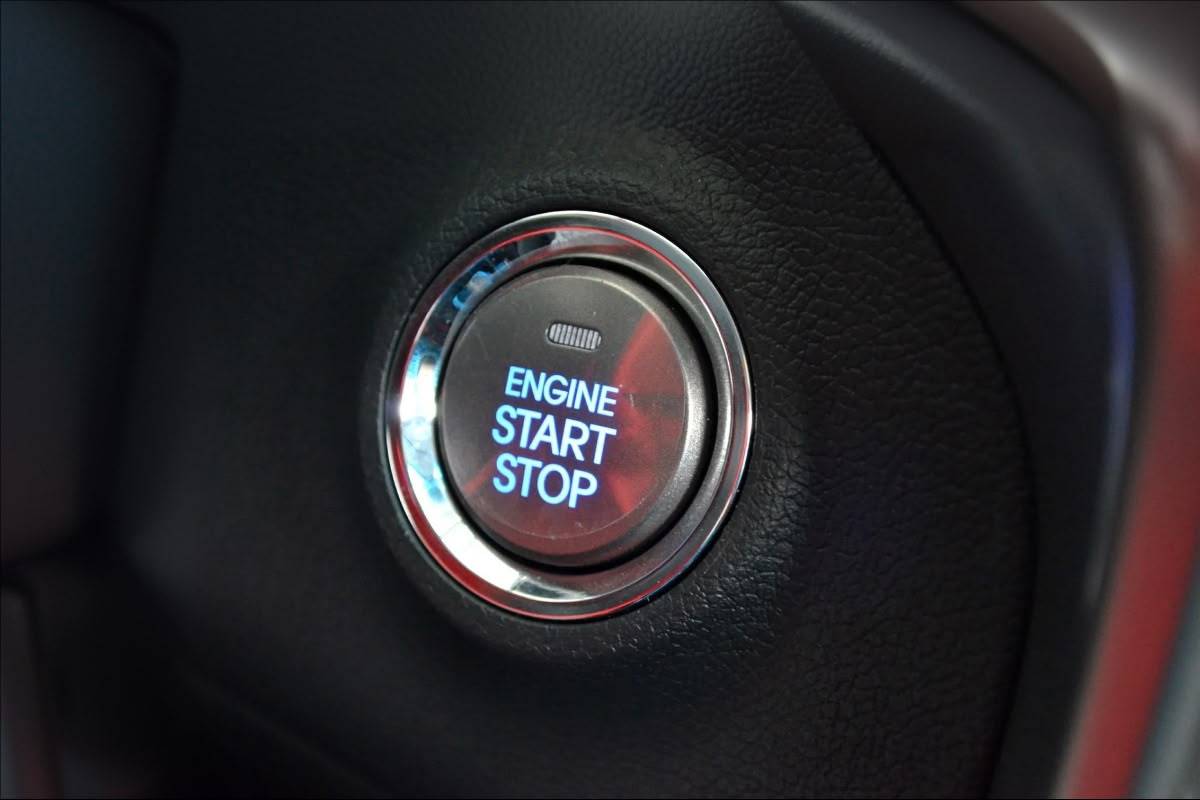
Did you know that cars equipped with auto start-stop systems are sometimes called microhybrids? Me neither, but the more you learn! And today, we’ll do even more of that, taking a look at the start-stop technology, which automatically shuts down and restarts the engine when the car comes to a stop to reduce fuel consumption.
Coming up, we’ll check out:
Enjoy the read!
 As mentioned in the previous paragraph, the auto start-stop is a system meant to save fuel by reducing the idle time of an internal combustion engine. According to some online sources, it was first introduced in a mass-produced car in the 70s by none other than Toyota – they put it in their 1974 Crown model, claiming a 10% gas saving.
Others (like Car and Driver) suggest that the first production car to use auto start-stop was the Volkswagen Polo Formel E, which debuted in 1983. Regardless, it was around the 1970s and 1980s that we were graced with this technology.
While the principle is simple—your car comes to a full stop, your engine shuts off, you lift the foot of the brake, it turns on—its reliable implementation is a bit more involved. After all, you don’t want the critical systems of your car to be deactivated at a busy junction. To support the auto start-stop, manufacturers introduce necessary changes to both engines (internally) and their accessories.
This usually includes things like:
Please note that these are not universal to all car makers, but rather a list of examples. Some manufacturers may include all of these modifications in their cars, while others may use a combination of either.
Regardless of the exact implementation though, this many start-up cycles makes one ask…
No, the auto start-stop isn’t really bad for your car. That being said, while modern engines are designed around this system and usually reinforced against the stress caused by more frequent start-ups, there are a couple of caveats.
Despite the special coating, beefed up starters and batteries, or oil additives, remember that your engine will be running more often with only adequate lubrication levels. Of course, the ECU won’t allow it to be turned off right after you start it, without warming it up for at least a bit.
However, due to the start-stop systems’ primary goal, i.e., lowering emissions and fuel consumption, it won’t be warming up longer than absolutely necessary. This means engine oil temperatures of around 160°F (70°C), which is less than the ideal range of around 200°F (95°C), though not dangerous or damaging anymore.
In short: you shouldn’t worry about the longevity of your engine even when using the auto start-stop system. Its operation might—theoretically—marginally increase the wear and tear, but you’d only start noticing these effects after hundreds of thousands or even millions of miles. So you’re safe, don’t worry!
The auto start-stop system isn’t mandatory in the United States, although you’ll find it in most brand-new vehicles sold here nowadays. What’s the reason for it? Well, whenever a new car is introduced, governing bodies have to check it for the emissions and fuel consumption. Including this system makes it easier to achieve good results, which helps not only with bringing the car to the market, but also selling it (low MPG attracts buyers).
Additionally, some markets require its presence, so it’s much easier and more cost-effective for the car maker to have it implemented anyway, regardless of the destination.

Since its inception, there have been many scientific studies conducted to measure the effectiveness of the auto start-stop systems. Depending on the source and the vehicle type, it was demonstrated that it usually saves around 5–10% of fuel.
This doesn’t seem like much, but let’s say you use $2,000–2,500 on fuel annually (so around the US average). At the end of the year, you’re looking at about $100–125 in savings, which can buy you and your significant other a nice dinner at that moderately fancy restaurant you love.
Is it worth it? You tell us after that trip to the Olive Garden ;)
While you can temporarily deactivate your auto start-stop system until you turn off your engine and ignition, there aren’t many ways to do so permanently. For most modern vehicles, the only method of permanently deactivating it is with a dedicated auto start-stop eliminator device. We wouldn’t recommend using those unless you got it from a reputable manufacturer.
However! If you drive one of the BMW Group models, there might be a way to permanently disable this system – and you’re in the right place to get it…
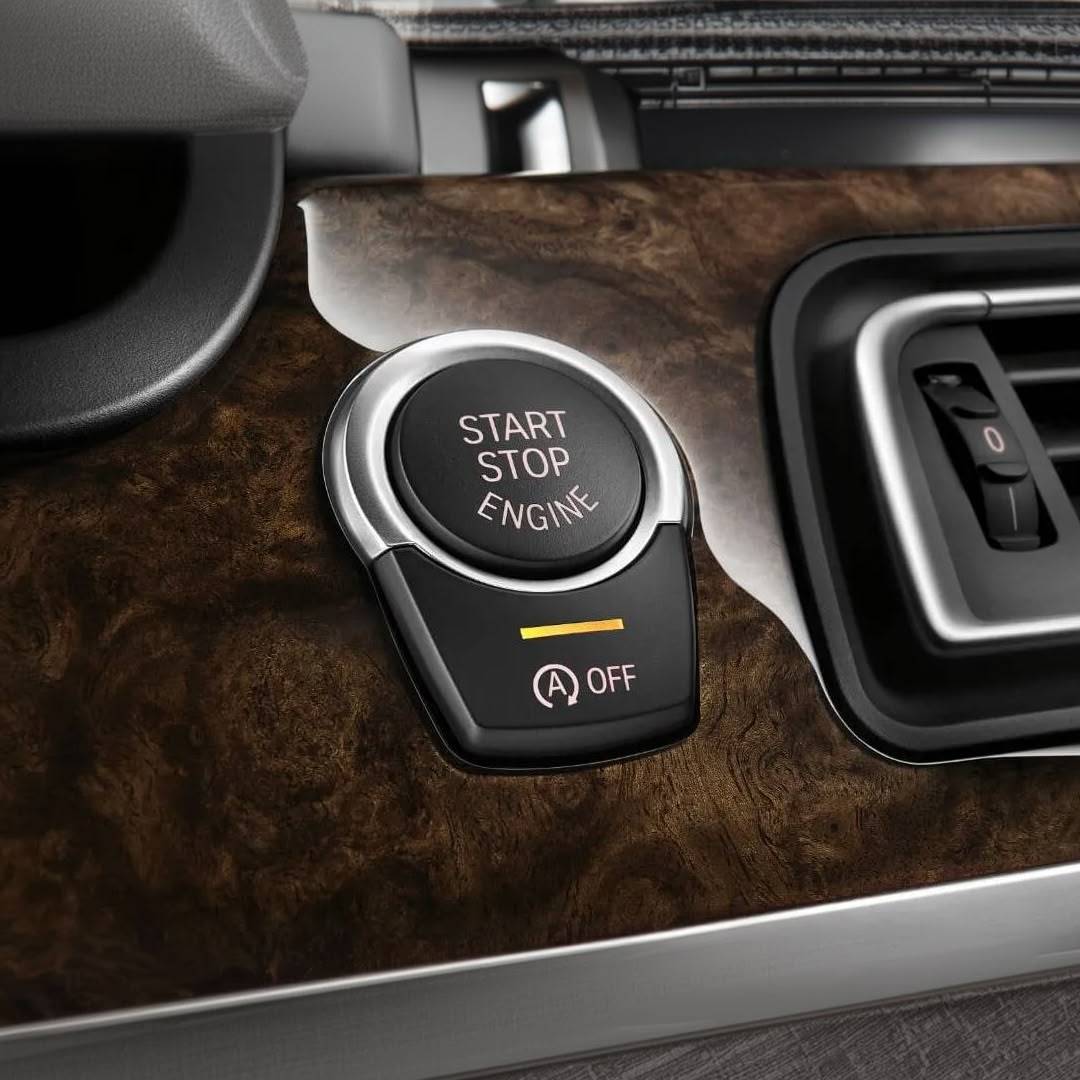
On older series BMWs it was possible to permanently disable this system in your car. The more convenient and elegant solution is enabling the so-called "memory function" for the Auto Start/Stop button. After the BimmerTech coding, your car will remember the last state of the button and will not reset to the default "ON" state each time you start your vehicle. This applies to Comfort and Sport (Mid and Sport in case of MINIs) modes your BMW has.
However, in the ECO mode Auto Start/Stop function stays always on. You can check the coding we offer at this page: BMW Start Stop Disable coding upgrade. Everything happens during a quick coding session and the only thing you have to do is connect your PC to your BMW or MINI. You don’t need to install any “eliminator” devices, so your car stays basically fully OEM.
Unfortunately, more and more new BMWs (starting somewhere from 2019) may not even have a physical Start/Stop button anymore. Deactivating that function is impossible, since BMW locks that within the software, so it stays on in both ECO and Comfort modes. The only mode where Auto Start/Stop function stays off is Sport.
So, as a workaround, we can code your car to start in the Sport or Sport Individual mode by default. If you choose the last option, you can customize it to be more like a Comfort mode. To make sure that the coding mentioned above is for you, decode your VIN before placing an order or reach out to our Sales Team to confirm the compatibility.
As you can see, the auto start-stop system is not without its merit. In the long run, it can save you some money (around $100–125 a year) and it shouldn’t really affect your engine's longevity. However, no one will blame you if you find its operation annoying and want to deactivate it. Just remember that some start-stop eliminator devices might not be too reliable, so try to find one from a reputable seller or seek specialized deactivation coding (like ours for the BMWs).
 Customer Reviews
Comments
Rate the product
This email is already registered.
Please Log In to continue.
Categories:
[[cat.label]] ([[cat.data.length]])Popular posts:
Newsletter
Let us find
the right version for you
We'll confirm pricing, compatibility and product details for your car:
Enter your VIN Customer Reviews
Comments
Rate the product
This email is already registered.
Please Log In to continue.
[[comment.name]]
[[comment.text|raw]]
BimmerTech
Newsletter
[[comment.name]]
[[comment.text|raw]]
BimmerTech