
























[[post.title]]
We're changing for you!
Check out our new website 
We're changing for you!
Check out our new website
BMW Original Parts
Search by VIN
Search by VIN
Jan 2, 2026
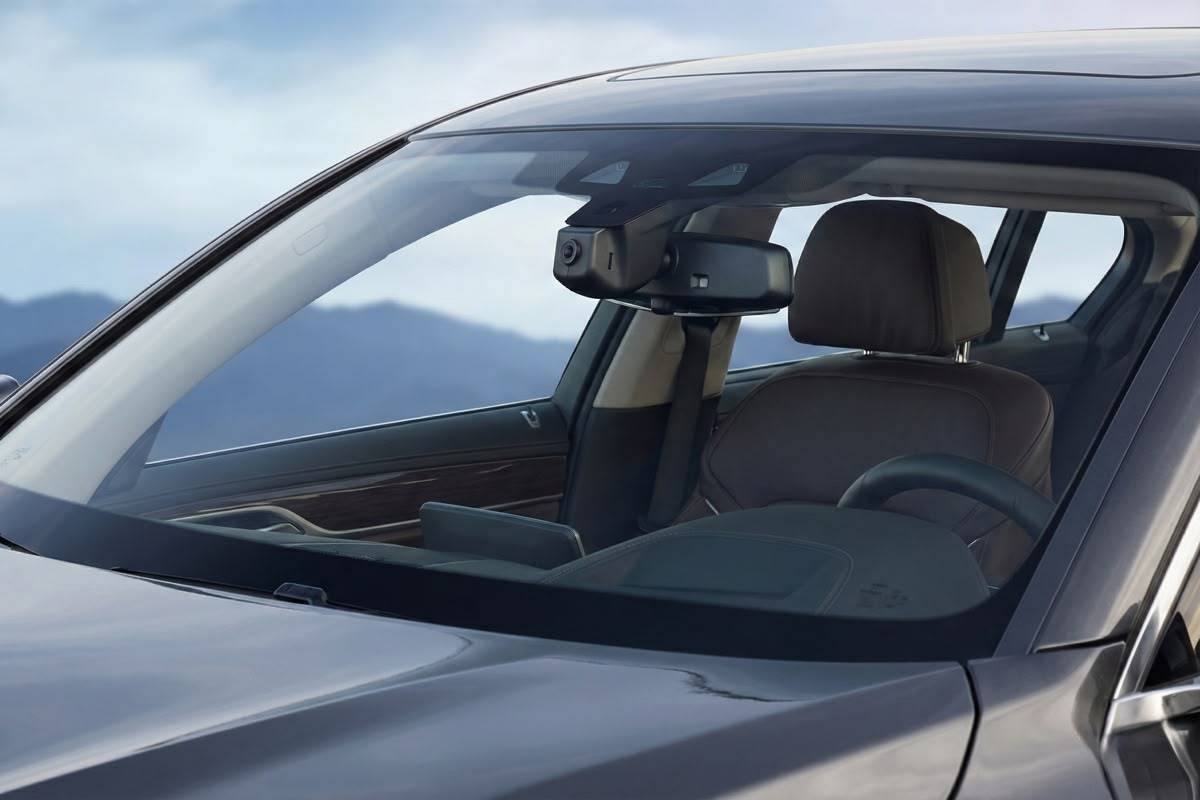
With insurance scams estimated at almost $8 billion each year and how often you can encounter dishonest drivers, getting the means to secure yourself seems like a must. This guide is for you if you are wondering how to choose the best dashcam for your BMW (or any other car). Pay attention to its recording resolution, operating temperature range, SD or MicroSD card compatibility, and low light recording capabilities. You’ll want at least Full HD resolution, with 4K being preferable, plus the ability to withstand temperature extremes. Ultimately though, the best dashcam for BMW is the one that suits all your needs.
Coming up, we’ll dive deeper into:
Let's dive in!
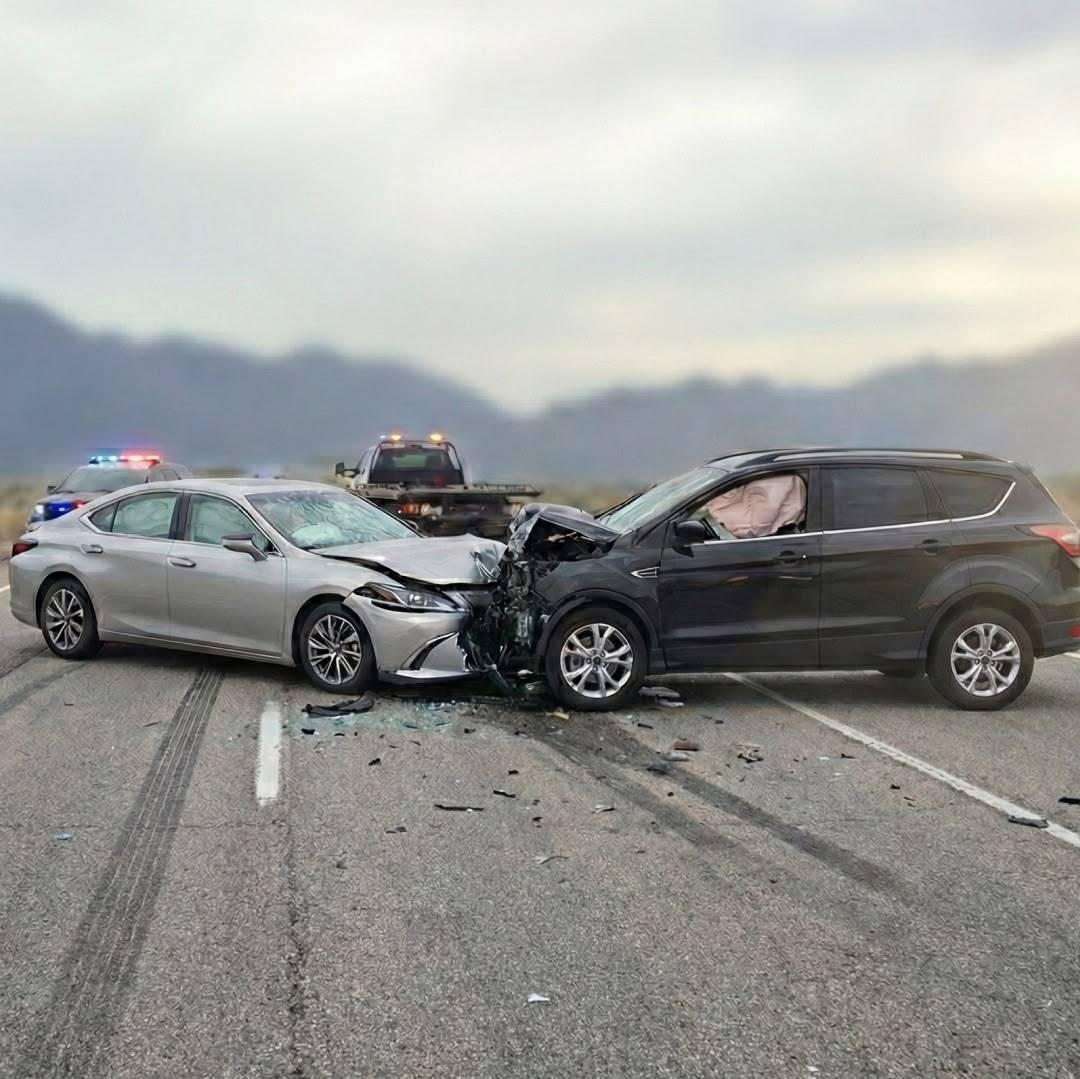 Picture this: you're gently coming to a stop at a red light when suddenly the car in front of you slams on their brakes for no reason. You tap them lightly and, before you know it, they're claiming whiplash and thousands in damages. Welcome to the world of "crash for cash" scams, costing honest drivers an estimated $7.4 billion annually according to various online sources.
The reality is that driving today comes with risks that go beyond simple accidents.
Insurance fraud has become increasingly sophisticated, road rage incidents are on the rise, and hit-and-runs in parking lots happen daily. BMW dashcam footage provides direct evidence to insurance companies of what caused an accident instead of relying solely on eyewitnesses.
Oh, and let's not forget the entertainment value! Remember all these funny or outright weird dashcam vids? Some drivers use dashcams to capture unusual sights, whether it's a herd of elk crossing a mountain road or a meteorite falling through the sky.
Shopping for a BMW dashcam can feel overwhelming. The market is flooded with options ranging from $60 budget models to $500 premium setups with more features than you knew existed. Most of the modern dash cam options come with a parking mode, so just make sure yours also has it. What else actually matters when choosing the best dashcam in 2025 for your BMW (well, most of this information obviously applies to other cars too…).
The majority of the best dashcams in 2026 record footage in 4K, while some low-end models could top out at just 1080p, but it’s best not to cheap out on this aspect. If you ever need to read a license plate from your footage, 4K resolution can mean the difference between identifying the culprit and having useless, fuzzy video for your YouTube channel.
Apart from resolution, what are some of the other specs to look out for?
Unless you go with the cheapest, unproven solution, you should be good to go.
A car dashcam lives in a pretty harsh environment – stuck to a windshield where temperatures can exceed 140°F in summer and drop below freezing in winter. Good BMW dashcams handle higher temps without shutting down and include safeguards if heat gets excessive.
Look for models with:
This is especially important since you don’t want your BMW dashcam to fail unexpectedly.
This is kind of obvious, because your dashcam will need some means to store the recordings.
When it comes to choosing between an SD and MicroSD card, it shouldn’t really matter which one you’ll go with in most cases. Important note though: some MicroSD cards can be slower than the SD cards, but this is all dependent on the manufacturer and card version. In other words, what you pay for is what you get.
However, you SHOULDN’T buy the cheapest available option anyway – as mentioned in the previous section about the dashcam reliability, car interiors can be pretty harsh. The same thing we said about a camcorder needing to be able to withstand temperature extremes goes for the SD/MicroSD card.
What are the most important SD/MicroSD card specifications?
Budget around $20–40 for a quality card; it's not where you want to cut corners. This is a good moment for us to include a shameless plug – our concealable Dashcam Retrofit for BMW cars comes standard with a 128 GB SD card. So if you have one of the compatible vehicles, make sure to check it out!
The terminology can be confusing, so let's clarify it a bit. Single-channel dash cams record only the front view, 2-channel models add a rear-facing camera, and 3-channel dash cams usually include a third interior-facing camera.
How many channels should you opt for?
Well, it mostly depends on your own needs and budget, but just a front facing camera is better than nothing. If you are wondering whether you should go for 3-channel, its biggest value is not in the “selfie shooting” potential. An interior-facing camera with a wide-angle lens will also cover the sides of your vehicle.
For most car owners, a dual-channel setup provides the best balance of protection and value.
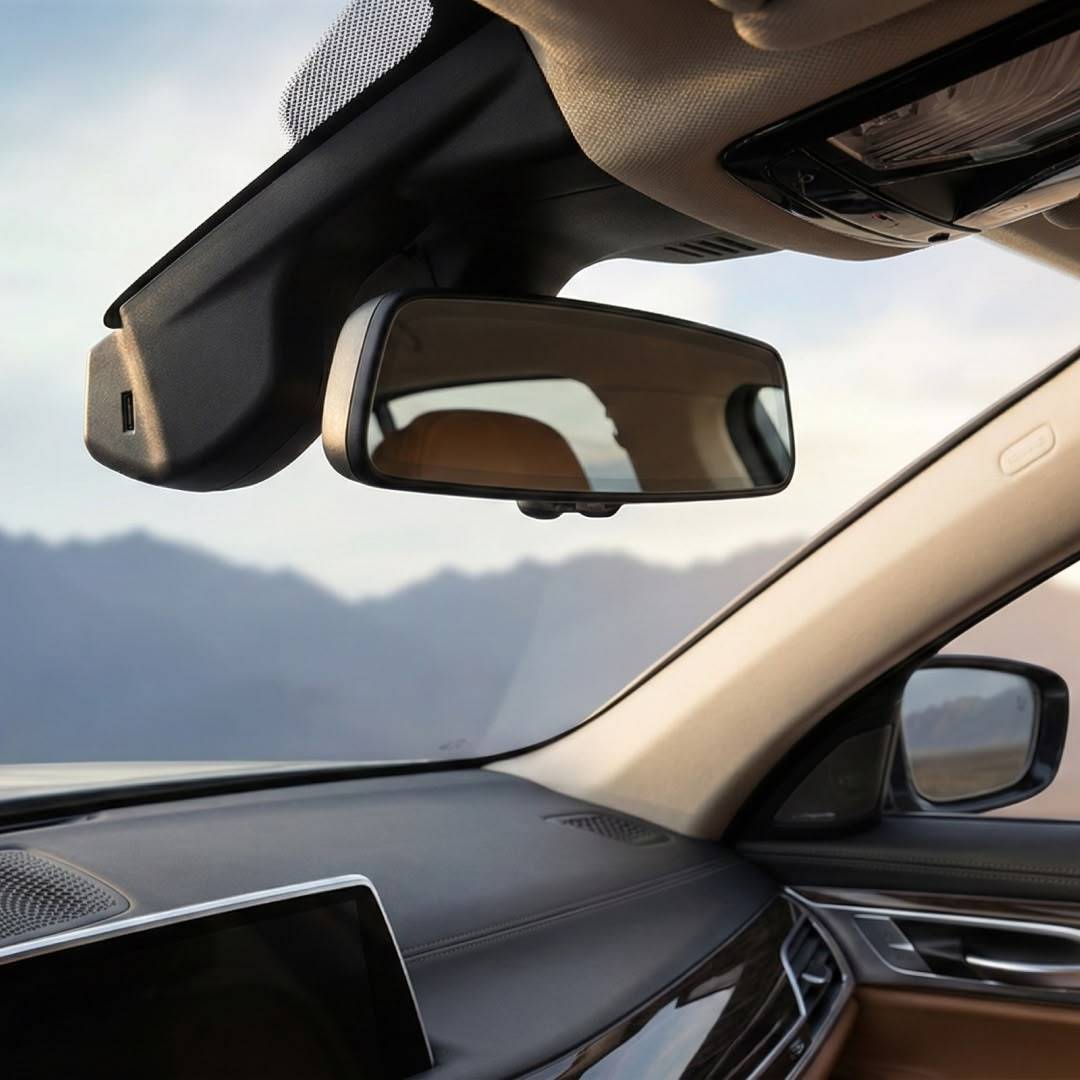 Even the best dashcam won't help if it's poorly positioned. Front dash cams should be mounted in or near the center of the front windshield to ensure an even field of view for the vehicle's sides. Here's how to get it right.
The ideal spot for mounting your dash cam is near the rearview mirror, either just below or behind it. This position ensures clear road coverage while staying out of your sight line and minimizing distractions.
Here are some additional positioning tips:
When adjusting the angle, test fit the positioning by holding the dashcam to your windshield and powering it up to see what’s visible through its lens. This is when you’ll be able to introduce any placement corrections for optimal footage.
The most common and recommended location for a rear dash cam is inside the rear windshield, mounted near the top center. This placement captures the maximum viewing angle while staying out of your rearview mirror's way. Important tip: avoid mounting the camera on rear defroster grid lines, as this can interfere with how the image is recorded.
When it comes to actually securing a dashcam, there are two main mounting options – adhesive and suction cup mounts, both of which take up a small piece of your windshield. It’s pretty simple to install them, with the glass cleaning and degreasing being the only prep work required. While adhesive-based mounts are more secure, they aren’t as adjustable as the suction mounts and might leave glue residue upon removal.
However, these are not the only ways for dashcam mounting. Some devices can be installed either on some interior trim elements or integrated into them via special replacement casings. There are, for example, universal auto-dimming rear-view mirror attachments with integrated cameras on their backside that snap onto regular mirrors.
For some vehicles there are also dedicated solutions, which brings us to the next subject…
While the earlier part of this article covered universal camcorder fitment and buying advice for all car owners, we’re going to focus on BMW dashcam options now. Sorry to all the Honda, Ford, Chevy, or Subaru owners, but that’s kinda our thing – we hope you found our tips up to this point useful!
So, back to business: what’s available for you if you have a Bimmer?
Drive Recorder is BMW's optional built-in dashcam system that uses the vehicle's existing 360° cameras. While it might sound tempting at first, it’s objectively not that good as a primary dashcam due to its low frame rate, low resolution, and short recording time. The system records in 15 FPS and 1280x960 resolution combined, 640x480 per camera – good luck making any sense of these license plates!
Additionally, if your car isn’t equipped with it already, retrofitting it would require a ton of work and extra parts. New wiring harnesses, cameras, or control modules, paired with the need to disassemble half of your car’s interior trim. Not too practical.
Our Dashcam Retrofit for BMW is a unique solution that offers seamless integration with the car interior. The whole module is very easy to install – it replaces the entire plastic rear-view mirror trim. Additionally, this dashcam boasts solid technical specifications:
Despite an OEM-like fitment, the installation process is very simple and fully plug-and-play. You can see it for yourself in this video:
In short, this one is just a traditional, windshield-mounted dashcam, just made by BMW. The whole set comes with two cameras for the front and rear that are mounted via an adhesive pad. As to its specifications:
Apart from the base version, there is also a second one that has a built-in screen for previewing your recordings. However, other than the display, its specs are the same. If you would like to read a more detailed comparison of these BMW-specific options, go ahead and read our previous BMW dashcam article overview.
Choosing the best dashcam for your BMW (or other car) comes down to balancing resolution, durability, and features with your specific needs and budget. When looking for the right camcorder option for you, make sure to pay attention to some key characteristics:
Whether you go with a universal dashcam or a BMW-specific option, the important thing is having one installed. Because when that unfortunate parking lot incident (or insurance scam) happens, you'll be glad you did.
Yes, a dashcam is worth the investment. While U.S. insurance companies typically don't offer direct discounts, dashcams provide crucial evidence for insurance claims, help prevent fraud, and can protect your no-claims bonus. They can save thousands of dollars if you're involved in an accident where you're not at fault, but someone else says you are.
Generally no – most U.S. insurance companies don't offer dash cam discounts. However, having footage that proves you weren't at fault can prevent premium increases after an accident.
Focus on resolution (4K preferred), high-endurance microSD card compatibility, multiple camera coverage, and the inclusion low–light recording capabilities.
Mount the front camera behind your rearview mirror in the center of the windshield, within the wiper coverage area. The rear camera should go at the top center of the rear windshield, avoiding defroster lines. Position cameras at or above driver eye level and ensure they don't obstruct your view or violate local placement laws.
Although BMWs have sensitive electrical systems that require careful dashcam installation, if you adhere to installation instructions and take enough time for cautious installation, you'll be fine. Dashcam installation often involves tapping into the vehicle's fuse box, but installing a rear dashcam takes about 20 minutes if done carefully. However, if you don't feel confident, have a trusted mechanic install the dash cam for you.
 Customer Reviews
Comments
Rate the product
This email is already registered.
Please Log In to continue.
Categories:
[[cat.label]] ([[cat.data.length]])Popular posts:
Newsletter
Let us find
the right version for you
We'll confirm pricing, compatibility and product details for your car:
Enter your VINYes, a dashcam is worth the investment. While U.S. insurance companies typically don't offer direct discounts, dashcams provide crucial evidence for insurance claims, help prevent fraud, and can protect your no-claims bonus. They can save thousands of dollars if you're involved in an accident where you're not at fault, but someone else says you are.
Generally no – most U.S. insurance companies don't offer dash cam discounts. However, having footage that proves you weren't at fault can prevent premium increases after an accident.
Focus on resolution (4K preferred), high-endurance microSD card compatibility, multiple camera coverage, and the inclusion low–light recording capabilities.
Mount the front camera behind your rearview mirror in the center of the windshield, within the wiper coverage area. The rear camera should go at the top center of the rear windshield, avoiding defroster lines. Position cameras at or above driver eye level and ensure they don't obstruct your view or violate local placement laws.
Although BMWs have sensitive electrical systems that require careful dashcam installation, if you adhere to installation instructions and take enough time for cautious installation, you'll be fine. Dashcam installation often involves tapping into the vehicle's fuse box, but installing a rear dashcam takes about 20 minutes if done carefully. However, if you don't feel confident, have a trusted mechanic install the dash cam for you.
Customer Reviews
Comments
Rate the product
This email is already registered.
Please Log In to continue.
[[comment.name]]
[[comment.text|raw]]
BimmerTech
Newsletter
[[comment.name]]
[[comment.text|raw]]
BimmerTech